Clear Sky Science · en
Health-related quality of life and visual function in retinoblastoma survivors with ocular prostheses: a cross-sectional study
Life After Childhood Eye Cancer
When a child loses an eye to cancer, families naturally worry not only about survival but also about how life will feel years later. Will their child see well enough to manage school, friends, and sports, and will wearing an artificial eye affect confidence or happiness? This study follows teenagers and young adults who survived retinoblastoma, a rare eye cancer of childhood, to explore how they function in daily life and how they feel about their overall well-being.
Who These Young People Are
The researchers studied 15 children and young adults in Sweden who had retinoblastoma and underwent removal of one eye, later receiving a custom-made artificial eye. Most had cancer in one eye, while three had disease in both. On average, they were about 15 years old at the time of the study, and many had worn an ocular prosthesis since preschool age. To understand their day-to-day lives, the team collected medical records, asked survivors and their parents to complete detailed quality-of-life questionnaires, and compared the answers to those from large groups of healthy peers.
How They See and How They Feel
Overall, survivors and their parents reported that general health-related quality of life was similar to that of children and young adults without cancer. Scores for physical health, social life, emotions, and school performance were, on average, close to population norms. Parents and children also tended to rate quality of life in similar ways. Still, there were hints that some areas, especially school and emotional well-being, might be slightly more vulnerable, even if differences did not always reach strict statistical cutoffs. 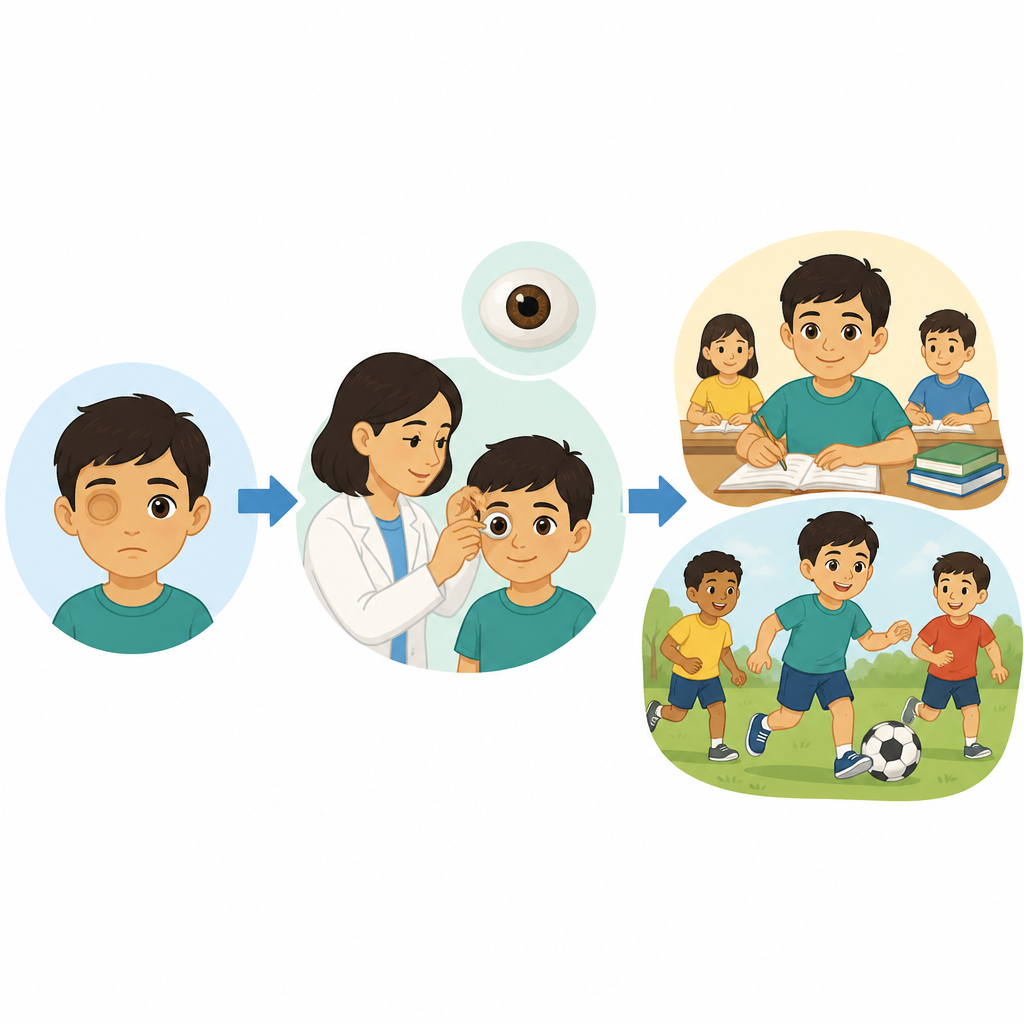
When Weaker Vision Makes a Difference
A key finding emerged when the researchers looked more closely at the sight in the remaining eye. Survivors whose better eye had clearly reduced sharpness of vision scored lower in nearly all areas of quality of life than those with normal sight, especially in school and social functioning. They reported more difficulties keeping up with classmates and joining in everyday activities, even though parents did not always notice the same impact. This gap suggests that some struggles remain partly hidden from adults, and that standard eye charts capture only part of what these young people experience in classrooms, playgrounds, and daily routines.
Hidden Visual Difficulties in Daily Life
Beyond how clearly they could see, the study examined more subtle visual challenges called perceptual visual difficulties. These problems involve how the brain handles what the eyes detect, such as judging distance, following moving objects, or finding an item in a crowded scene. Using a structured interview, the researchers found that nine of the fifteen survivors reported at least one such difficulty, far more than matched healthy volunteers. Depth perception issues were common, which fits with having only one seeing eye, but troubles with busy visual scenes and other areas also appeared. Interestingly, these brain-based visual challenges did not track closely with standard eye test scores or with the quality-of-life ratings, and older participants tended to report more of them, perhaps because life demands increase with age. 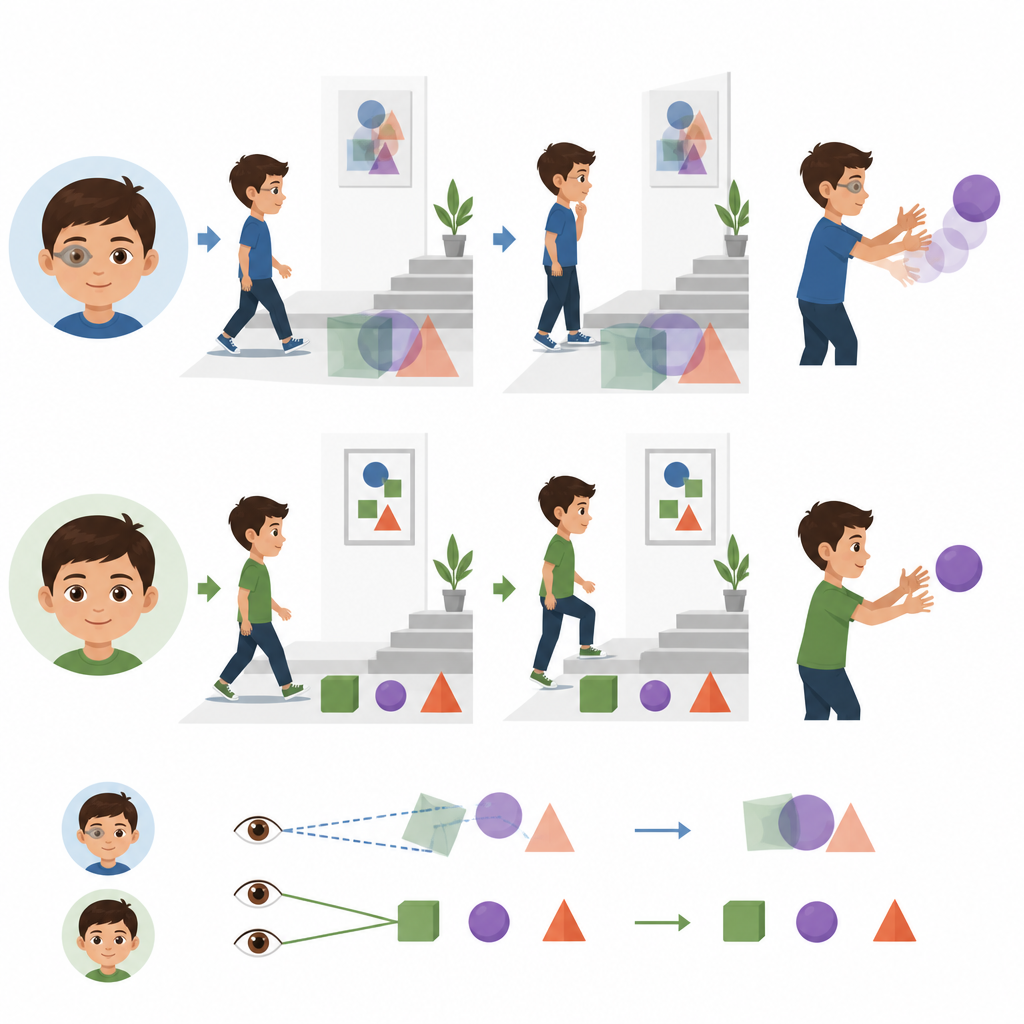
What This Means for Care and Support
Despite facing childhood cancer, surgery, and long-term follow-up, most retinoblastoma survivors with an artificial eye reported an overall quality of life similar to their healthy peers. However, reduced sight in the remaining eye was clearly linked to lower well-being, especially in school, and many survivors described subtle visual processing problems that do not show up on a routine eye chart. The authors argue that follow-up care should look beyond simple measures of eyesight, taking into account brain-based visual challenges and their impact on school and daily life. By combining regular eye care with careful questioning about everyday tasks and tailored educational support, clinicians, teachers, and families can better identify hidden needs and help these young people thrive in the long term.
Citation: Casslén, B., Jonasson, R., Odersjö, M. et al. Health-related quality of life and visual function in retinoblastoma survivors with ocular prostheses: a cross-sectional study. Sci Rep 16, 15174 (2026). https://doi.org/10.1038/s41598-026-52270-8
Keywords: retinoblastoma, ocular prosthesis, childhood cancer survivor, visual function, quality of life