Clear Sky Science · en
Bio-generated CoO-NPs from Salvia officinalis: a promising tool against ESBL-producing bacteria
Why garden herbs matter in the fight against tough germs
Antibiotic resistant infections are an increasing worry in hospitals around the world. Some bacteria can shrug off even powerful drugs, making routine infections harder to treat. This study explores an unusual ally in that fight: the common herb sage. By using sage leaves to help build tiny particles of cobalt oxide, the researchers tested whether these particles could slow down dangerous bacteria while staying reasonably safe for healthy cells.
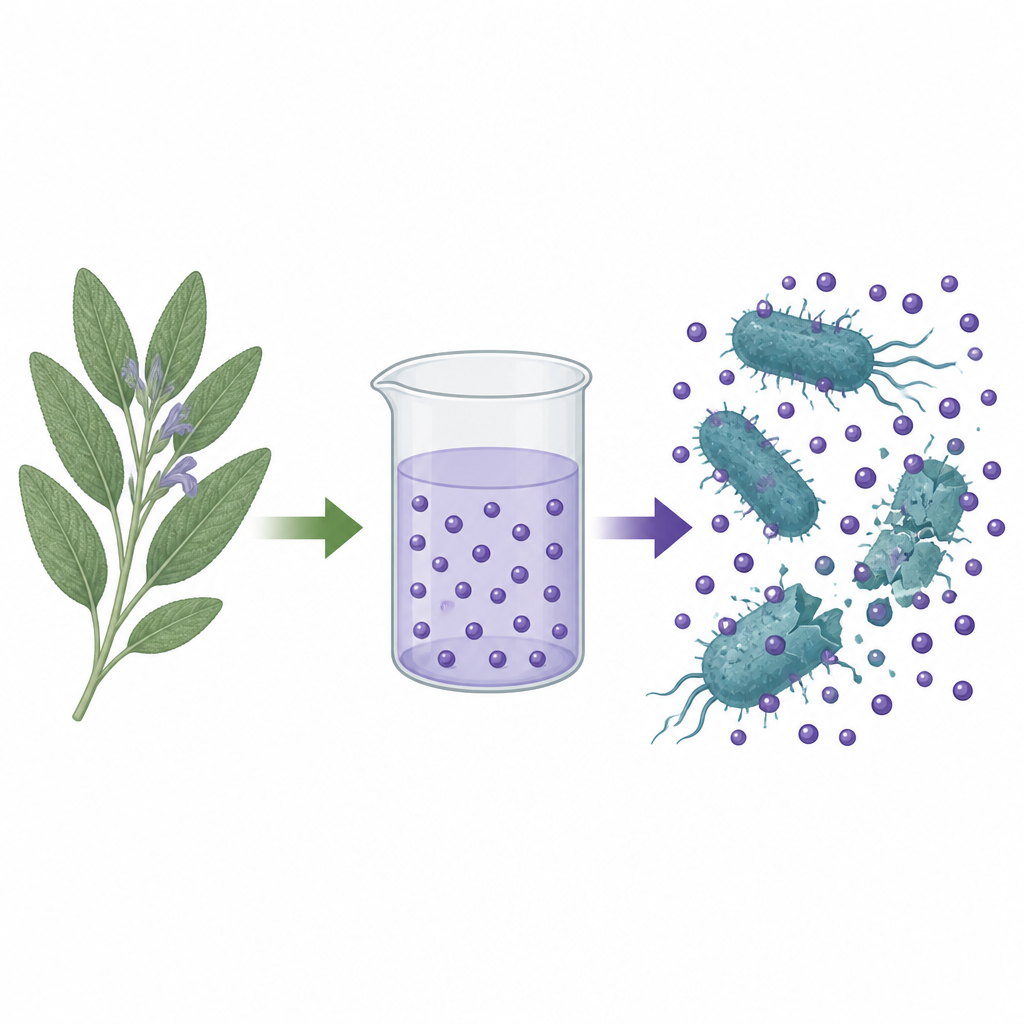
Stubborn hospital germs under the microscope
The team began by collecting medical samples such as urine, wound swabs, and blood from patients at a cancer hospital in Cairo. From these, they isolated dozens of strains of Gram negative bacteria and then searched for the most worrying kind: those that produce extended spectrum beta lactamases, enzymes that disable many widely used antibiotics. They found eight such strains, mostly Escherichia coli with a couple of Klebsiella pneumoniae. Using standard lab tests and an automated identification system, they confirmed that these strains carried strong resistance to several important drugs.
Turning sage leaves into tiny cobalt helpers
Next, the researchers prepared an aqueous extract of fresh Salvia officinalis, better known as sage. Chemical analysis showed that the extract contained a mix of natural compounds, including a high level of the antioxidant rosmarinic acid. When this extract was mixed with a cobalt salt solution, the liquid gradually changed color, signaling that nano sized cobalt oxide particles were forming. Modern imaging and analytical tools confirmed that the resulting particles were crystalline, ranged from about 10 to 50 nanometers in size, and carried plant based chemical groups on their surface that helped keep them dispersed in water.
Putting the new particles up against resistant bacteria
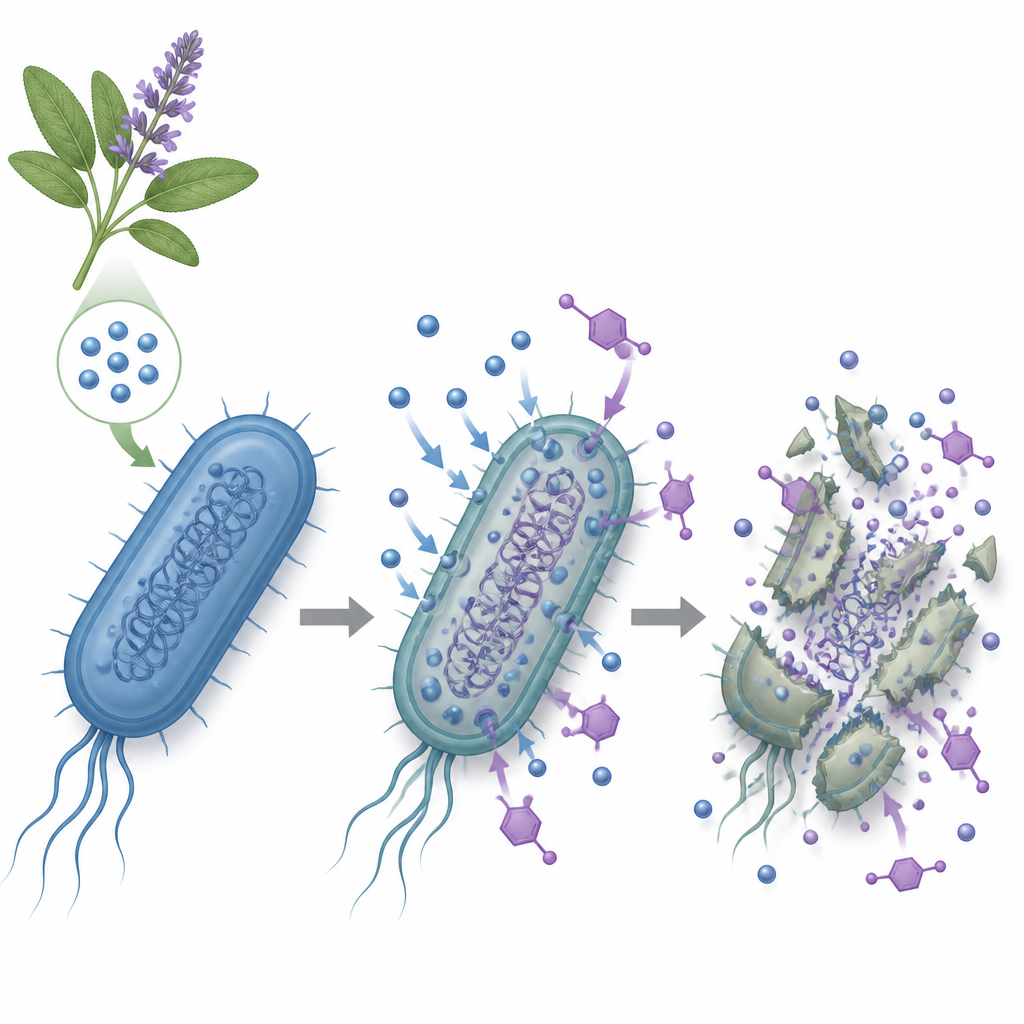
The team then compared the antibacterial power of plain sage extract, cobalt salt, and the sage made nanoparticles. The extract alone did not stop bacterial growth, and the salt had only moderate effect. In contrast, the cobalt oxide nanoparticles produced clear zones where bacteria could not grow around them on test plates. These zones were consistently large for all resistant strains, and further tests showed that small amounts of nanoparticles in liquid culture could halt bacterial growth. The nanoparticles also had a useful side benefit: when bacteria were briefly exposed to a sublethal dose before being tested with standard antibiotics, several drugs became noticeably more effective, especially rifampicin, meropenem, and gentamicin.
Measuring antioxidant power and safety to normal cells
Because plant based coatings can change how nanoparticles behave in the body, the study also examined their antioxidant capacity and effects on noncancerous cells. In two common free radical scavenging tests, the cobalt particles showed moderate ability to neutralize reactive molecules, better than the plant extract alone but weaker than pure vitamin C. To gauge safety, the researchers exposed kidney and oral cell lines to increasing nanoparticle concentrations. Cell survival gradually decreased with dose, but the concentrations needed to kill half the cells were several hundred micrograms per milliliter, a range often considered to reflect low to moderate toxicity in this type of screening.
What this could mean for future infection care
Overall, the work suggests that cobalt oxide nanoparticles made using sage extract can strongly hinder drug resistant bacteria while only moderately affecting normal cells in lab tests. They may also make some existing antibiotics work better against stubborn strains. These findings do not yet translate directly into treatments for patients, but they point toward a possible future in which common herbs help shape safer nanomaterials that support conventional drugs in the ongoing struggle against resistant infections.
Citation: Kalaba, M.H., Elrefaey, A.A., Saber, M.E. et al. Bio-generated CoO-NPs from Salvia officinalis: a promising tool against ESBL-producing bacteria. Sci Rep 16, 15470 (2026). https://doi.org/10.1038/s41598-026-52141-2
Keywords: antibiotic resistance, cobalt nanoparticles, Salvia officinalis, ESBL bacteria, green nanotechnology