Clear Sky Science · en
Antimicrobial activity of topcoat formulation based on synthesized new cyclodiphosph(V)azane derivatives as a biocide for protective coatings
Why cleaner walls matter
From hospital corridors to kitchen walls, painted surfaces can quietly collect harmful bacteria and fungi. Once these microbes settle, they can form stubborn films that are hard to remove and may contribute to infection or material damage. This study explores a new kind of protective paint that not only looks good and lasts longer, but also helps keep surfaces hostile to unwanted germs by building the germ-fighting power straight into the coating itself. 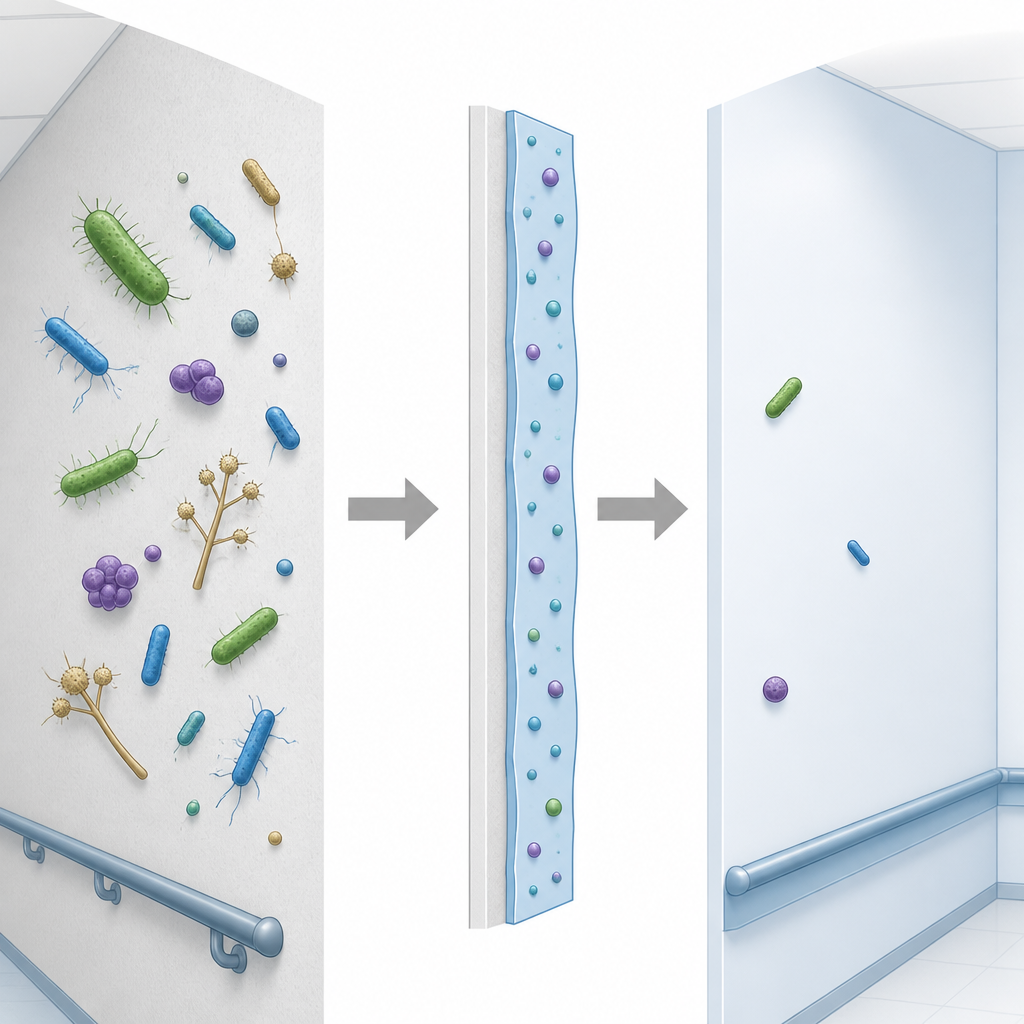
Building germ fighters into paint
The researchers designed special chemical molecules that can grip metal atoms and then mixed them into a standard topcoat paint. These molecules, based on a phosphorus-containing ring, act like tiny carriers that hold copper or cadmium ions in a stable way. First, the team carefully made and tested these compounds in the lab to confirm their structure and stability using widely used tools for studying molecules. Once they were sure the chemistry was correct, they blended a small amount of each additive into commercial paint to see how it would affect both the strength of the coating and its ability to slow or stop microbial growth.
Testing strength and shine
Adding new ingredients to paint can easily ruin its finish or make it fragile, so the team measured standard practical traits such as gloss, hardness, how well the coating sticks to a surface, and how much impact it can withstand. Compared with a commercial paint and a similar formula without any germ-fighting additive, the modified paints came out ahead. The new coatings maintained a bright glossy look, became harder to scratch, clung more firmly to the underlying surface, and resisted impact more effectively. Importantly, these gains came without losing flexibility or resistance to water, suggesting that the additives do not simply make the paint brittle, but instead reinforce it in a balanced way.
Putting microbes to the test
To see how well the new materials challenged real germs, the scientists tested them against several bacteria and fungi that commonly cause problems in healthcare and industrial settings, including strains such as MRSA, Escherichia coli, Acinetobacter baumannii, and the fungi Candida albicans and Aspergillus niger. When used alone, the cadmium-based compound was the clear front runner, creating large clear zones around itself where microbes could not grow, while the copper version showed moderate power and the base molecule without metal had more selective effects. When these same ingredients were locked into the paint film, their activity dropped because the compounds could not spread through the test gel as freely, but the coated films still noticeably slowed or stopped growth of several of the test organisms. 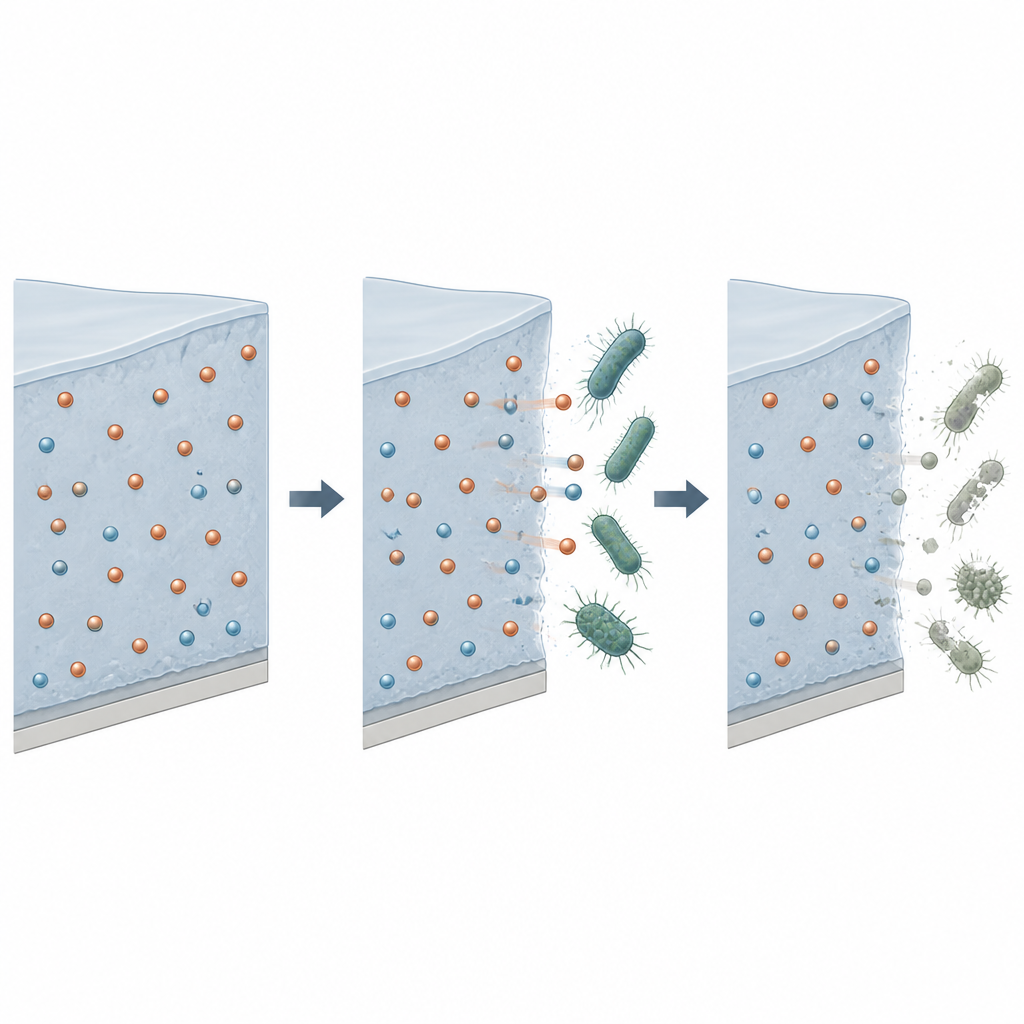
How the protective layer works
The results point to a stepwise picture of how the coatings act in use. Once the painted surface is in place, microbes that land on it encounter a film containing many tiny pockets of metal-bearing molecules. Over time, small amounts of these species move close to the surface, where they can touch nearby cells. The metals are thought to disturb key parts of the microbes, including their outer membranes and enzymes, and may trigger harmful forms of oxygen inside the cells. Because the metal is held in a more fat-loving environment by the carrier molecule, it can more easily cross into the cell and cause damage, making the coated surface less welcoming for bacteria and fungi.
What this means for everyday surfaces
In plain terms, the study shows that it is possible to make paint that is both tougher and less friendly to germs by adding carefully designed metal-based molecules. While the cadmium compound worked best in the lab dishes, all of the tested additives helped the paint keep its shine and strength while adding a measure of antimicrobial protection. Although the germ-fighting effect is lower once the compounds are trapped inside the paint film, the coatings still showed useful activity against some troublesome microbes. This suggests that such formulations could offer a practical way to extend the life of painted surfaces and make them easier to keep hygienic in busy public, industrial, or medical spaces.
Citation: El-Wahab, H.A., El khashab, N.G., Albohy, S.A.H. et al. Antimicrobial activity of topcoat formulation based on synthesized new cyclodiphosph(V)azane derivatives as a biocide for protective coatings. Sci Rep 16, 15466 (2026). https://doi.org/10.1038/s41598-026-52099-1
Keywords: antimicrobial coatings, protective paint, metal complexes, surface protection, bacterial control