Clear Sky Science · en
Synergistic rhizobacteria enhance physio-biochemical resilience and sustain tomato yield under drought stress
Why soil microbes matter for your tomato patch
As heatwaves and water shortages become more common, home gardeners and farmers alike are asking how to keep crops alive and productive with less water. This study looks beneath the soil surface to a living toolkit of friendly bacteria that cluster around plant roots. By working together, these microbes helped tomato plants stay greener, sturdier, and more fruitful even when water was scarce, pointing to a natural way to protect food production in a drier future.
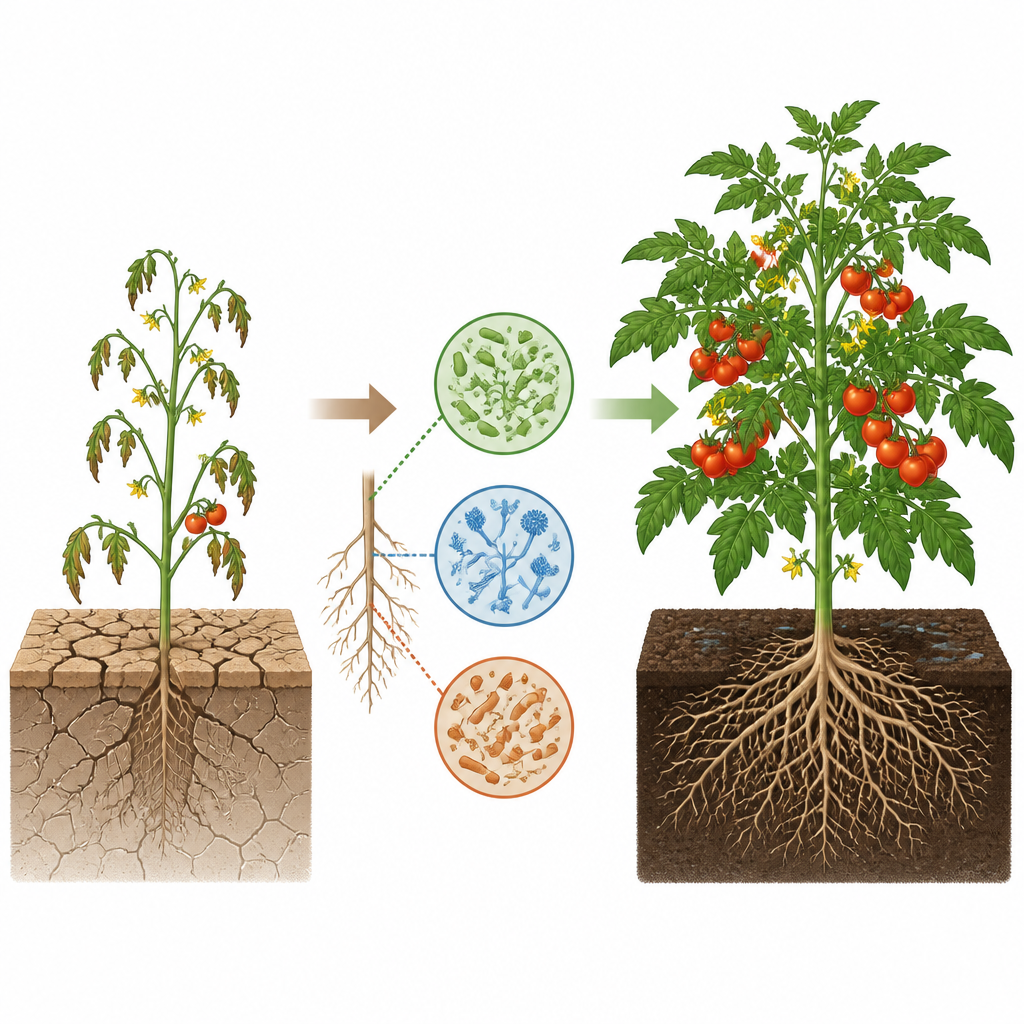
Tomatoes in trouble when water runs low
Tomato plants are valued around the world for their flavor, nutrition, and bright color, but they are highly sensitive to drought. When soil dries out, tomatoes lose water faster than they can replace it. Their leaves wilt, the green pigment that drives photosynthesis breaks down, and cells suffer damage from unstable oxygen byproducts. Roots, which normally explore the soil for water and nutrients, struggle to function in dry, compacted ground. The result is fewer flowers, fewer fruits, and a sharp drop in harvest weight per plant.
Recruiting helpful neighbors around the roots
The researchers tested whether three types of helpful soil bacteria could work better together than alone. These root-friendly microbes naturally live around plant roots and are known for jobs such as supplying nitrogen, releasing bound nutrients, and sending growth signals to plants. Tomato seedlings were grown in pots and either kept well watered or exposed to a short, intense dry spell. Some droughted plants received no microbes, others received a single bacterial strain, and another group received a mix of all three. The team then measured leaf greenness, water content, stress damage, growth, and yield.
Greener leaves, calmer cells, stronger growth
Without microbial help, droughted tomatoes lost much of their leaf water and chlorophyll, and their cell membranes became leaky and damaged. Plants treated with any one bacterial strain did noticeably better, holding more water and keeping more of their green pigment. The mixed group showed the greatest benefit, nearly doubling total chlorophyll compared with droughted plants without microbes and bringing water content close to that of well-watered plants. Inside the leaves, natural protective enzymes became more active, helping to neutralize harmful compounds produced under stress. Levels of cell damage markers dropped by more than half in the mixed treatment, indicating that plant tissues were being shielded from drought’s worst effects.
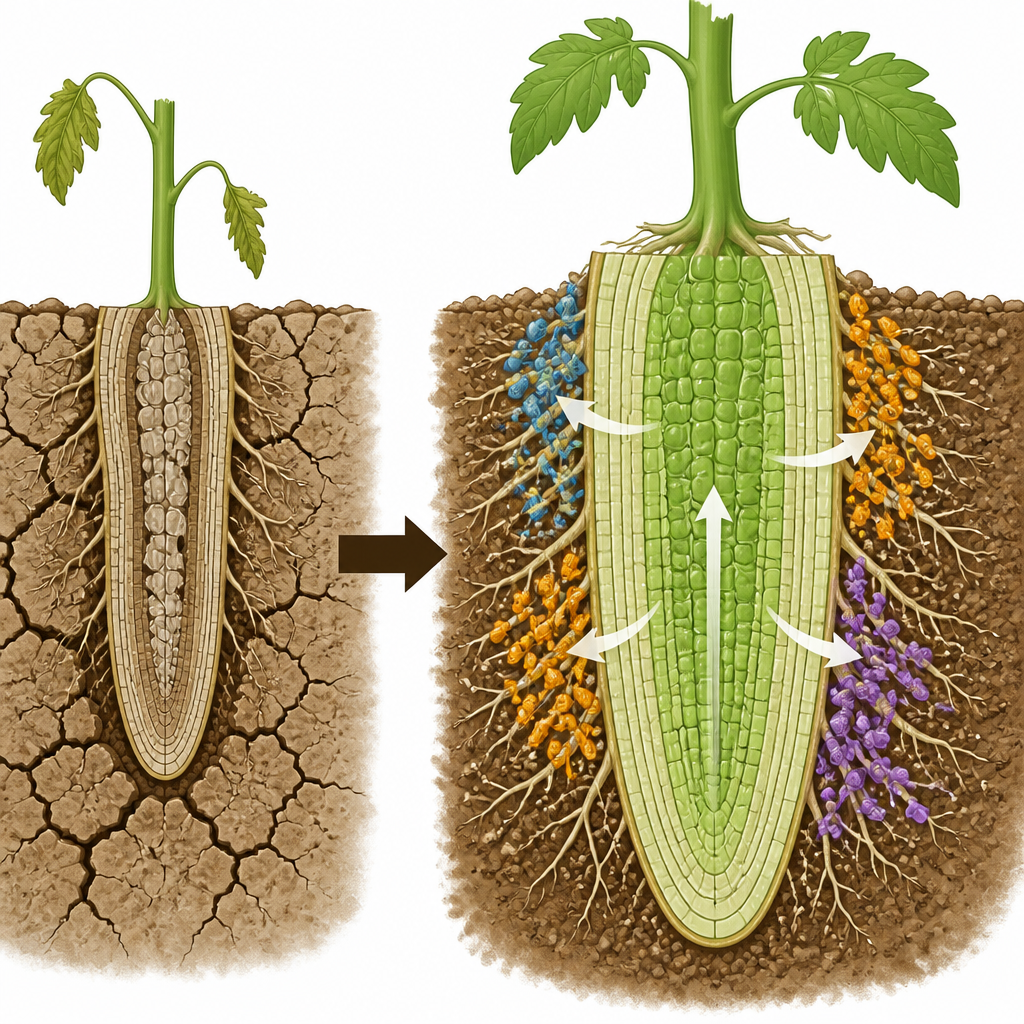
More roots, more fruits, more yield
These internal changes translated into visible gains. Drought cut plant height, shoot weight, and root weight sharply, but microbe-treated plants bounced back. The three-strain mix produced the tallest plants with the heaviest roots and shoots, suggesting a stronger, deeper system for finding and using limited water. While drought alone slashed tomato yield to a small fraction of normal levels, all microbe treatments restored a large share of lost production. The mixed group produced the highest yield per plant, outpacing each single strain and approaching the harvest seen under full watering. Analyses linking many traits together showed that plants which held more water, kept their chlorophyll, and protected their membranes were also the ones that set more fruits and gave better yields.
What this means for future food growing
To a non-specialist, the takeaway is simple: the right community of helpful bacteria at the roots can act like a living support system for tomatoes during dry spells. Instead of relying only on extra irrigation or chemical inputs, growers may be able to coat seeds or roots with selected microbe mixes that help plants stay hydrated, keep their leaves working, and continue filling fruits when water is limited. The study suggests that blends of several compatible bacteria perform better than single strains, offering a nature-based tool to help keep tomato harvests steady in an increasingly water-stressed world.
Citation: Preeti, Rai, P.K., Khanday, D.M. et al. Synergistic rhizobacteria enhance physio-biochemical resilience and sustain tomato yield under drought stress. Sci Rep 16, 14971 (2026). https://doi.org/10.1038/s41598-026-51973-2
Keywords: tomato drought, root microbes, beneficial bacteria, crop resilience, sustainable agriculture