Clear Sky Science · en
Green synthesis of diazo-pyrazole derivatives and their application as functional disperse dyes for dyeing polyester fabric
Why colorful clothes can also protect your health
Most of us think of clothes as a way to stay warm and look good, but fabrics can also shield our skin from sunlight and germs. This study explores new ways to color common polyester fabric so it not only keeps its bright shade after many washes, but also blocks harmful ultraviolet (UV) rays and slows the growth of bacteria and fungi. The researchers focused on using greener lab methods to make these special dyes, hoping to reduce waste and energy while adding protective features to everyday textiles. 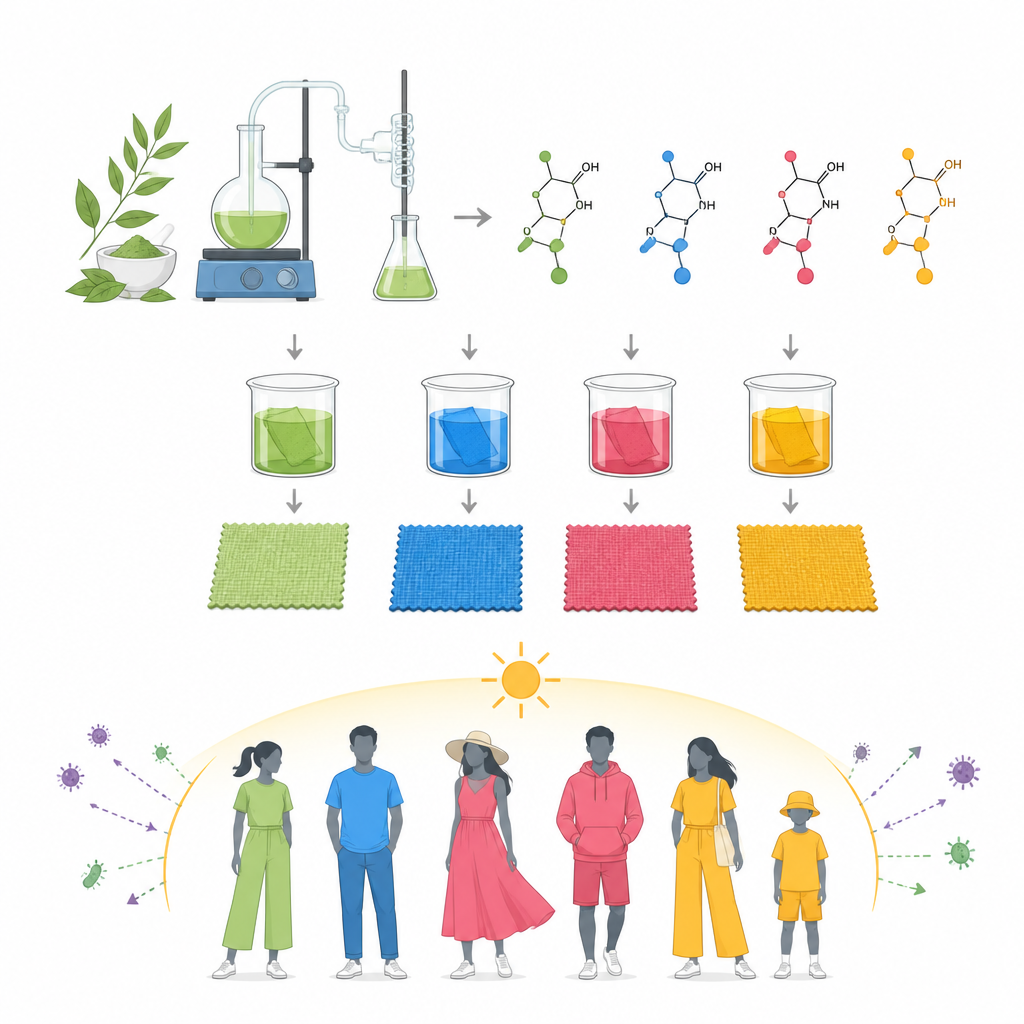
A new kind of color for everyday fabrics
Polyester, often labeled PET, is one of the most widely used fibers in clothing, sportswear and home textiles because it is strong, cheap and easy to recycle. Yet it does not easily take up many common dyes. The team designed a small family of new color molecules that bond well with polyester and are based on a chemical skeleton already known for medical and antimicrobial uses. These molecules belong to the disperse dye class, which is well suited to coloring synthetic fibers under heat and pressure, and they were tailored to give yellow to orange shades that can be used alone or mixed with other colors.
Greener routes from lab bench to dye pot
Instead of relying only on traditional heated flasks and large amounts of solvent, the researchers compared three ways to make their dyes: standard heating, simple mechanical grinding of the ingredients, and microwave heating. The last two are considered green chemistry tools because they can shorten reaction times, cut energy use and greatly reduce or even remove the need for liquid solvents. Using a set of numerical measures for efficiency and waste, they found that microwave heating gave the highest yields of dye in the shortest times, with grinding also performing better than the conventional method. Careful testing with spectroscopy and elemental analysis confirmed that all routes produced the same final dye structures.
Turning plain polyester into protective fabric
The new dyes were then applied to woven polyester using a standard high temperature dye bath similar to that used in industry. After dyeing, the fabrics were cleaned to strip off any loose color from the surface. The team measured how strongly each fabric absorbed light, how the color appeared in a standard color space, and how much the shade changed with different dye amounts. As the dye level increased, the color became deeper and more intense, while still spreading evenly across the cloth. The dyed samples were then put through tests that mimic real life use, including repeated washing, rubbing, sweat and long exposure to light, and they generally held their color well, especially at the lower dye levels where more of the dye was firmly fixed inside the fibers. 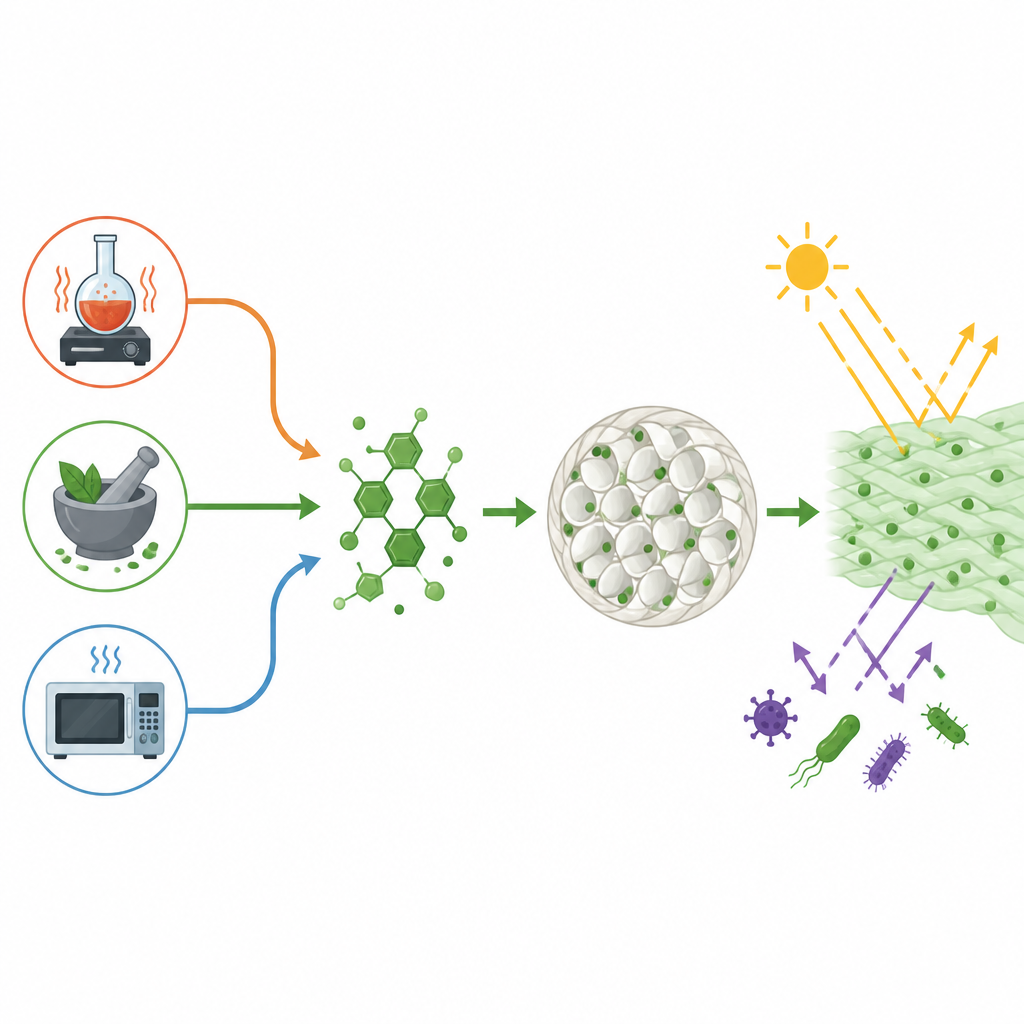
Built in shield against sun and germs
Beyond appearance, the fabrics gained two important protective features. First, when the researchers measured how much UV light passed through the cloth, they found that undyed polyester offered only weak protection, but once colored with the new dyes it reached the highest class of UV protection used in textile standards. Second, tests with common bacteria and a fungus showed that dyed fabrics could reduce the number of living microbes by up to about 97 percent compared with untreated cloth. This added resistance is thought to arise from the combined behavior of different parts of the dye molecules that interfere with microbial growth.
What this means for future clothing
In simple terms, this work shows that it is possible to design colorants for polyester that do three jobs at once: give rich, durable shades, block much of the sun’s UV radiation and curb harmful microbes, all while being produced with cleaner lab techniques. Although more studies are needed, including direct comparisons with existing commercial dyes and closer study of how dye level affects protection, these results point toward everyday garments, upholstery and bedding that quietly add an extra layer of safety for the wearer without changing how the fabrics feel or how they are cared for.
Citation: Kafafy, H., Hussien, A.M., Sayed, G.H. et al. Green synthesis of diazo-pyrazole derivatives and their application as functional disperse dyes for dyeing polyester fabric. Sci Rep 16, 15505 (2026). https://doi.org/10.1038/s41598-026-51883-3
Keywords: polyester fabric, disperse dyes, green chemistry, UV protection, antimicrobial textiles