Clear Sky Science · en
Sustainable high-throughput microwell spectrophotometric methods for avapritinib quality control via charge-transfer complexation
Why this matters for cancer patients and the planet
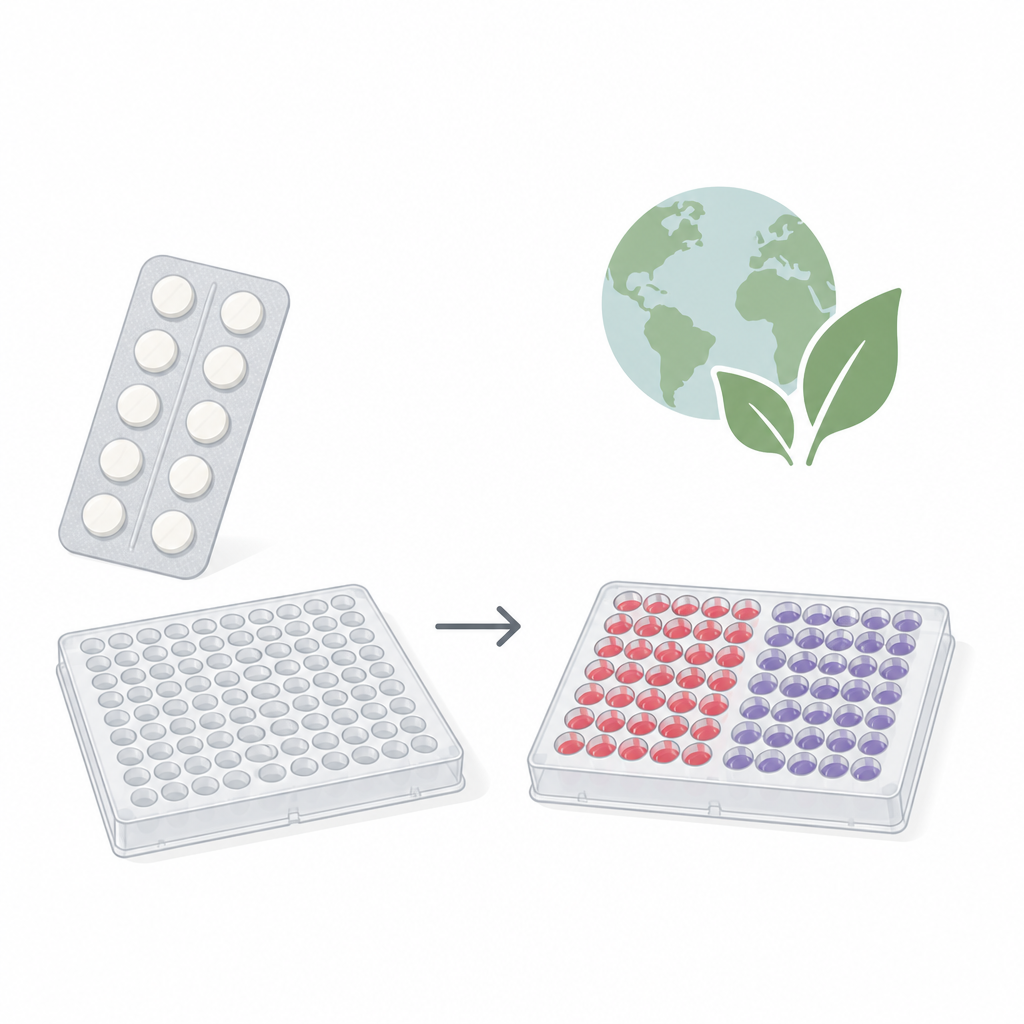
Modern cancer drugs can be life extending but only if every tablet contains the right dose. Checking this quality usually relies on complex, slow tests that use a lot of chemicals and energy. This study introduces two simple, fast, and more environmentally friendly ways to measure the amount of the cancer drug avapritinib in tablets, offering a route to safer medicines with less waste.
A targeted cancer pill that needs careful checking
Avapritinib is a targeted pill used to treat certain hard to manage tumors of the digestive system and a rare blood disorder. It works by blocking faulty enzymes that drive these diseases. Because it is powerful and has a narrow margin between an effective and a harmful dose, manufacturers must check tablet strength very carefully. Existing laboratory tests, based mainly on liquid chromatography and fluorescence, can be highly sensitive but are slow, expensive, and consume large volumes of organic solvents, creating chemical waste that conflicts with green chemistry principles.
A color change in tiny wells
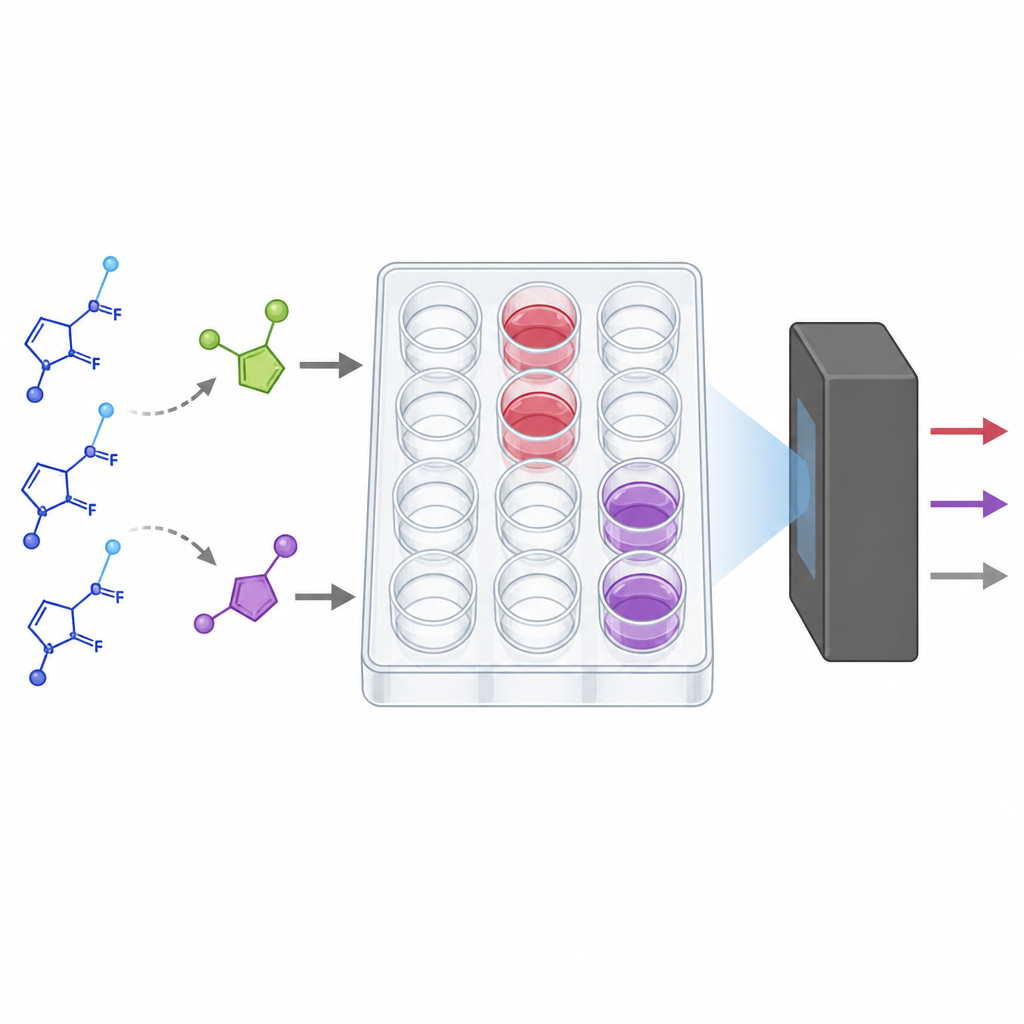
The authors designed two new tests that rely on a simple idea: when avapritinib meets specific partner molecules, the mixture changes color in a predictable way. They used tiny plastic plates containing 96 miniature wells, each holding only 200 microliters of liquid. In each well, avapritinib acts as an electron donor while one of two partner molecules, known as DDQ and chloranilic acid, acts as an electron acceptor. This controlled exchange of electrons forms a so called charge transfer complex that turns the clear solution red with DDQ or violet with chloranilic acid. A standard plate reader then measures how much light the colored solutions absorb at specific visible wavelengths, which reveals how much drug is present.
How the new tests were tuned and proven
To make these color based tests reliable, the team systematically adjusted conditions such as the amount of reagent and the reaction time in the microwells. They found that a low reagent strength and a reaction time of just a few minutes were enough to give a strong, stable color that remained steady for at least half an hour. They confirmed that each colored complex contains avapritinib and its partner in a one to one ratio, which is essential for accurate measurement. Under these conditions, both methods showed a straight line relationship between color intensity and drug amount over a wide range, with very small measurement errors. When tested repeatedly on different days and at different concentrations, the methods produced nearly identical results, demonstrating high precision and accuracy that meet international guidelines for analytical methods.
Peeking inside the molecular handshake
The researchers also used modern computer calculations to understand why these color changes are so robust. By modeling the shapes and charge distributions of avapritinib, DDQ, and chloranilic acid, they showed that avapritinib’s electron rich ring system naturally aligns with electron hungry regions on the partner molecules. The simulations revealed strong stacking between flat ring systems and additional hydrogen bonds that hold the partners together. These interactions are stronger with DDQ than with chloranilic acid, matching the experimental observation that the DDQ based test is slightly more sensitive. This molecular level picture suggests that computer modeling can help choose the best reagents when designing future analytical methods for other drugs.
Speed, sustainability, and real tablet testing
Because each microwell uses only a tiny volume and a standard plate reader can scan many wells at once, the new setup can process about 500 samples per hour, far outpacing conventional chromatographic methods that handle only a handful. The team made test tablets that mimic the commercial avapritinib product and showed that common pill ingredients do not interfere with the color based measurements. They then examined the broader environmental and practical impact of the methods using ten different scoring tools that consider factors such as chemical hazards, energy use, waste, cost, and ease of daily operation. Across these independent metrics, the microwell tests scored very highly, with one composite measure, the so called White Index, reaching 94.2 percent, indicating a rare balance of performance, practicality, and green credentials.
What this means for everyday drug quality
In simple terms, this work offers quality control laboratories two new ways to check a critical cancer medicine that are faster, cheaper, and cleaner than most existing options. By shrinking the test to tiny wells and harnessing a clear color change, the methods reduce chemical use and waste while still giving precise answers about tablet strength. If adopted widely, such approaches could help ensure consistent dosing for avapritinib and similar targeted drugs, while also moving pharmaceutical testing in a more sustainable direction that better aligns with global health and environmental goals.
Citation: Ali, A.M., Alsalhi, M.S., Othman, W.M. et al. Sustainable high-throughput microwell spectrophotometric methods for avapritinib quality control via charge-transfer complexation. Sci Rep 16, 15874 (2026). https://doi.org/10.1038/s41598-026-51872-6
Keywords: avapritinib, microwell spectrophotometry, green analytical chemistry, pharmaceutical quality control, charge transfer complex