Clear Sky Science · en
Attenuation of LPS-induced inflammatory responses in J774A.1 macrophages by phenylpropanoids and ursane triterpenes from Lavandula coronopifolia Poir.
Why this lavender study matters
Many people know lavender for its scent in soaps and oils, but this study looks at how a wild lavender species might help our bodies fight long lasting inflammation and even certain cancer cells. By zooming in on specific non fragrant chemicals inside the plant, the researchers show how a few of these natural molecules can calm overactive immune cells in the lab and selectively harm lung cancer cells while sparing healthy cells. Their work hints at future medicines inspired by a familiar herb. 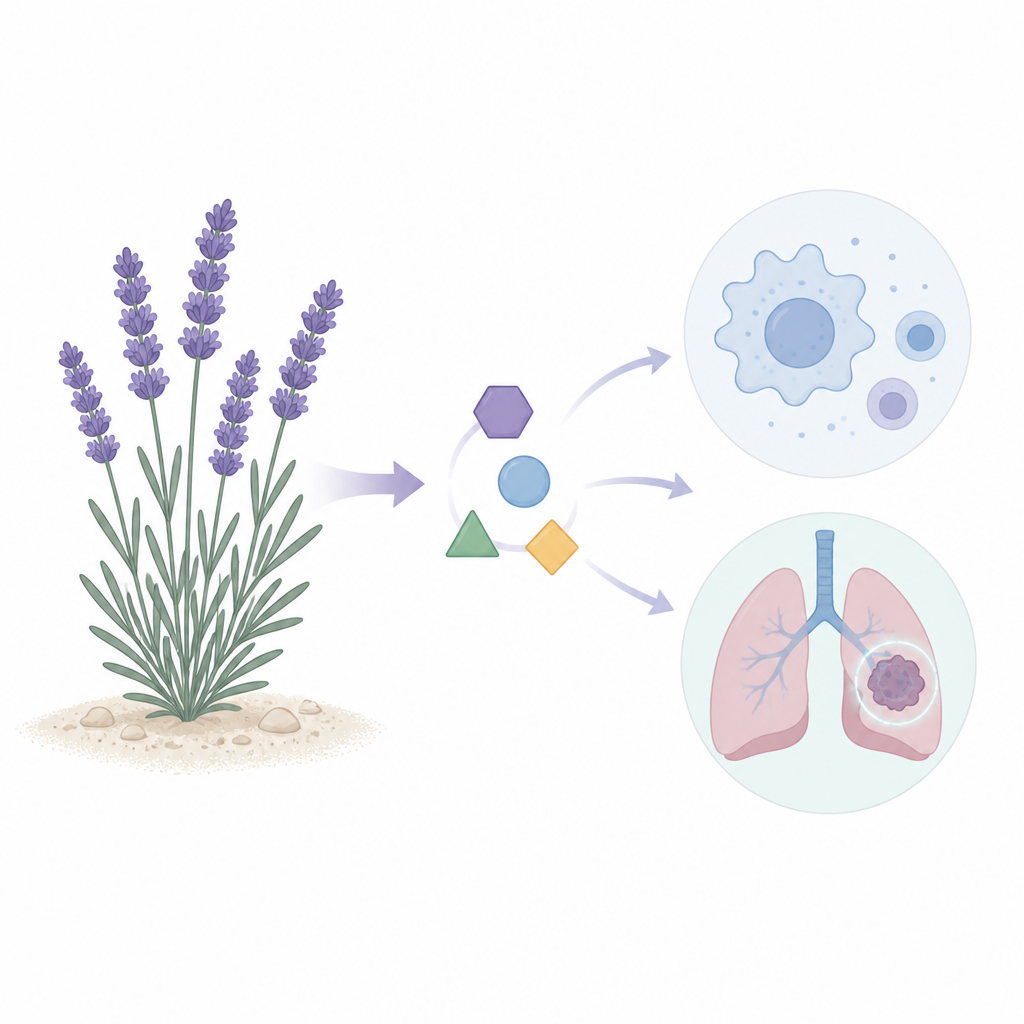
A closer look inside a desert lavender
The team focused on Lavandula coronopifolia, a shrub like lavender that grows in dry, sandy regions. While earlier work centered on its essential oils, which easily evaporate and carry the scent, this study turned to the heavier, non volatile components that stay in plant extracts. From the flowering tops, the scientists isolated seven distinct compounds, including two related to well known plant antioxidants and five more complex molecules called triterpenes. Some of these had been found in this plant before, but three of the triterpenes were identified in this species for the first time, expanding the chemical picture of this desert lavender.
Testing the fight against lung cancer cells
To see whether these plant compounds could affect cancer, the researchers tested them on human lung cancer cells (A549) and compared the results with non cancerous human kidney cells (HEK293T). Only one molecule, a triterpene named compound 5 in the paper, stood out. It curbed the growth of lung cancer cells at micromolar levels, a range often used as an early benchmark in lab studies, yet showed no measurable harm to the normal kidney cells at the highest tested dose. Interestingly, close chemical cousins of this molecule did not show the same selective effect, suggesting that tiny changes in its structure, such as the position of a double bond on one ring of the molecule, are critical for its anticancer action.
Quieting overactive immune cells
Chronic inflammation arises when immune cells stay switched on for too long, helping drive diseases from heart problems to diabetes and some cancers. The researchers used a mouse immune cell line that behaves like macrophages, the body’s cleanup and defense cells. They triggered these cells with a bacterial component called LPS that strongly boosts inflammation and cell movement. Using a scratch wound test on a cell layer, they watched how quickly the cells crawled to close a gap. In the presence of LPS alone, the gap nearly disappeared within a day. When three lavender compounds, labeled 2, 3, and 6, were added, the cells moved much less, and the gap stayed more open, similar to what was seen with the steroid drug dexamethasone. 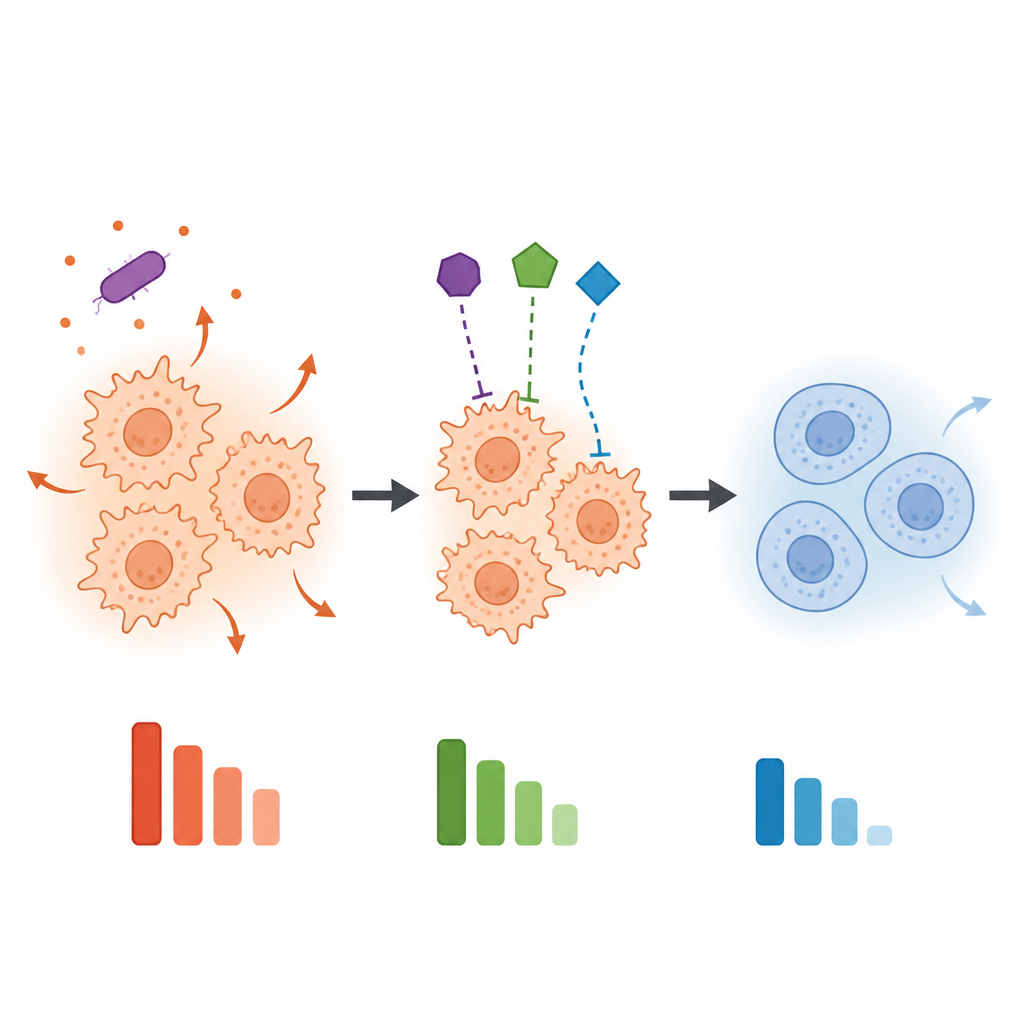
Shaping cells and turning down inflammatory signals
The team also examined the appearance and internal signals of the macrophage like cells. LPS made the cells slightly change shape and boosted molecules linked to inflammation, including the enzyme iNOS, which helps produce nitric oxide, and the signaling protein IL 6. When compounds 2, 3, and 6 were present, the cells became more settled and spindle shaped, resembling those treated with dexamethasone. Genetic tests showed that all three compounds lowered the overproduction of iNOS and IL 6 back toward levels seen in unstimulated cells. Although the study did not directly probe all of the signaling routes involved, the pattern fits with known pathways that link these markers to inflammatory switches inside cells.
What this means for future therapies
For a general reader, the key message is that a non fragrant fraction of a wild lavender holds molecules that can both calm overactive immune cells and selectively slow lung cancer cells in lab dishes. One specific compound looks like a candidate for further lung cancer studies, while three others show promise as templates for anti inflammatory drugs that might one day help control chronic inflammation with fewer side effects. The work also shows how slight tweaks in natural molecule structures can make the difference between harming healthy cells and protecting them, guiding chemists as they design safer, plant inspired treatments.
Citation: Elsbaey, M., Elattar, E., Mourenza, Á. et al. Attenuation of LPS-induced inflammatory responses in J774A.1 macrophages by phenylpropanoids and ursane triterpenes from Lavandula coronopifolia Poir.. Sci Rep 16, 16021 (2026). https://doi.org/10.1038/s41598-026-51849-5
Keywords: lavender, chronic inflammation, macrophages, lung cancer cells, natural products