Clear Sky Science · en
Comparative analysis of volatile composition and anticholinesterase activity of Egyptian Hedychium coronarium and Alpinia zerumbet using chemometric assessment of extraction techniques
Why these fragrant plants matter
Many people know ginger family plants for their spicy scent in kitchens and gardens, but their aromas also hide chemicals that may help protect the brain and fight damage caused by oxygen based "rust" in our cells. This study looks at two such plants grown in Egypt, white ginger lily (Hedychium coronarium) and shell ginger (Alpinia zerumbet), to see what exactly is in their essential oils and how the way we extract those oils changes their contents and potential benefits for conditions like Alzheimer’s disease.
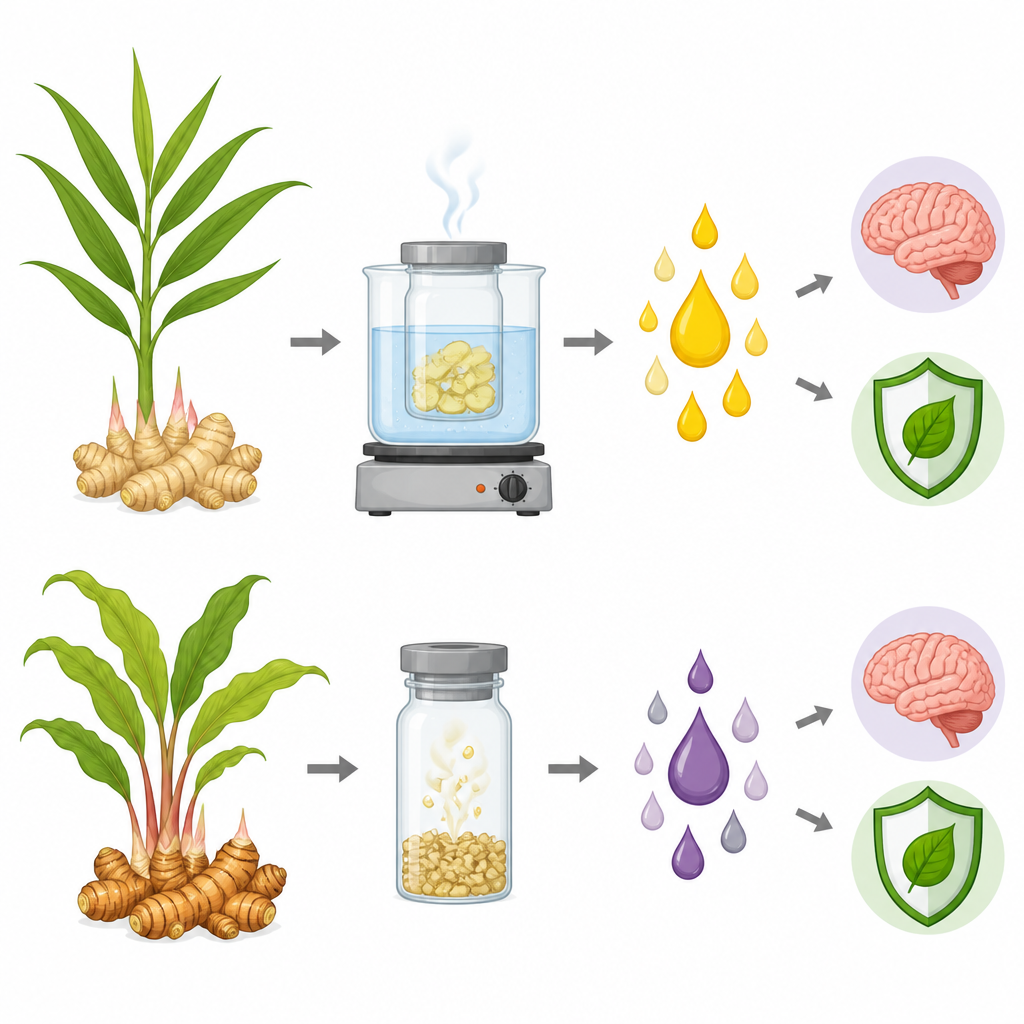
Smelling the difference in plant perfumes
The researchers focused on the leaves and underground stems, or rhizomes, of both plants because these parts are especially rich in volatile oils. They used two common techniques to capture the plant aromas. One, called hydrodistillation, boils plant material in water and collects the vapors. The other, a headspace method, gently traps the natural scent that the fresh plant gives off without boiling it. The collected vapors were then separated and identified using a sensitive instrument that can tell different molecules apart by how quickly they travel through a column and by their mass fingerprints.
How extraction shapes what we find
The detailed chemical analysis showed that both plants have complex mixtures of small scent molecules, many from the terpene family. However, the recipe of these mixtures depended strongly on how the oil was collected. In white ginger lily leaves, the boiled oil was rich in heavier compounds such as caryophyllene and its oxygenated cousin, while the gentle headspace method favored lighter molecules like beta pinene and alpha pinene. In the rhizomes of both species, a cooling, eucalyptus like component called 1,8 cineole dominated, but its exact share shifted between boiling and headspace sampling. Shell ginger oils were more stable between methods, while white ginger lily changed more, showing that heat and water contact can reshape its natural scent profile.
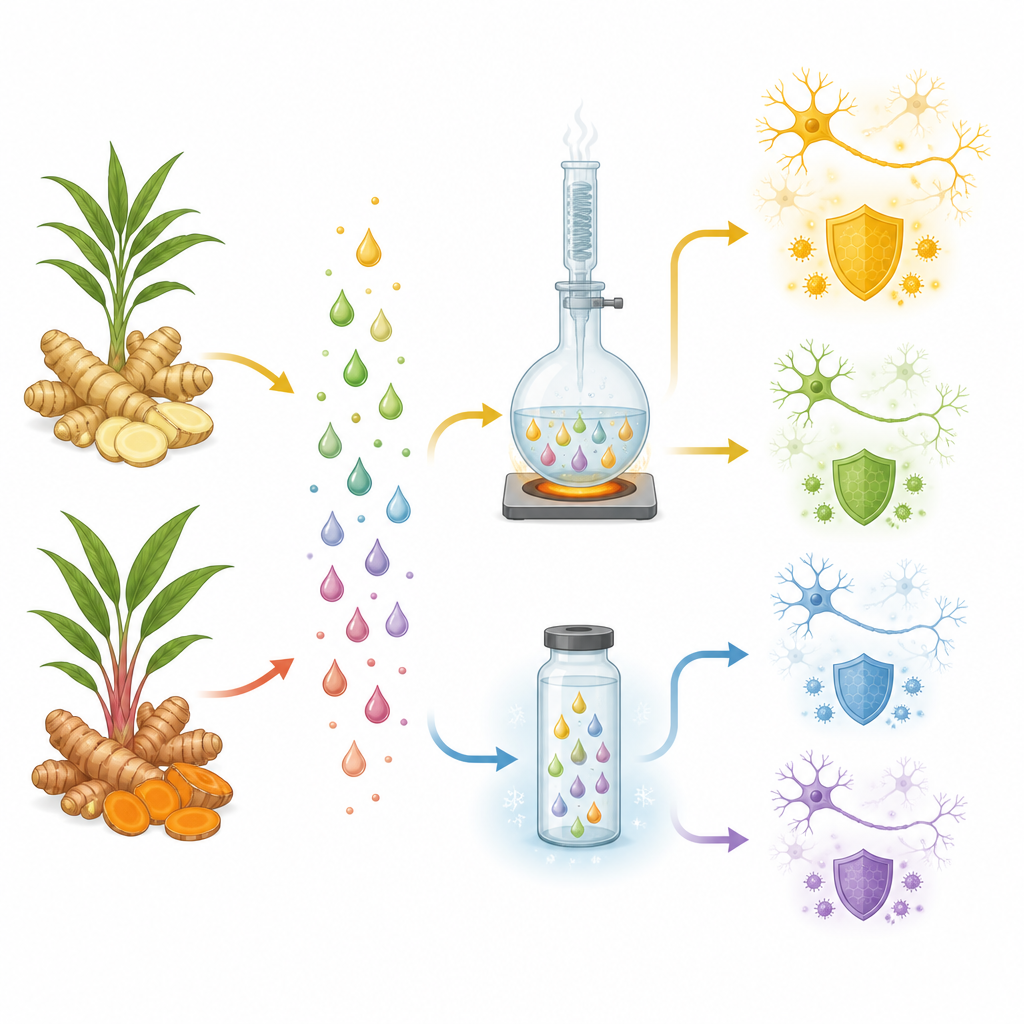
Finding patterns in complex mixtures
To make sense of dozens of compounds at once, the team used statistical tools that group samples based on overall similarity rather than looking at one molecule at a time. These methods, known as principal component analysis and cluster analysis, separated the oils into clear clusters. Oils from headspace and from boiling sorted into distinct groups, especially for white ginger lily, confirming that extraction method is a major driver of what we think a plant’s aroma "is." In contrast, shell ginger samples from different methods tended to cluster together, suggesting that its chemistry is more robust and less altered by heating.
Testing for brain related and antioxidant effects
Beyond listing chemicals, the scientists asked whether these oils could slow the breakdown of acetylcholine, a messenger molecule important for memory that is reduced in Alzheimer’s disease. They also tested how well the oils could neutralize reactive oxygen species, unstable molecules that can damage cells. Shell ginger rhizome oil showed the strongest ability to block the enzyme that destroys acetylcholine, with activity on the same scale as some existing drugs, though still weaker. White ginger lily rhizome oil, in contrast, stood out for its capacity to soak up oxygen radicals, performing slightly better than the standard antioxidant quercetin in their test. Leaf oils from both plants showed intermediate effects.
What this means for everyday health
Overall, the study shows that the way we capture plant aromas can dramatically change both the chemical picture and our view of their potential health roles. For these two ginger relatives, headspace sampling gave a closer look at the true scent released by living tissues, while boiling tended to favor heavier, sometimes more transformed components. The findings point to shell ginger rhizomes as promising sources of natural compounds that slow acetylcholine breakdown, and to white ginger lily, especially its rhizomes and leaves, as strong natural antioxidants. While this work was done in laboratory tests and does not yet translate into treatments, it supports further research into these fragrant oils as gentle helpers that might, one day, complement existing approaches to protecting memory and limiting oxidative damage in the brain.
Citation: Shahat, E.A., Ayoub, I.M., Bakr, R.O. et al. Comparative analysis of volatile composition and anticholinesterase activity of Egyptian Hedychium coronarium and Alpinia zerumbet using chemometric assessment of extraction techniques. Sci Rep 16, 15209 (2026). https://doi.org/10.1038/s41598-026-51750-1
Keywords: essential oils, Hedychium coronarium, Alpinia zerumbet, anticholinesterase, antioxidant