Clear Sky Science · en
Profiling metabolites of Ficus natalensis hochst. fruit by UPLC-MS/MS and evaluation of anti-inflammatory activity
Why this fig matters for everyday health
Many people turn to plants for gentler ways to support their health, especially when it comes to long lasting aches and inflammatory conditions. This study looks at the fruit of the Natal fig, a tree common in Africa and cultivated in Egypt, to ask a simple question with modern tools: what is inside these fruits, and could their natural ingredients help calm inflammation in the body?
Peeking inside a medicinal fig
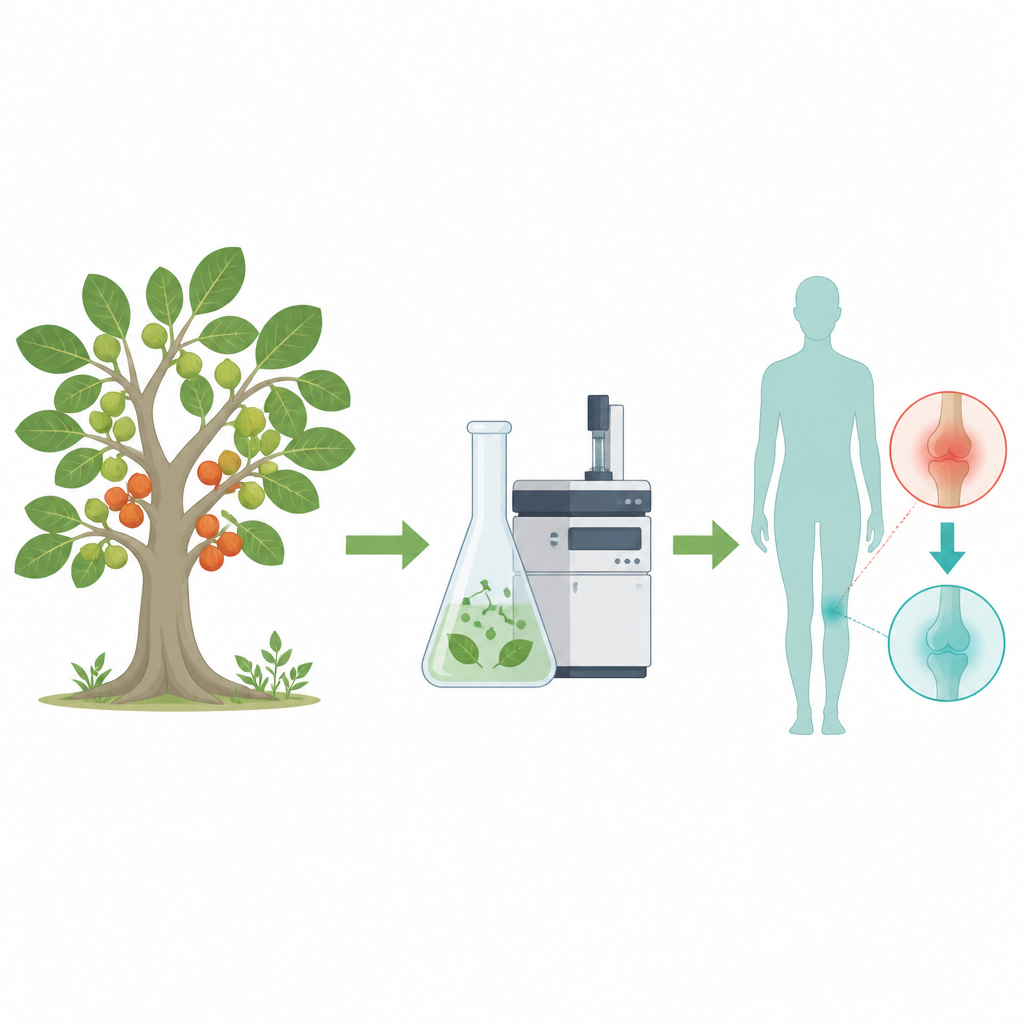
To explore the Natal fig fruit, the researchers did not rely on taste or traditional use alone. They used a powerful form of chemical fingerprinting that separates and weighs tiny molecules in a complex mixture. This allowed them to map out, in great detail, the natural cocktail of substances present in the fruit extract. The work turns what was once a traditional remedy into a carefully cataloged collection of candidate health promoting compounds.
A rich mix of plant chemicals
The team detected 160 distinct compounds in the fruit extract, spanning many families of plant chemicals. These included phenolics and flavonoids, which are often linked to antioxidant and anti inflammatory effects, along with organic acids that shape fruit flavor, fatty acids that can influence heart and immune health, and larger molecules such as terpenoids and plant sterols. Well known substances like gallic acid, ellagic acid, and various quercetin based molecules appeared alongside less familiar but related compounds. Together, this varied mix suggests the Natal fig fruit is more than simple sugar and fiber; it is a dense package of bioactive ingredients that may act in concert.
Connecting fig chemistry to inflammation
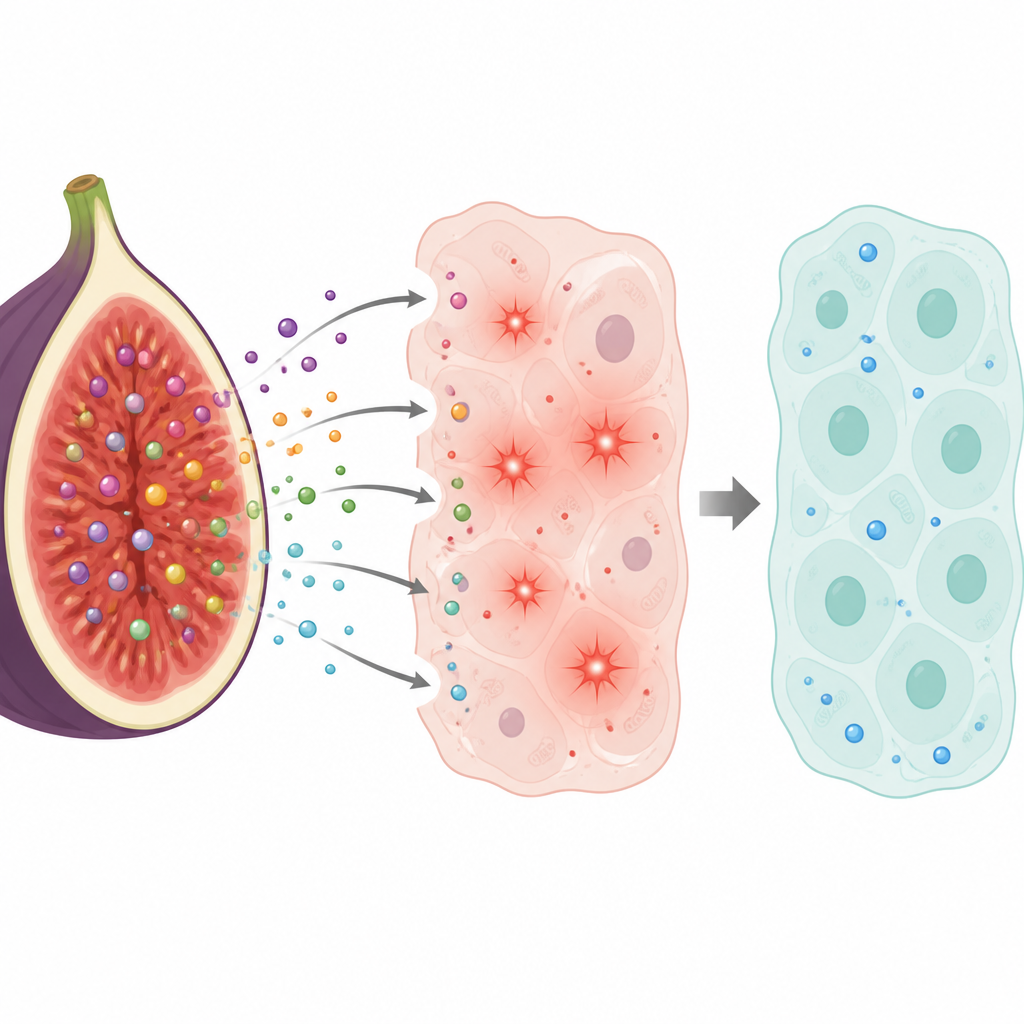
Finding many interesting compounds is not enough, so the scientists also tested whether the fruit extract could affect a key chemical signal involved in inflammation. They measured how well the extract could curb the production of nitric oxide, a small gas molecule that, when overproduced, contributes to tissue damage and chronic inflammatory diseases. In a cell free test, the methanolic fruit extract reduced nitric oxide levels with a measurable strength, although it was less potent than resveratrol, a well studied plant compound used here as a comparison. The researchers point out that several identified ingredients, such as gallic acid, ellagic acid, betulinic acid, and quercetin derivatives, are already known from other studies to reduce oxidative stress and damp down inflammatory pathways.
What this means for food and folk medicine
The findings support the traditional use of Ficus species for complaints linked to inflammation and pain, while adding modern detail about which molecules might be involved. The presence of omega like fatty acids, antioxidant rich phenolics, and bioactive terpenoids and sterols hints that eating or formulating products from Natal fig fruit could offer multiple small benefits that add up, rather than relying on a single miracle ingredient. At the same time, the authors stress that their chemical identifications are tentative, based on comparison with existing data, and that the anti inflammatory tests were limited to one model system.
Next steps before it reaches your plate
For general readers, the key takeaway is that Natal fig fruit appears to be a chemically rich source of natural compounds that can help rein in molecules linked to inflammation. However, this does not yet translate into a proven treatment. The study calls for further work to confirm the exact structures and amounts of the compounds, to test other biological activities such as antioxidant and antimicrobial effects, and to move from simple laboratory assays toward animal and human studies. Only then can scientists say with confidence how Natal fig fruit might fit into evidence based strategies for managing inflammation through diet or plant based supplements.
Citation: Shawky, E.M., Hamdy, R. & Baky, M.H. Profiling metabolites of Ficus natalensis hochst. fruit by UPLC-MS/MS and evaluation of anti-inflammatory activity. Sci Rep 16, 15041 (2026). https://doi.org/10.1038/s41598-026-51688-4
Keywords: Ficus natalensis, plant metabolites, anti inflammatory activity, phenolic compounds, medicinal figs