Clear Sky Science · en
Antibacterial and anticancer properties of Streptomyces microflavus BA2 isolated from brackish waters
Hidden helpers in salty waters
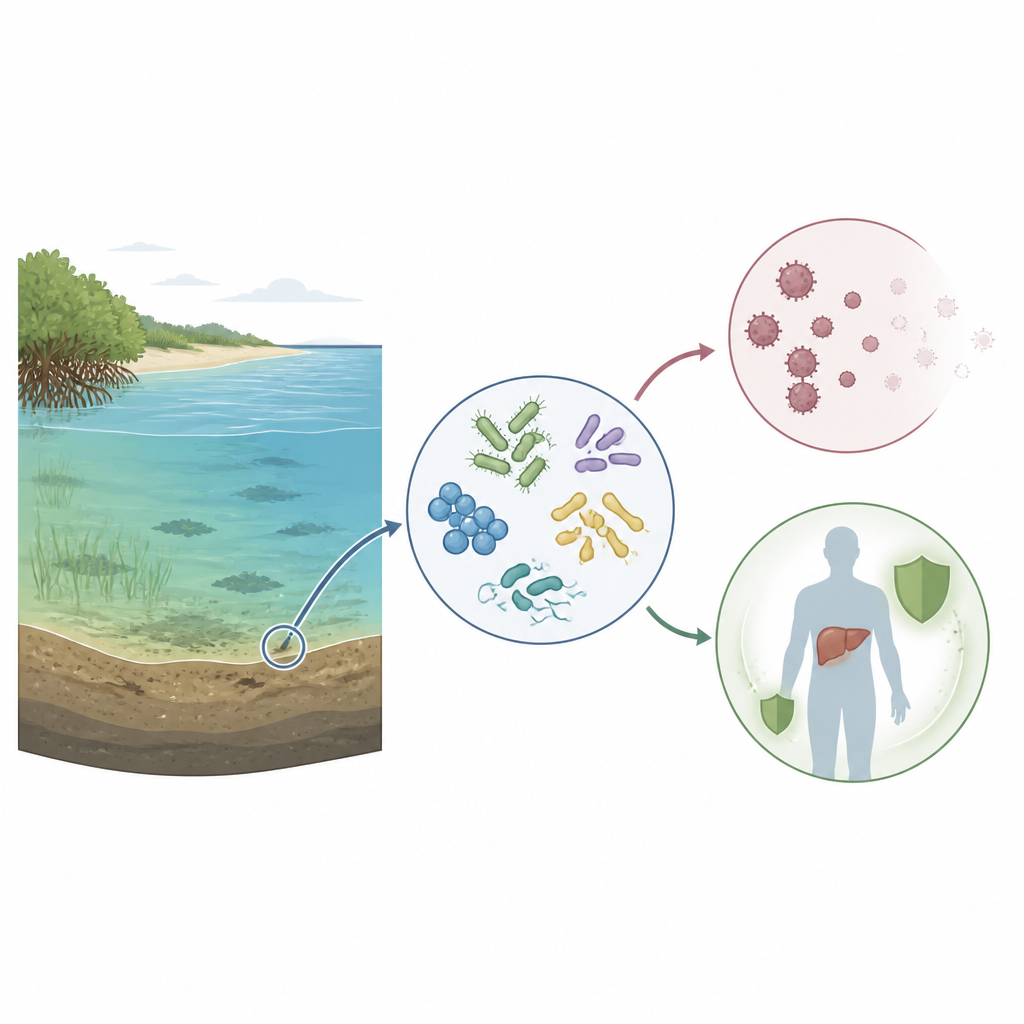
Antibiotic resistant infections and cancer are two health problems that touch many families. This study explores an unlikely ally in this fight tiny bacteria living in the mix of fresh and salty water in an Egyptian lake. By examining what these microbes make, the researchers looked for natural substances that can slow harmful germs, affect cancer cells, and still be reasonably gentle on normal human cells.
A special microbe from a quiet lake
The team collected muddy sediment from Lake Burullus, a brackish lake on Egypt's northern coast where river water meets the sea. In this stressful mix of changing salt levels and nutrients, microbes have evolved unusual survival tricks. The scientists isolated one strain with a powdery, white growth and dark pigment and identified it genetically as Streptomyces microflavus BA2, a relative of well known antibiotic producers. Careful comparison of its appearance and DNA confirmed it matched a known species, but its chemical output and behavior marked it as a distinct strain adapted to this harsh habitat.
Fighting dangerous bacteria in the lab
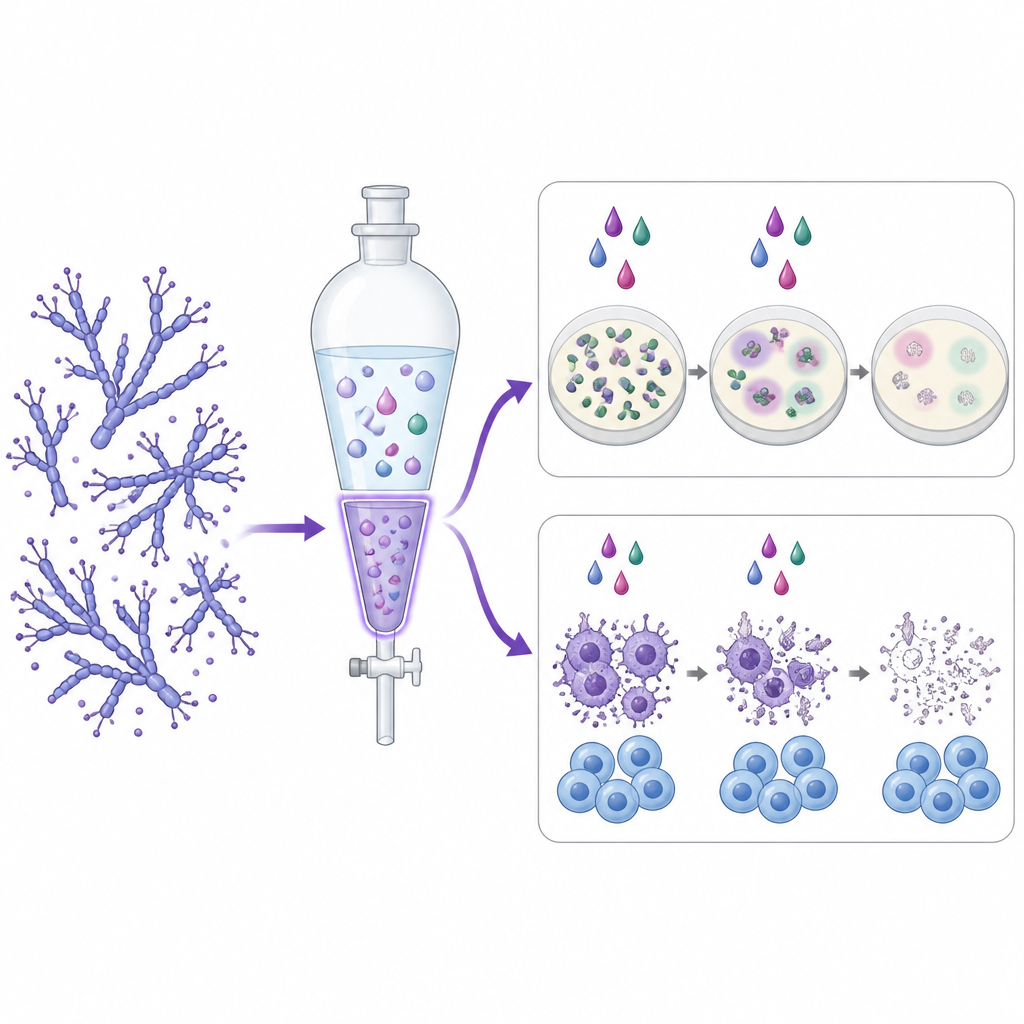
The researchers grew large batches of this microbe in liquid food and tested the filtered broth against five troublesome human pathogens, including Staphylococcus aureus and Escherichia coli. The raw liquid strongly blocked all of them, forming large clear zones where the pathogens could not grow. When they split the broth with different solvents, the part that moved into water after mixing with diethyl ether showed the strongest effect, sometimes working better, at tiny doses, than the common antibiotic ampicillin. This suggests that the broth contains several cooperating compounds that together hit a broad range of bacteria, an encouraging sign for tackling multidrug resistant strains.
Touching cancer and healthy cells
Because some natural antibiotics also affect tumor cells, the team tested the most active extract on human liver cancer cells in culture. At higher concentrations the cancer cells died in a clear dose dependent pattern, giving what researchers call moderate antitumor activity. The same extract and its protein portion were then tested on normal human lung cells. Here the cells survived at similar or higher doses, meaning the extract was less harsh on healthy tissue than on the tumor line. While this level of activity is far weaker than standard chemotherapy drugs, it hints that inside the crude mixture may be ingredients that could be refined into more selective anticancer agents.
What is in the microbial cocktail
To peek inside the extract, the scientists used a tool called gas chromatography mass spectrometry, which separates and weighs molecules. They detected seven main compounds, many of them fatty acids and related molecules already known from other studies to have antibacterial or anticancer effects. Two, forms of hexadecanoic acid and oleic acid, were especially abundant. The mix also contained phenolic compounds, a class often linked to antioxidant and protective effects. Together, this blend of fatty and aromatic molecules likely explains why the extract can slow bacteria, modestly damage cancer cells, and show moderate ability to mop up harmful free radicals.
Why this tiny strain matters
In simple terms, the study shows that a microbe from a little studied, half salty lake can make a natural cocktail that slows dangerous germs and nudges cancer cells toward death while being less damaging to normal cells. Although the extract is not strong enough as a drug on its own, it opens the door to finding and purifying its most active ingredients. For a world searching for new ways to handle resistant infections and cancer, this humble strain from brackish mud highlights how unusual environments can still surprise us with new chemical tools.
Citation: Atallah, B.M., El-domany, R., Agwa, H.E. et al. Antibacterial and anticancer properties of Streptomyces microflavus BA2 isolated from brackish waters. Sci Rep 16, 15737 (2026). https://doi.org/10.1038/s41598-026-51609-5
Keywords: antibiotic resistance, brackish water bacteria, Streptomyces microflavus, natural antibacterial compounds, anticancer metabolites