Clear Sky Science · en
Design, synthesis and biological evaluation of novel chalcone-derived thioxopyridine and pyrazolopyridine compounds as antimicrobial agents
Why new germ fighters matter
Antibiotic resistance is making many once reliable medicines less effective, so scientists are racing to design fresh molecules that can slow or stop harmful microbes. This study explores a family of lab made compounds inspired by plant based chemicals, testing whether careful tweaks to their structure can turn them into useful new weapons against bacteria and fungi that threaten human health.
Building blocks from a plant inspired idea
At the heart of this work is a simple framework called a chalcone, a type of molecule that appears in many natural products and is known to affect microbes, inflammation, and even cancer cells. The researchers started from this scaffold and stitched on additional ring shaped fragments rich in nitrogen and sulfur atoms. These extra rings, called pyridine and pyrazole rings, are common in modern medicines and often help a drug slip into cells or latch onto key proteins. By combining these elements in new ways, the team created a small library of related compounds to test.
From basic chemicals to a small library of candidates
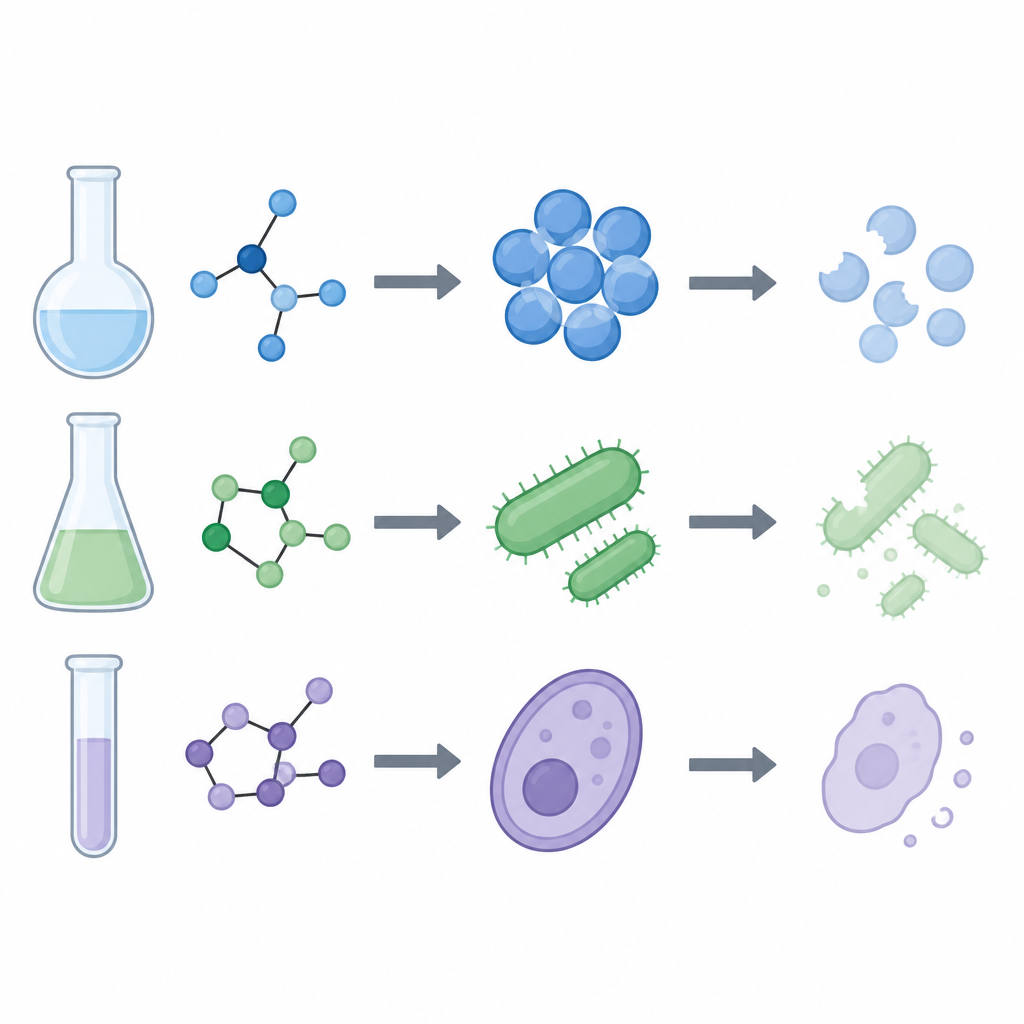
Using standard organic chemistry techniques, the team first prepared an intermediate compound that carries both sulfur and a reactive cyano group, making it a versatile building block. They then reacted this piece with a chalcone containing a furan ring and a methoxy substituted benzene ring, gradually shaping it into more complex structures. Through a series of steps, including ring closing reactions and small substitutions on sulfur and nitrogen, they obtained several distinct molecules that shared a common core but differed at a few critical positions. Each product was carefully checked using infrared spectroscopy, nuclear magnetic resonance, and mass spectrometry to confirm that the atoms were arranged as intended.
Putting the new molecules to the test
Once the compounds were in hand, the researchers asked how well they could slow the growth of selected microbes in the lab. They tested them against two common bacteria, Staphylococcus aureus representing Gram positive bacteria and Escherichia coli representing Gram negative bacteria, as well as the yeast Candida albicans, a frequent cause of fungal infections. In a well diffusion test, the compounds were placed in small holes in an agar plate seeded with microbes, and the team measured the clear zones where growth was blocked. Several of the molecules, particularly those labeled 3, 6, 11 and 14, produced noticeable zones of inhibition, indicating meaningful antibacterial and antifungal effects, especially at higher concentrations.
How structure shapes strength
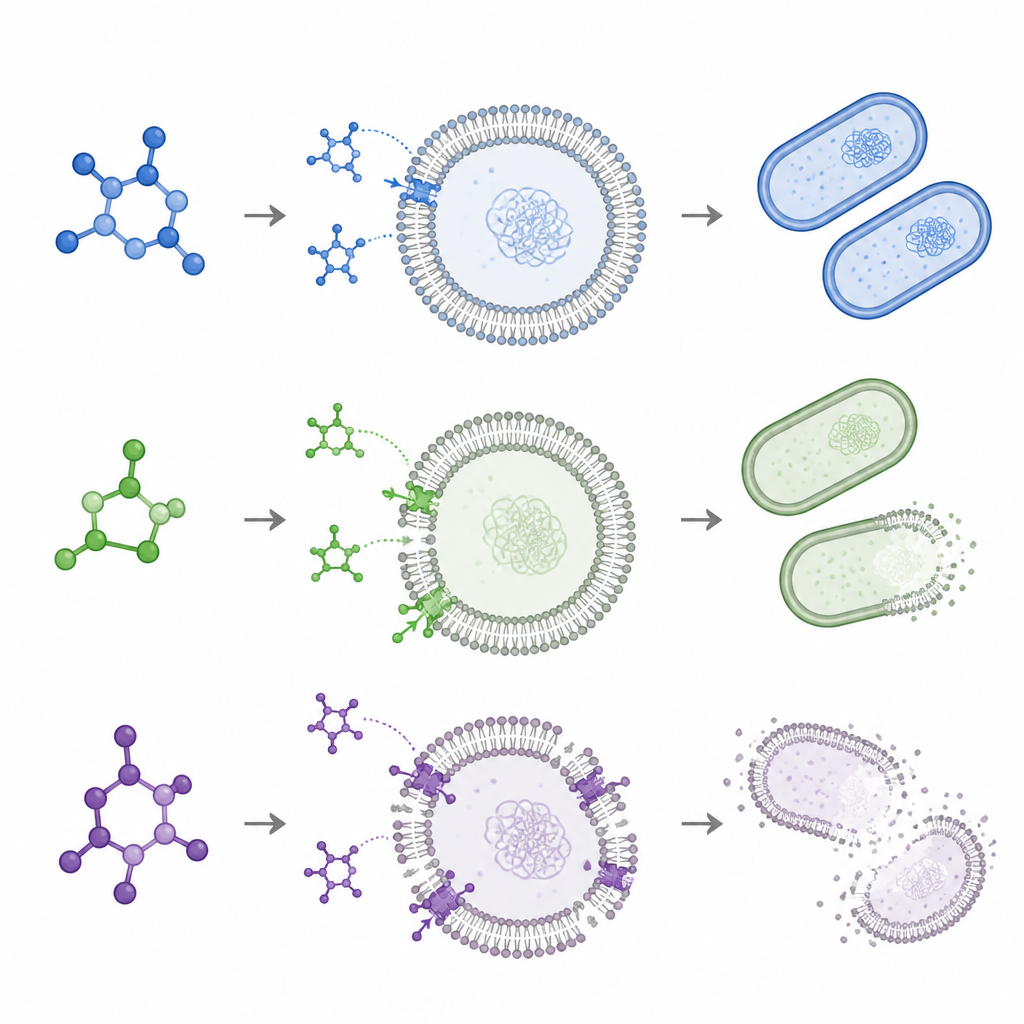
By comparing similar molecules with slightly different attachments, the scientists could see which features were most important for activity. Compounds that kept both a sulfur rich “thioxo” group and a cyano group on the pyridine ring tended to show better antimicrobial effects. These features make the molecule more electron poor, which may help it interact with microbial targets or pass through cell membranes. When the sulfur group was replaced by a methylthio or hydrazinyl group, as in two of the derivatives, the activity largely disappeared. A fused ring system linking pyridine and pyrazole restored some activity against E. coli, suggesting that the shape and rigidity of the ring system also matter for how these molecules fit into microbial structures.
What the findings mean going forward
For lay readers, the key message is that modest changes in the shape and decoration of small molecules can dramatically alter how they affect germs. In this study, a handful of newly designed compounds showed moderate ability to inhibit bacteria and fungi, although they were still weaker than standard drugs such as levofloxacin, clarithromycin, and amphotericin B. The work does not deliver a ready to use medicine, but it maps out which parts of the molecular design help or hurt antimicrobial power. That knowledge gives chemists a clearer recipe for crafting the next generation of candidates that may one day help tackle resistant infections.
Citation: Algaber, G., Shyamala, P., Dammag, Z. et al. Design, synthesis and biological evaluation of novel chalcone-derived thioxopyridine and pyrazolopyridine compounds as antimicrobial agents. Sci Rep 16, 14973 (2026). https://doi.org/10.1038/s41598-026-51574-z
Keywords: antimicrobial compounds, chalcone derivatives, thioxopyridine, pyrazolopyridine, antibacterial activity