Clear Sky Science · en
Integrating morphophysiological traits with salt-responsive gene expression uncovers cultivar-specific tolerance mechanisms in faba beans facing NaCl stress
Why salty soils matter for a favorite bean
Across North Africa and the Near East, faba beans are a cornerstone of everyday meals, providing affordable protein for millions of people. But as irrigation water becomes saltier and soils accumulate salt, these beans struggle to grow and set seed. This study asks a simple but urgent question: when the soil turns salty, why do some faba bean varieties keep yielding while others fail, and what hidden traits could breeders use to build hardier crops?
Three bean types under salty conditions
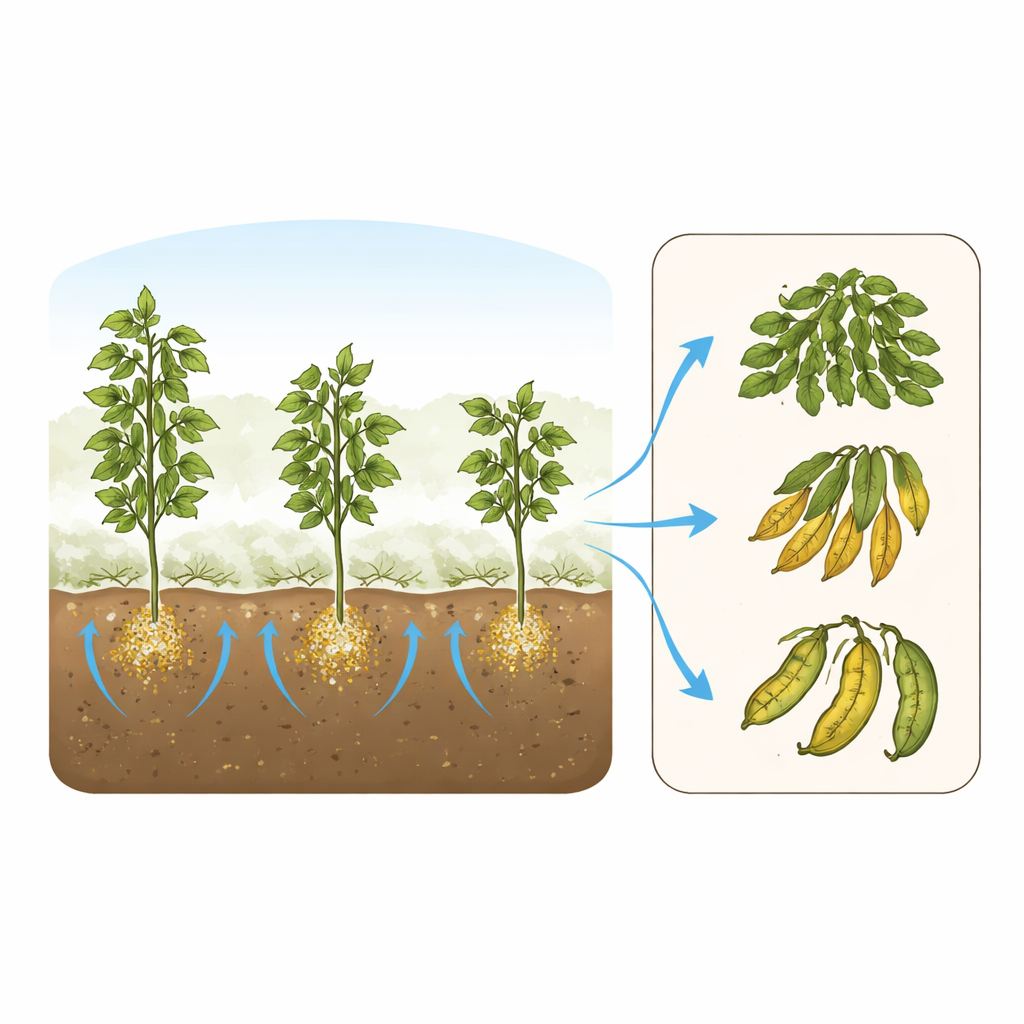
The researchers focused on three Egyptian faba bean cultivars—Nubaria 1, Giza 716, and Sakha 5—grown in pots in a climate-controlled greenhouse. Plants were exposed to three salt levels in the watering solution: none, moderate, and high. The team didn’t just measure height and yield; they tracked twenty different features, including root system size, leaf nutrients, leaf waxes, and how efficiently leaves exchanged gases with the air. They also examined the activity of eleven genes known to switch on when plants are under salt stress, covering ion movement, water balance, antioxidant defenses, and the production of protective leaf wax.
Growth, roots, and pods tell different stories
All three bean types grew less as salt levels rose, but they lost vigor in very different ways. Nubaria 1 proved the most resilient: at the highest salt level, its shoot weight fell only slightly, and it still produced almost two pods per plant. Giza 716 was mostly in the middle, while Sakha 5 suffered the most in terms of harvest—it produced no pods at all under severe salt stress. Below ground, Sakha 5 responded by dramatically elongating its roots, more than doubling total root length, while the other cultivars showed only modest changes. This suggests that simply growing more roots is not enough if the rest of the plant cannot cope with salty conditions.
Leaf function, minerals, and protective waxes
Salt not only dries plants out; it also disrupts how leaves capture carbon from the air. In all three cultivars, photosynthesis dropped sharply as salt increased, even while the concentration of carbon dioxide inside the leaf actually rose. That combination points to internal damage to the photosynthetic machinery, rather than just tighter control of pores on the leaf surface. A key difference lay in the mineral balance of the leaves: Nubaria 1 held its potassium level steady even at high salt, while Sakha 5 lost more potassium. Because potassium helps enzymes work and supports water balance in cells, this stability likely contributes to Nubaria 1’s better performance. The waxy coating on leaves also changed with salt. All cultivars built up more surface wax under moderate salt, but at the highest level this protective layer collapsed in Sakha 5 and Giza 716, while Nubaria 1 kept a relatively thicker wax layer, which may help reduce water loss and shield tissues.
Genes switch on, but more is not always better
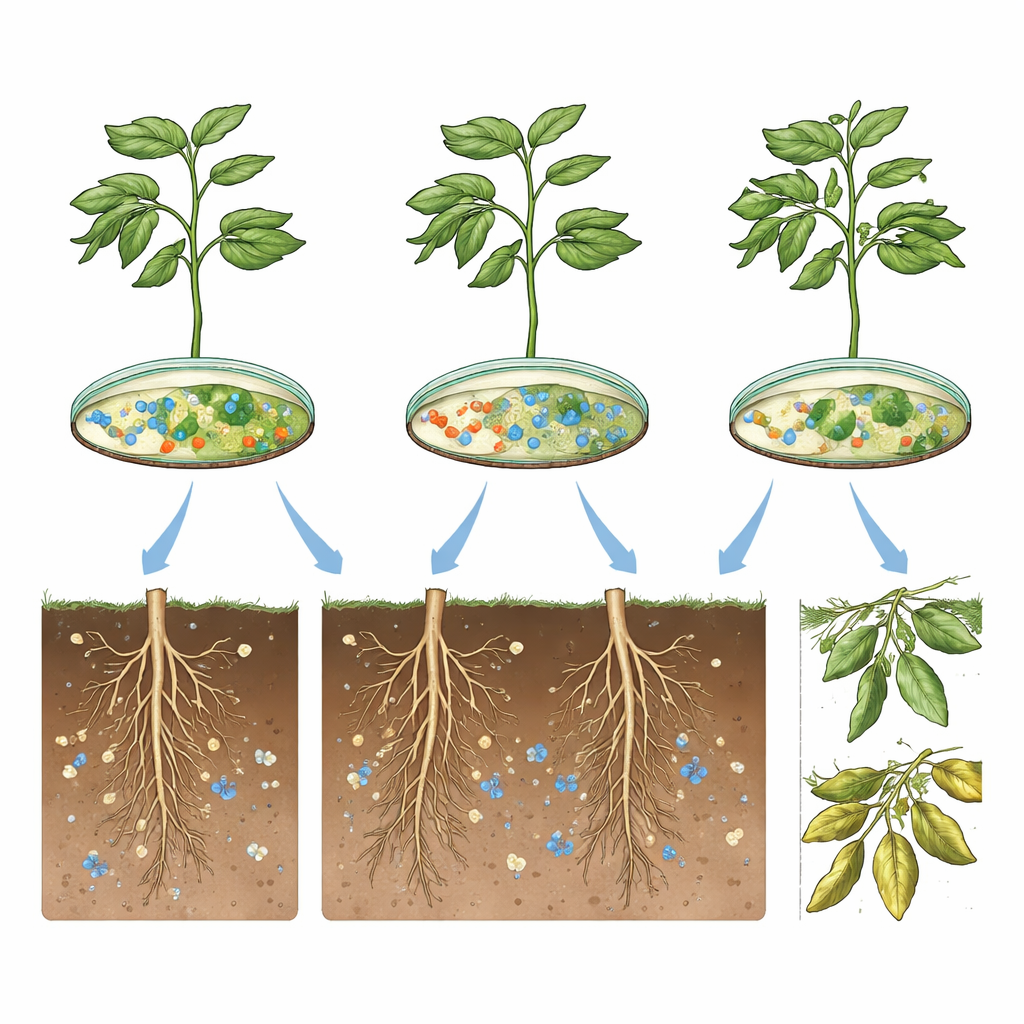
The gene activity patterns painted an unexpected picture. Sakha 5, the most salt-sensitive in terms of yield, showed the strongest surge in nearly every stress-related gene: those that pump salt ions out of cells, build the osmotic “buffers” like proline, detoxify harmful reactive molecules, and produce stress-response proteins. Nubaria 1, by contrast, showed only mild increases in these same genes. Even the gene tied to wax production became highly active in Sakha 5 at high salt, yet the actual wax coating on its leaves fell. This mismatch between gene activity and physical traits suggests that simply turning stress genes up to high volume does not guarantee survival; metabolic bottlenecks and energy costs can limit how useful that response is.
What this means for future faba beans
By combining plant measurements, root architecture, leaf chemistry, and gene activity into a single analysis, the study shows that each faba bean cultivar uses a distinct strategy when faced with salty soils. Nubaria 1 appears to rely on quiet efficiency: it keeps potassium in its leaves, maintains photosynthesis better, and preserves a robust wax layer, all while avoiding an extreme genetic alarm response. Sakha 5 mounts a dramatic internal response and grows very long roots, yet still fails to set pods under severe salt. This contrast highlights two practical traits—leaf potassium levels and photosynthetic performance under stress—as promising early screening tools for breeders. In simple terms, the work suggests that the best salt-tolerant beans may be those that stay calm and balanced inside, rather than those that react most loudly at the genetic level.
Citation: Lamlom, S.F., Khalifa, A.S.A., Abdelhamid, M. et al. Integrating morphophysiological traits with salt-responsive gene expression uncovers cultivar-specific tolerance mechanisms in faba beans facing NaCl stress. Sci Rep 16, 14702 (2026). https://doi.org/10.1038/s41598-026-51413-1
Keywords: faba bean salinity, salt tolerant crops, plant stress physiology, root architecture, stress responsive genes