Clear Sky Science · en
Synergistic effects of air pollution and temperature on blood pressure in older German women
Why weather and air matter for your heart
Most of us know that dirty air or bitter cold are not great for our health, but we often think about lungs and frostbite rather than what happens inside our blood vessels. This study looks at how temperature and air pollution work together to influence blood pressure in older women, a group especially vulnerable to heart and circulation problems. Understanding this double hit from weather and air quality can help us see everyday risks that are largely invisible, yet important for healthy aging.
Who was studied and what was measured
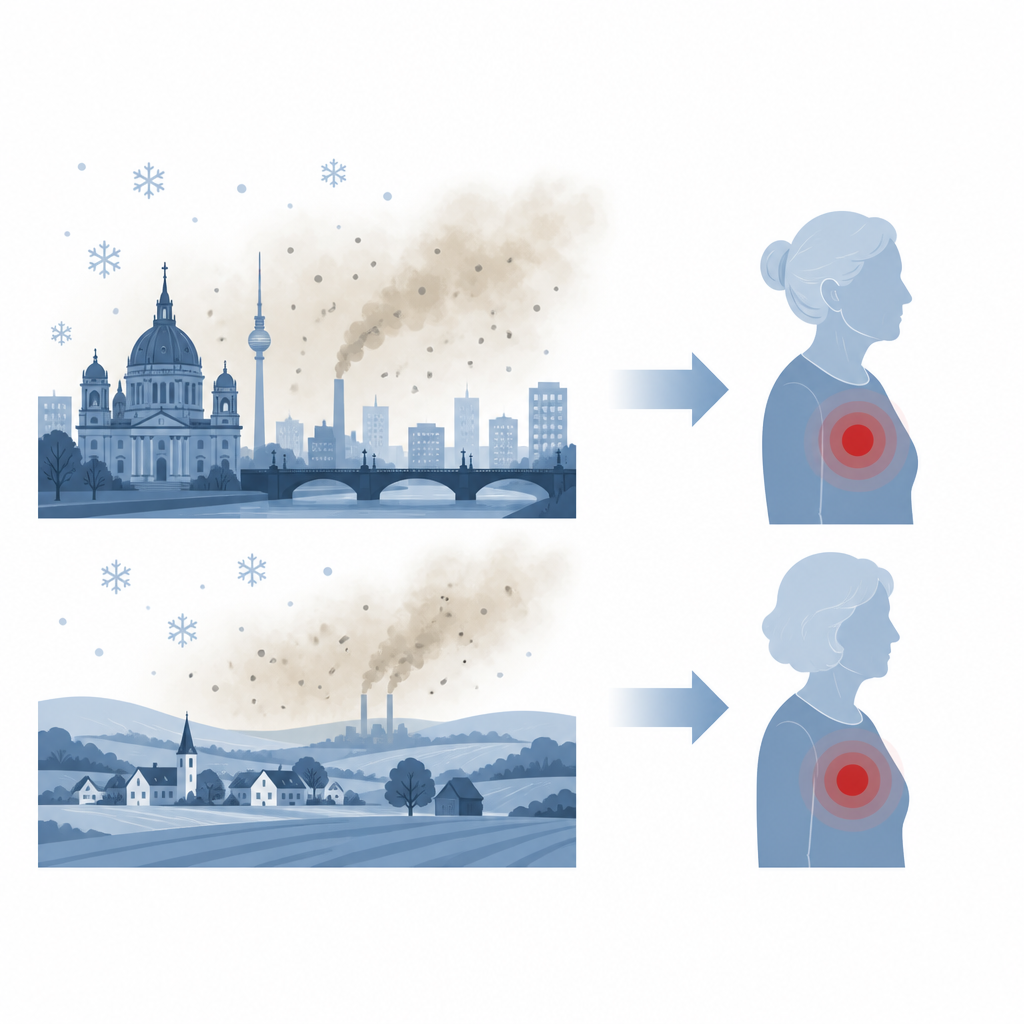
The research team used data from 530 women in their late seventies who took part in a long running health study in Germany. These women lived in both industrial cities and quieter rural towns, giving a mix of backgrounds, lifestyles, and environments. Nurses measured their systolic and diastolic blood pressure with a standard blood pressure device. The scientists also collected information about smoking, body weight, exercise, alcohol use, income and education level, and whether the women lived in urban or rural areas, so they could separate the effects of personal habits from those of the surrounding environment.
Tracking air, temperature, and daily conditions
To understand what the women were breathing and feeling on the day their blood pressure was taken, the researchers linked each home address to detailed maps of outdoor air and weather. They used national monitoring data to estimate fine particle levels (PM2.5), nitrogen dioxide from traffic and combustion, and ozone in the lower atmosphere, along with daily average temperature and humidity. These values reflect short term exposure, focused on the same day the blood pressure was measured, and in additional checks they also looked at averages over up to three days.
Looking for complex patterns, not simple lines
Instead of assuming that each degree of temperature or each extra bit of pollution changes blood pressure in a straight line, the team used flexible statistical models designed to capture curves and interactions. These models treat temperature and each pollutant together as a smooth surface, allowing the effects to bend, flatten, or reverse at different combinations of heat and pollution. They also tested whether the patterns differed between warm and cold seasons, between cities and countryside, and between women with different body weight and socio economic status.
What happens when cold meets dirty air
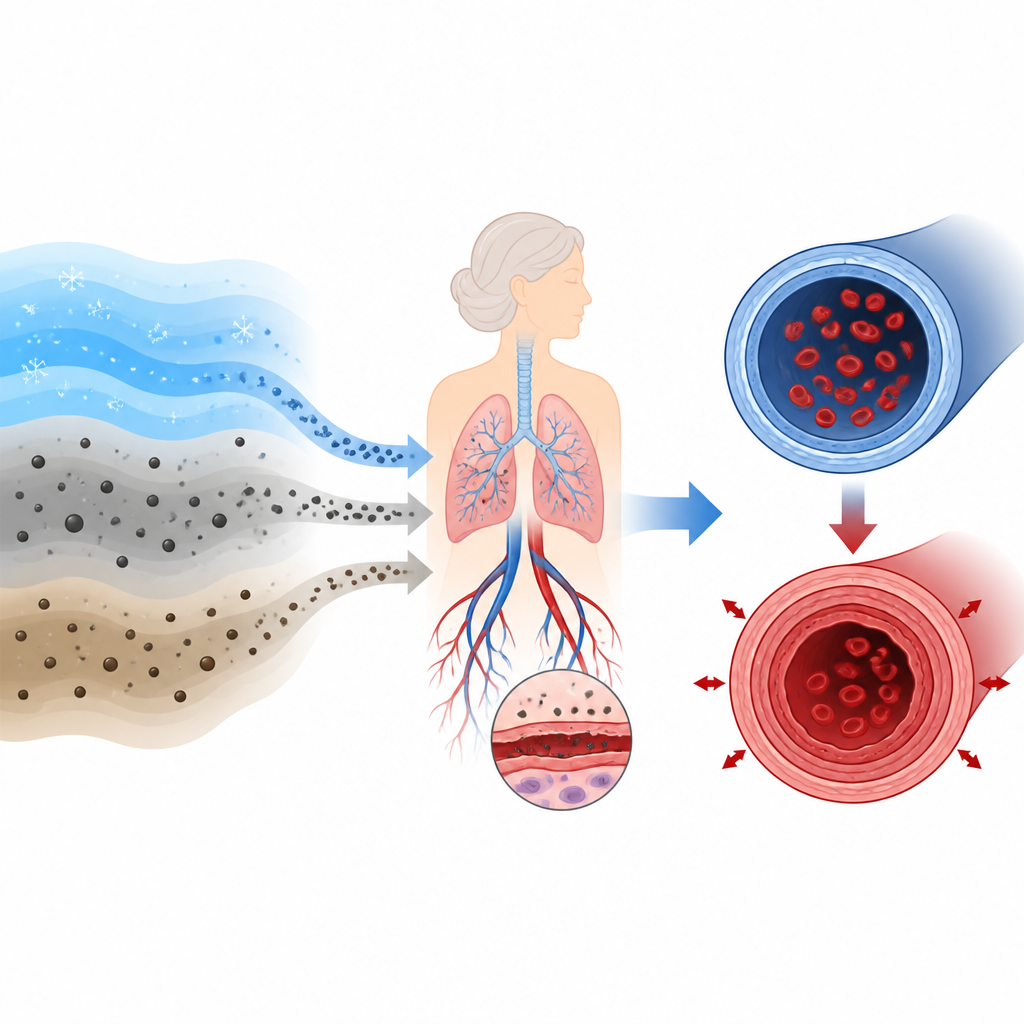
The clearest signal appeared when cold days and high pollution coincided. At low temperatures, higher levels of fine particles and nitrogen dioxide were linked with higher systolic and diastolic blood pressure. On warmer days, however, increases in these pollutants were not associated with the same rise, and for systolic pressure sometimes lined up with lower values. Ozone behaved differently: in general, higher ozone and higher temperatures came with lower blood pressure, except at very low temperatures. The strongest combined effects were seen in women living in cities and in those with lower education levels, while women with higher body weight did not show clear combined effects.
Seasons, sensitivity, and what it could mean
Seasonal patterns reflected how our environment changes throughout the year. Fine particles and nitrogen dioxide had stronger links with higher blood pressure in the cold season, when heating and traffic emissions are often greater and people spend more time indoors with less ventilation. Ozone related effects were stronger in warm months, when sunlight helps form more ozone. The authors suggest that cold air can squeeze blood vessels and activate nerves that raise blood pressure, while pollution may trigger inflammation and stress in aging arteries, making them less able to adapt. Together, these influences may push blood pressure higher than either factor alone.
What the findings mean for everyday life
For older women in this German cohort, the study indicates that blood pressure tends to rise when cold weather and polluted air occur together, especially in cities and among those with fewer resources. The work does not prove cause and effect on its own and is limited to one group of older women, but it highlights how environmental factors interact in ways that simple averages can miss. In practical terms, it suggests that protecting heart health in an aging population may require paying attention to both temperature and air quality at the same time, and planning public health measures for days when the combination of cold and dirty air creates a hidden strain on the circulatory system.
Citation: Ravi, D., Groll, A., Wigmann, C. et al. Synergistic effects of air pollution and temperature on blood pressure in older German women. Sci Rep 16, 15046 (2026). https://doi.org/10.1038/s41598-026-51334-z
Keywords: air pollution, temperature, blood pressure, older adults, urban health