Clear Sky Science · en
Synthesis and evaluation of novel nanocomposites for removal of zinc ions from aqueous solutions
Why cleaning metal from water matters
Many factories and everyday products release traces of metals into rivers and wastewater. Zinc is one of these metals: our bodies need tiny amounts, but in higher doses it can harm fish, plants, and people. This study explores a new, relatively simple material that can pull excess zinc out of water, helping make treatment plants more effective and affordable.
A new sponge for metal in water
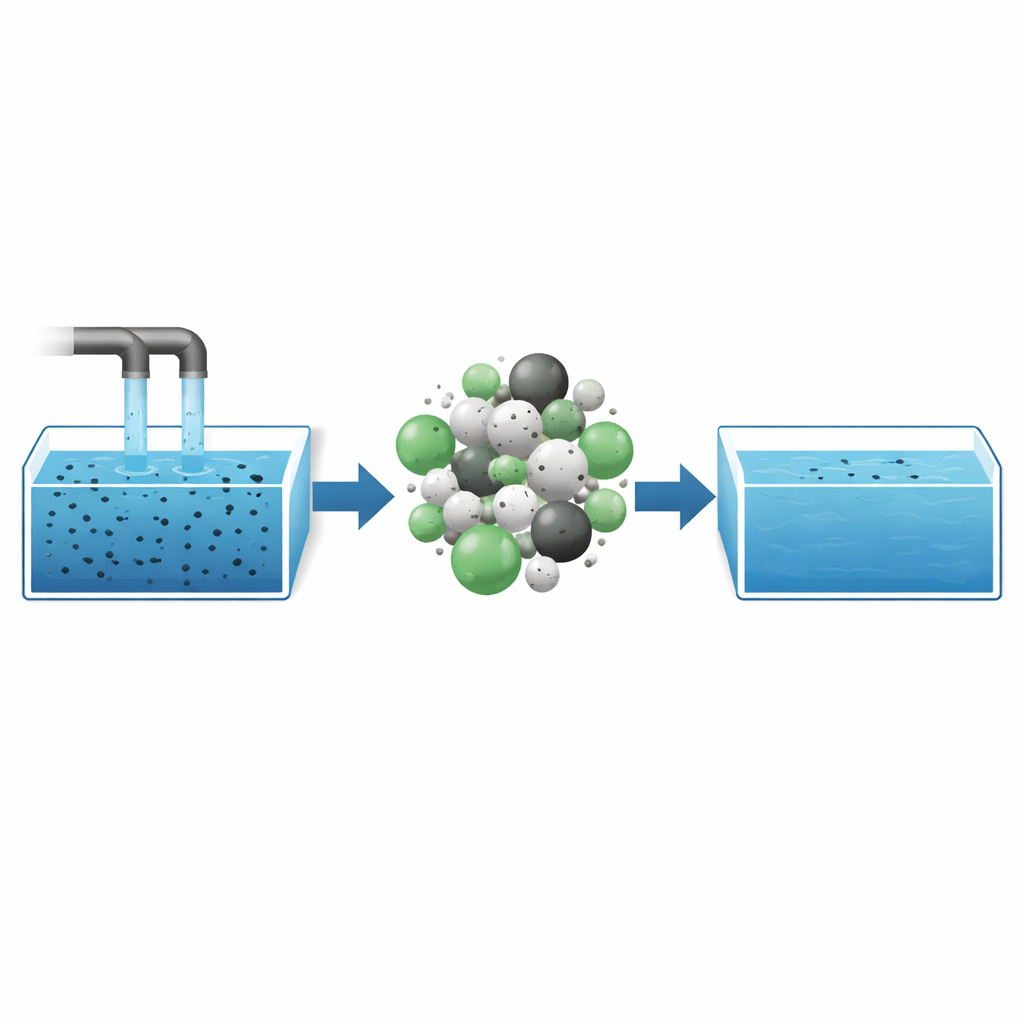
The researchers created tiny solid particles that act like sponges for zinc ions in water. These particles are a mixture of barium carbonate, barium aluminate, and a small amount of carbon, all fused together into a nanocomposite. Using a straightforward chemical recipe known as the Pechini sol–gel process, they heated the material to either 600 °C or 800 °C, producing two versions called BA600 and BA800. Both were carefully examined with X-ray diffraction and electron microscopes to reveal what crystals formed, how big the particles were, and how their surfaces were arranged.
How structure shapes performance
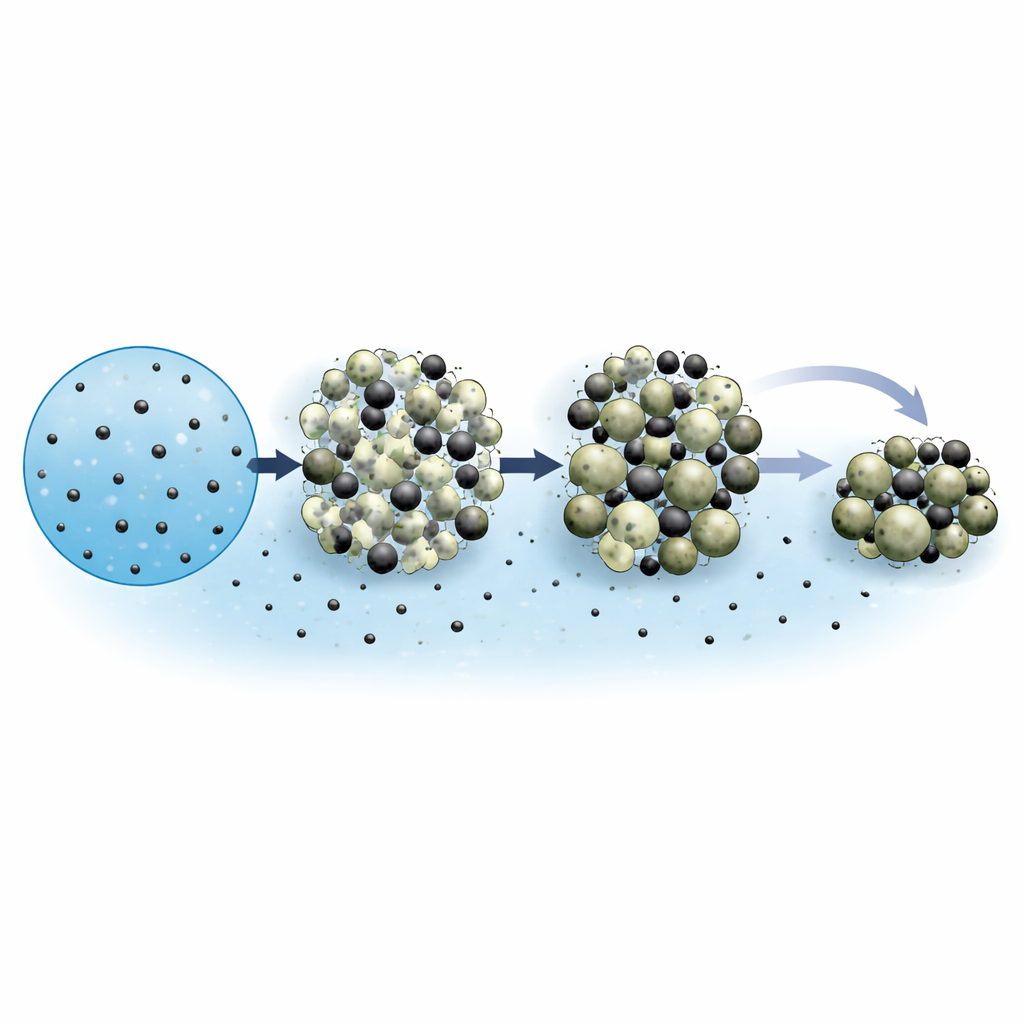
The two nanocomposites turned out to have different internal structures and textures. BA600 had smaller crystals, more surface area, and more pore volume, while BA800 had larger, more well-formed grains but fewer accessible pores. Because zinc removal happens when zinc ions stick to active spots on the surface, these differences mattered. Tests showed that BA600 could hold up to about 124 milligrams of zinc per gram of material, while BA800 reached about 91 milligrams per gram. The team’s measurements indicated that zinc did not just sit loosely on the surface; instead, it formed stronger, chemical-like attachments to oxygen-rich groups on the particles.
Finding the sweet spot for zinc removal
To understand how best to use the new material, the scientists varied conditions like acidity, contact time, temperature, and dose. Zinc removal improved sharply as the water’s pH rose from strongly acidic toward neutral, and it leveled off by pH 6, before zinc would start to form solid hydroxides. BA600 removed zinc faster than BA800, reaching steady performance in about an hour versus 80 minutes. Lower temperatures favored removal, showing that the process releases heat and works best in cooler water. When the researchers modeled how zinc covered the surface, the behavior matched a single, uniform layer of zinc ions, consistent with well-defined surface sites filling up until saturated.
Reuse, real wastewater, and competition
The team also asked whether the material would still work in realistic settings. Zinc-loaded particles were washed with hydrochloric acid, which stripped nearly all of the zinc without dissolving the material itself. After five cycles of use and regeneration, BA600 still kept nearly 70% of its original removal efficiency, and BA800 retained about 45%, indicating practical reusability. When common water ingredients such as sodium, calcium, or sulfate were present, zinc removal dropped slightly, while other metals like copper and nickel competed more strongly. Even so, BA600 remained the more selective and robust option. In real laboratory wastewater, containing many salts and organic matter, the materials still captured impressive amounts of zinc, only modestly less than in pure water.
What this means for cleaner water
Overall, the study shows that carefully designed, multi-component particles can efficiently capture zinc from contaminated water using a relatively simple and controllable manufacturing route. Although some cutting-edge materials can hold even more zinc, this new BaCO3/BaAl2O4/C nanocomposite stands out for combining solid performance, easy synthesis, and the ability to be regenerated and reused. In practical terms, BA600 in particular could help future treatment systems strip harmful levels of zinc from industrial effluents and laboratory waste, reducing risks to ecosystems and public health.
Citation: Al-Kadhi, N.S., Aljlil, S.A., El-Feky, H.H. et al. Synthesis and evaluation of novel nanocomposites for removal of zinc ions from aqueous solutions. Sci Rep 16, 13889 (2026). https://doi.org/10.1038/s41598-026-51234-2
Keywords: zinc removal, nanocomposite adsorbent, wastewater treatment, heavy metals, water purification