Clear Sky Science · en
Nitric oxide dual-enhanced nanosystem boosts ferroptosis-chemotherapy synergy for tumor therapy
Why this cancer study matters
Chemotherapy saves lives, but many tumors gradually learn to dodge its lethal blows. This study explores a new way to push cancer cells past their limits by hitting them with a one-two punch: a smart nanoparticle that delivers a standard chemotherapy drug while also triggering a newer form of cell death called ferroptosis. Together, these attacks may help outsmart tumors that resist routine treatments, at least in early tests in mice.
A new kind of cell death joins the fight
Most chemotherapy drugs work by driving cancer cells into apoptosis, a tidy self-destruct program. Unfortunately, many aggressive cancers evolve to resist this process, making drugs far less effective. Ferroptosis is a very different route to cell death that depends on iron and the buildup of damaged fats in cell membranes. Because it bypasses the usual suicide pathways, it offers a way to target tumors that have become stubbornly resistant to standard drugs. The challenge is to trigger enough oxidative damage inside cancer cells without harming healthy tissues.
Building a tiny delivery vehicle
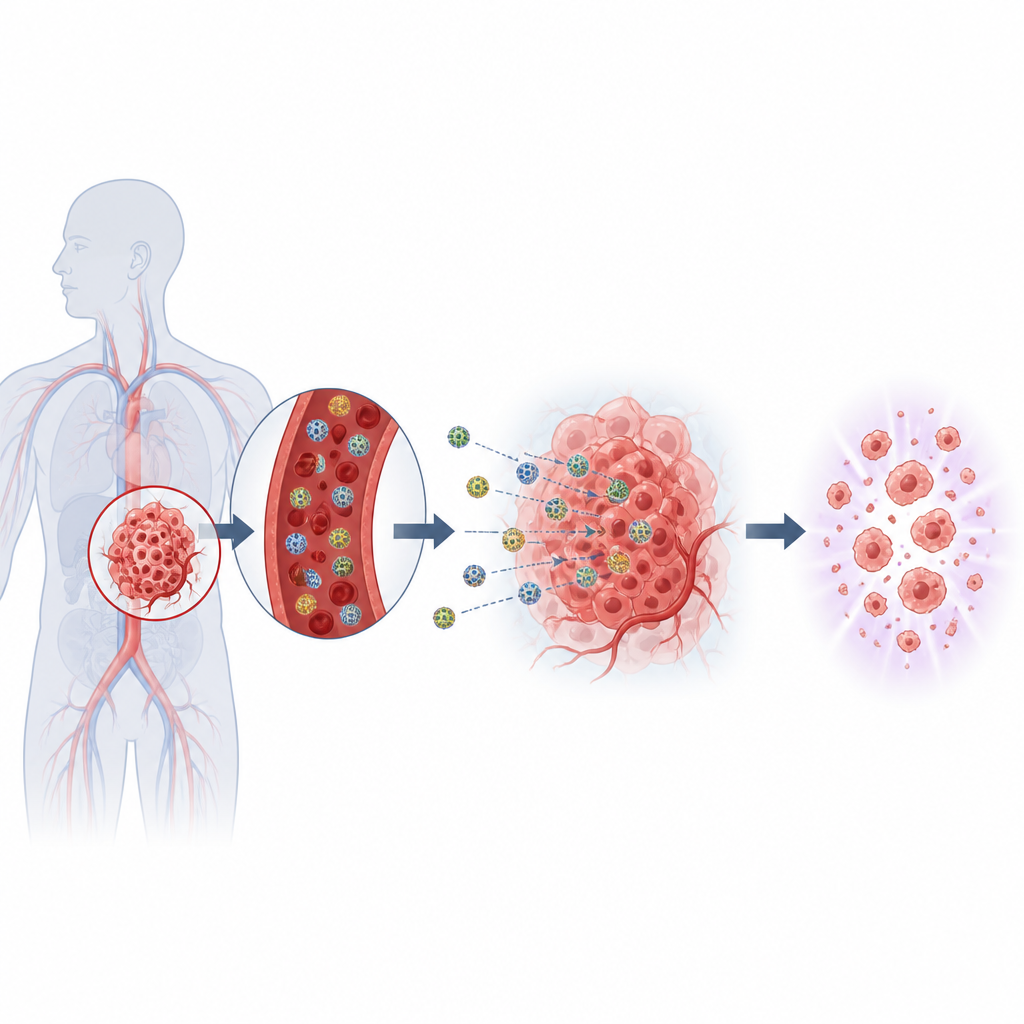
To tackle this, the researchers built a nanoscale delivery system based on porous iron oxide particles roughly a quarter of a micrometer across. These particles naturally release iron in acidic environments like those inside tumor cells, feeding chemical reactions that generate highly reactive molecules. The team coated the particles with the natural amino acid arginine and then packed them with the chemotherapy drug doxorubicin. Arginine plays two roles: it helps the particles home in on tumor cells that are hungry for this nutrient, and it serves as a source of nitric oxide, a gas that can damage cancer cells at high levels. Laboratory tests showed that the particles had a large internal surface area and stable coatings, could carry substantial amounts of both arginine and drug, and released doxorubicin much more rapidly under acidic and reducing conditions that mimic the interior of tumor cells.
How nitric oxide and iron team up
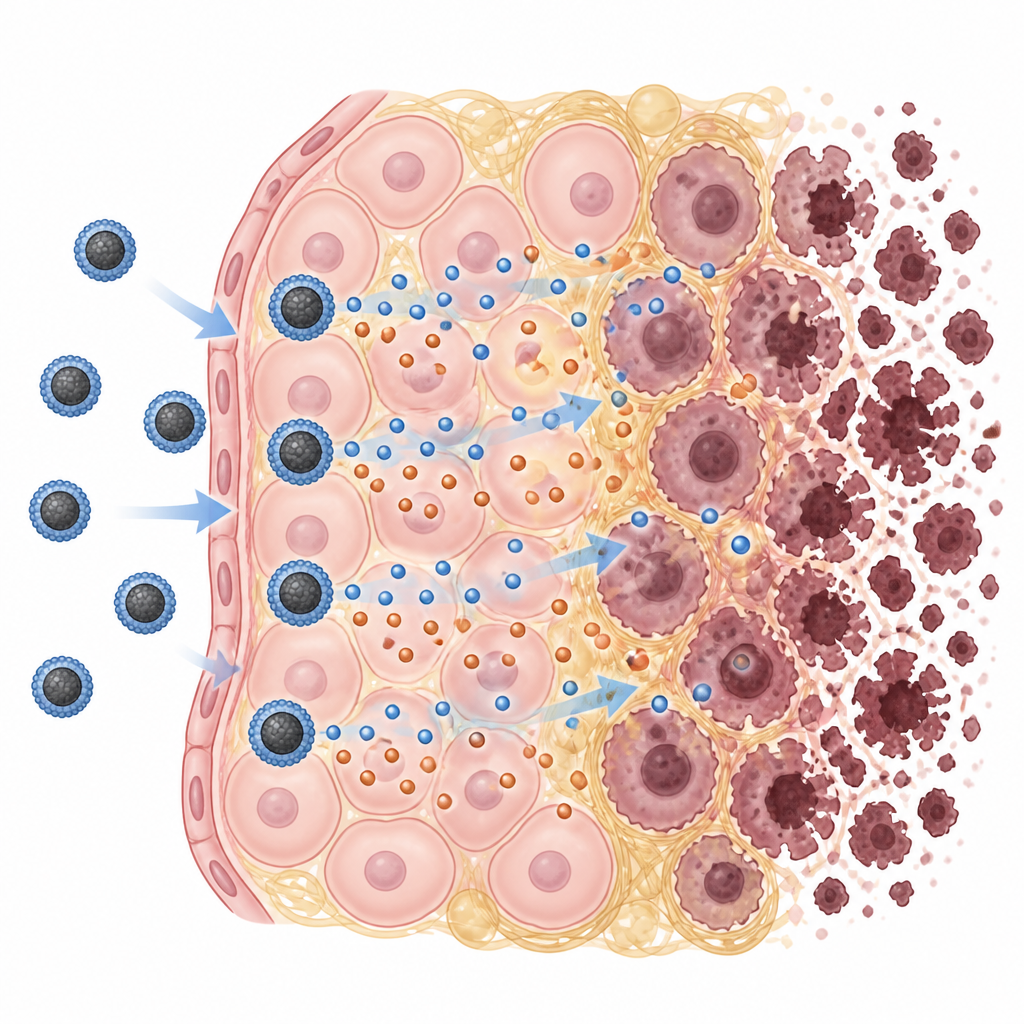
Inside cancer cells, the iron-rich particles act like tiny catalysts, converting hydrogen peroxide into reactive oxygen species. At the same time, arginine is converted into nitric oxide, which reacts further to form reactive nitrogen species. Together, these molecules deplete the cell’s protective glutathione pool and drive intense lipid peroxidation, a hallmark of ferroptosis. In cell culture experiments with melanoma cells, the combined nanoparticle system caused far more cell death than free doxorubicin alone. The researchers observed higher levels of oxidative stress markers, more damaged cell membranes, and strong signs of both ferroptosis and apoptosis, including reduced levels of protective proteins and increased activity of executioner enzymes that carry out cell dismantling.
Targeting tumors in mice
The team then tested the nanosystem in mice bearing melanoma tumors. Labeled particles accumulated strongly in tumor tissue while largely sparing other organs, and they penetrated deeper into the tumor mass than untargeted particles. Mice treated with the full arginine–iron–doxorubicin formulation showed slower tumor growth and more extensive tumor cell death than animals receiving the drug alone or simpler particle versions. Importantly, the animals maintained stable body weight, and tissue examination revealed no major damage to the heart or other key organs, in contrast to the known heart strain seen with free doxorubicin. These results suggest that concentrating chemotherapy and oxidative stress within tumors can improve the balance between effectiveness and side effects in this animal model.
What this could mean for future cancer care
In plain terms, this work shows that it may be possible to pack several coordinated assaults into a single tiny delivery vehicle: steer toward tumors using a nutrient they crave, unleash iron-driven chemical reactions, release nitric oxide to push cells over the edge, and deliver a familiar chemotherapy drug at the same time. While this is an early, preclinical study limited to mouse melanoma, it offers a proof of concept that combining ferroptosis with traditional chemotherapy in a targeted nanoparticle could help overcome some forms of drug resistance and reduce collateral damage to healthy tissues if similar effects can be achieved in humans.
Citation: Ding, X., Ren, J., Li, D. et al. Nitric oxide dual-enhanced nanosystem boosts ferroptosis-chemotherapy synergy for tumor therapy. Sci Rep 16, 16300 (2026). https://doi.org/10.1038/s41598-026-51184-9
Keywords: cancer nanomedicine, ferroptosis, nitric oxide, doxorubicin, tumor targeting