Clear Sky Science · en
Communication-related aspects drive senior patients’ satisfaction with the process of decision-making in cancer therapy
Why this matters for patients and families
Cancer treatment is about much more than scans, surgeries, and drugs. For many older adults, the hardest part is deciding which therapy path to follow in the first place. This study looks at what makes senior patients actually feel satisfied with how those life‑shaping decisions are made. Instead of focusing on medical details, the researchers ask a simple but powerful question: when people with cancer think back on their treatment choices, what about the conversations, support, and coordination around them makes the experience feel right—or leaves them uneasy?

A closer look at decision talks in cancer care
The team surveyed 2,011 people in Germany aged 50 and older who had breast or colorectal cancer. Most were women with early‑stage disease. All were asked a straightforward question: overall, how satisfied were they with the way treatment decisions were made? Answers ranged from “very unsatisfied” to “very satisfied.” Nearly three out of four participants chose one of the top two ratings, suggesting that many older patients do feel positive about how their cancer decisions were handled. But the real interest of the study lies in what separated the very satisfied from the less satisfied, and which surrounding circumstances made the biggest difference.
What made patients feel well cared for
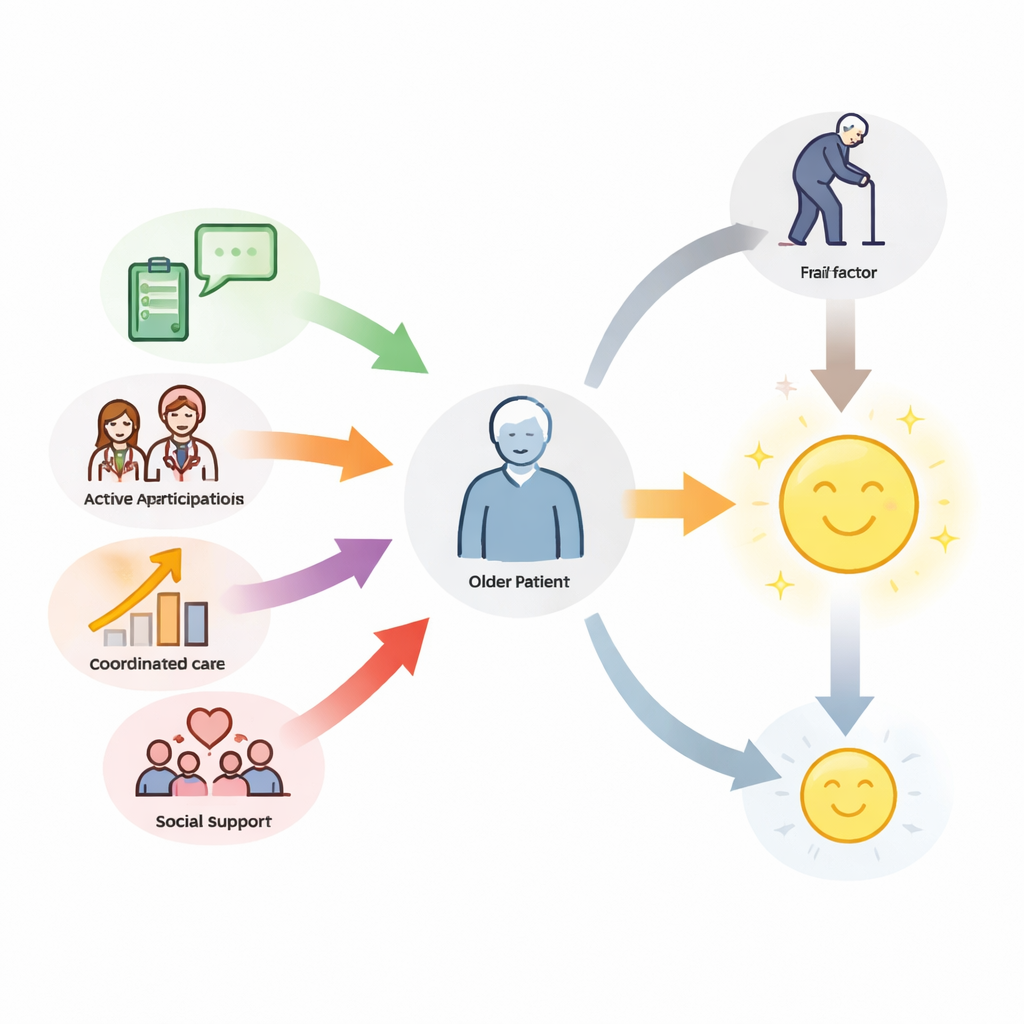
Several themes emerged strongly. Patients who felt they had received clear, thorough information about their illness and the available treatment options were far more likely to report high satisfaction than those who did not feel well informed. Feeling personally involved in the decision—rather than merely being told what would happen—also mattered a great deal. Another important piece was how well doctors appeared to work together. When patients perceived that their different physicians acted in harmony and shared information smoothly, their trust in the decision process rose. Beyond the clinic, people who believed in their own ability to handle health challenges and those who felt well supported by friends and family also tended to look back more positively on how decisions were made.
When decision-making becomes harder
Not every factor the researchers examined turned out to be important. Satisfaction did not differ much by age, sex, cancer type, or how advanced the cancer was. Even needing help with daily care or having been treated with particular therapies did not clearly reduce satisfaction. One factor did stand out on the negative side: frailty. Patients who were physically more fragile—often juggling multiple health problems and limited energy—were less satisfied with the decision process. The authors suggest that for these individuals, medical discussions may be more overwhelming, and standard “shared decision” conversations may not fully capture their priorities, such as remaining independent or avoiding exhausting treatments.
What this means for everyday practice
These findings point toward practical steps that doctors, nurses, and family members can take. Good communication is not an optional extra; it is central to whether older patients feel at peace with their treatment choices. Making time to explain options in understandable language, inviting patients to share what matters most to them, and ensuring that different specialists send consistent messages all help build that sense of security. For people who are frail, lack strong social networks, or feel unsure of themselves, extra support—such as involving trusted relatives in talks or offering more tailored counseling—may be especially important.
Bringing patients into the center of cancer choices
In everyday terms, this study shows that many older adults with cancer are satisfied not just when the treatment works, but when they feel informed, heard, and backed by a united care team. The authors conclude that improving how doctors communicate and coordinate, and how they support vulnerable patients, can make the decision-making journey less frightening and more empowering. Future research will explore how best to structure these conversations over time, including using digital tools and new training approaches. But the core message is already clear: when patients understand their options, share in the choices, and feel they are not facing cancer alone, the path they take is far more likely to feel like the right one.
Citation: Heidenreich, A., Fuchshofen, R., Elsner, S. et al. Communication-related aspects drive senior patients’ satisfaction with the process of decision-making in cancer therapy. Sci Rep 16, 13917 (2026). https://doi.org/10.1038/s41598-026-51157-y
Keywords: shared decision-making, cancer communication, older patients, patient satisfaction, frailty