Clear Sky Science · en
Betulinic acid is associated with miR-21 modulation, apoptosis and redox changes in breast cancer cells: an in vitro and in silico study
Why a tree compound and breast cancer matter to you
Many modern cancer drugs have roots in nature. This study looks at betulinic acid, a substance found in the bark of birch trees and some common plants, to see how it affects one of the hardest types of breast cancer to treat. By examining how this natural compound interacts with cancer cells and a standard chemotherapy drug in the lab, the researchers explore whether it might one day help make treatment more effective or less harmful.
A tough kind of breast cancer
Breast cancer is the most frequently diagnosed cancer in women worldwide, and one aggressive form is called triple negative breast cancer. These tumors lack three common hormone and growth receptors that many current drugs target, which means fewer treatment options and often a poorer outlook. Doctors commonly rely on chemotherapy drugs such as doxorubicin, which are powerful but can damage healthy tissue, including the heart. Finding substances that can either fight these tumors directly or allow lower doses of harsh drugs is therefore a major goal of current research.
A tree derived compound under the microscope
Betulinic acid has attracted attention because it can slow the growth of several tumor types while showing relatively little harm to normal cells. In this work, scientists grew triple negative breast cancer cells in dishes and treated them with betulinic acid, doxorubicin, or both. They measured how many cells survived, how many underwent programmed cell death, and how the cells changed shape. Betulinic acid alone reduced cancer cell growth and triggered classic signs of cell death, while doxorubicin was more potent overall. When combined, the two showed strong toxic effects on the cancer cells, with a shift toward more necrotic, or ruptured, cell death. 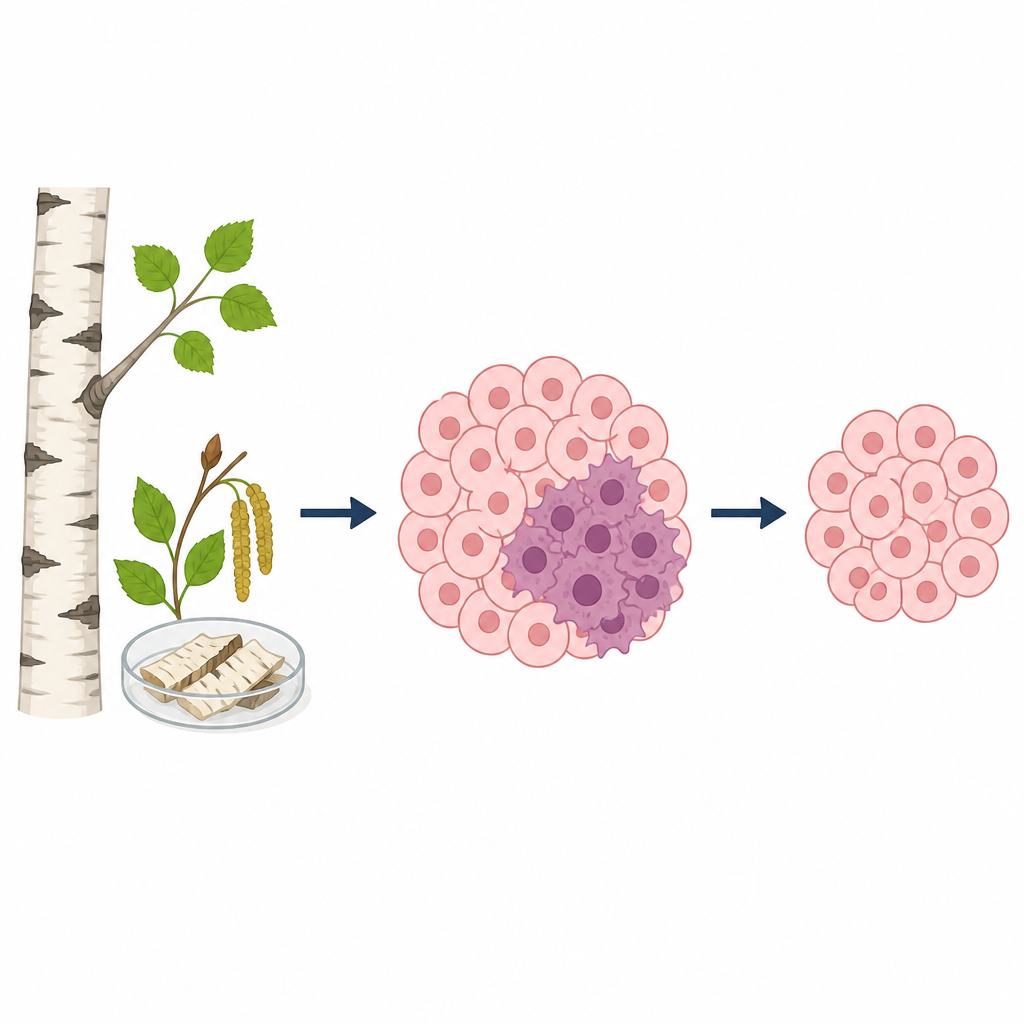
Switching tiny genetic switches
Beyond simply counting dead cells, the team looked at molecular switches that help control whether cancer cells grow or die. They focused on a small RNA molecule called miR 21, often found at high levels in breast tumors and linked to invasion and poor outcome. Betulinic acid lowered the amount of miR 21 in the cancer cells. At the same time, it boosted the activity of two protective genes, PTEN and PDCD4, which usually act as brakes on tumor growth, and reduced the activity of HIF1A and SMAD7, which can support cancer progression under certain conditions. Doxorubicin showed similar trends, and the combination treatment produced distinct patterns, suggesting that betulinic acid can reshape several cancer related pathways at once.
Balancing cell stress and protection
The researchers also examined how the treatments affected the cell’s internal stress and defense systems. Betulinic acid increased the activity of two antioxidant enzymes, SOD and CAT, which help control reactive oxygen species and keep the cell’s chemistry in balance. In contrast, doxorubicin lowered these defenses, consistent with its known ability to generate damaging oxidants. Interestingly, cells exposed to both substances showed higher antioxidant activity than those treated with doxorubicin alone, hinting that betulinic acid might influence how cancer cells handle chemical stress while still driving them toward death. 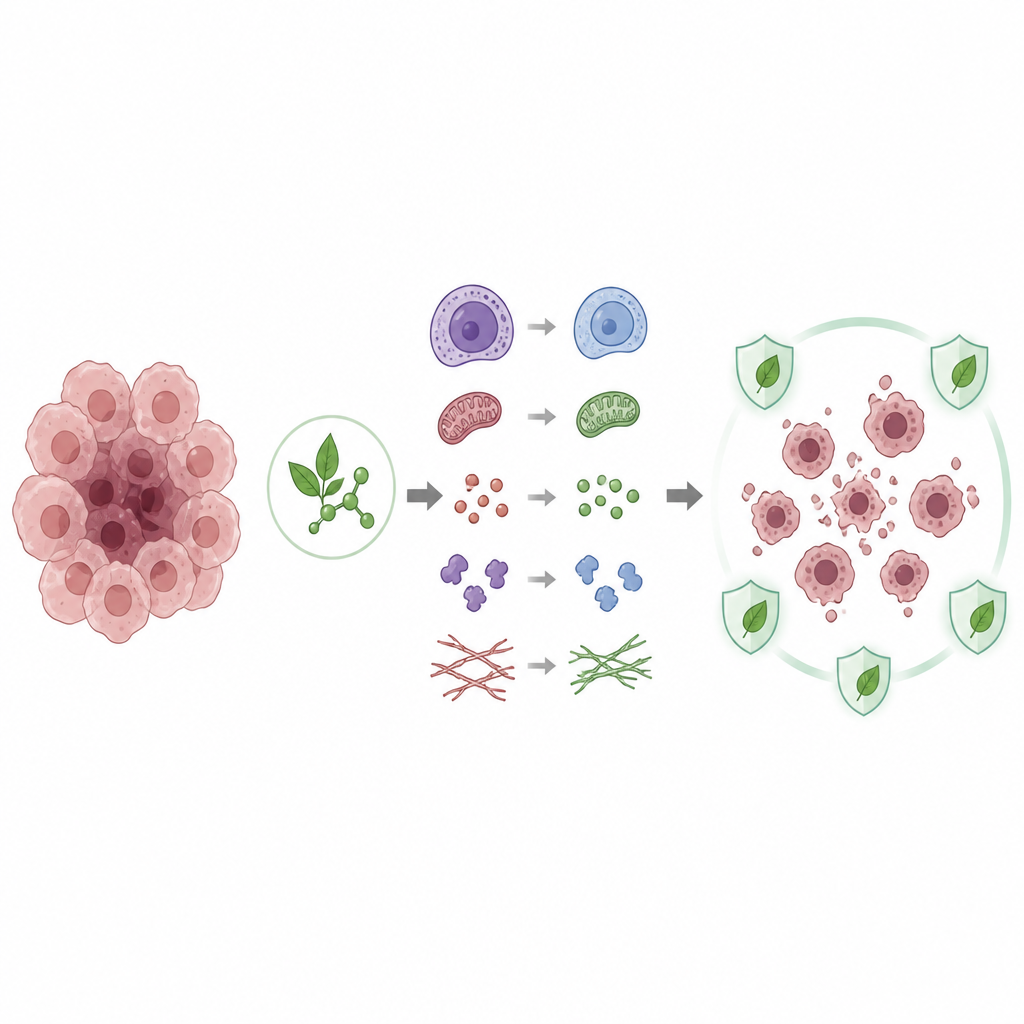
Peeking at possible docking sites
To better understand how betulinic acid might work at the atomic level, the team used computer modeling to test how it could fit into the three dimensional structures of the PTEN, PDCD4, HIF1A, and SMAD7 proteins. The simulations suggested that betulinic acid can bind particularly well to PTEN and PDCD4, with doxorubicin also showing favorable contacts. These predicted docking events do not prove that the interactions occur in living cells, but they support the idea that betulinic acid may directly influence key control proteins that steer cancer cell growth, survival, and response to low oxygen.
What this could mean for future treatment
In everyday terms, this study suggests that a birch bark derived molecule can push aggressive breast cancer cells toward self destruction while dialing down a cancer linked microRNA and strengthening tumor suppressor signals. At the same time, it may help rebalance the cell’s internal chemistry and interact with important control proteins. The work was done entirely in cell cultures and computer models, so it does not yet show that betulinic acid is safe or effective in patients. However, it adds to the evidence that natural compounds could be combined with standard chemotherapy to fine tune cancer control, and it lays out specific molecular clues for future animal and clinical studies to test.
Citation: Mahmoud, M.A., Abdo, H., Mekky, M. et al. Betulinic acid is associated with miR-21 modulation, apoptosis and redox changes in breast cancer cells: an in vitro and in silico study. Sci Rep 16, 15225 (2026). https://doi.org/10.1038/s41598-026-51156-z
Keywords: betulinic acid, triple negative breast cancer, miR-21, doxorubicin, apoptosis