Clear Sky Science · en
Cultivation of Nordic Chlorococcum sp. in anaerobic digestion effluent: Effects of CO2 concentration and reactor configuration
Turning Wastewater into a Resource
As cities grow, we flush away enormous amounts of dirty water that still contains nutrients and carbon that could be put to work. Instead of treating this water as a problem, scientists are exploring how tiny green algae can transform it into a source of clean water, useful products, and even help tackle climate change. This study looks at a hardy Nordic microalga and asks a practical question: under what conditions can it best clean wastewater, lock away carbon dioxide, and produce valuable biomass?
From Sewage Sludge to Algae Food
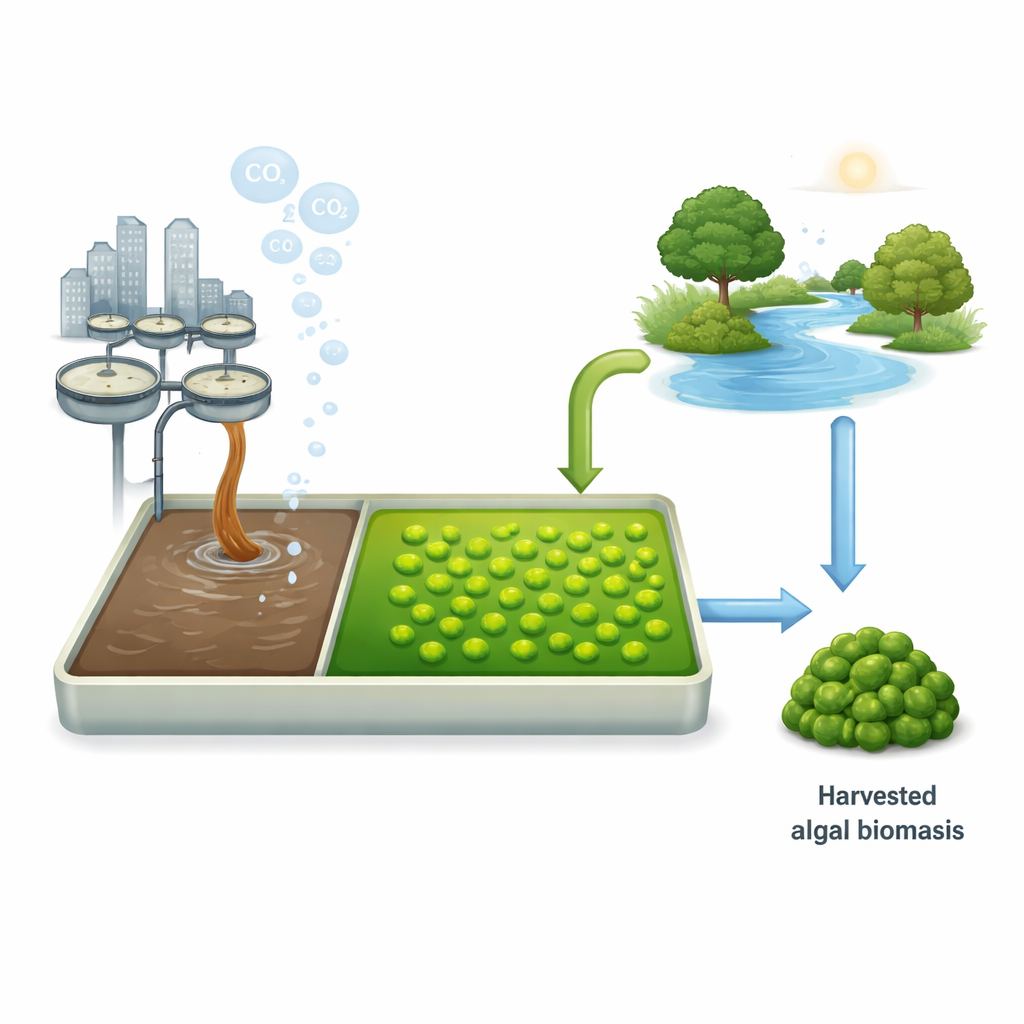
Modern wastewater plants often use anaerobic digestion, a process where microbes break down sludge to produce biogas. What is left behind is a liquid rich in nitrogen and phosphorus. If released untreated, these nutrients can trigger harmful algal blooms in lakes and seas. The researchers used this leftover liquid as a growth medium for a Nordic strain of the green microalga Chlorococcum. Because the algae grow by photosynthesis, they also supplied carbon dioxide (CO2), mimicking gas streams that could come from flue gases. By adjusting the CO2 level and the type of cultivation vessel, they tested how well the algae could grow, remove nutrients, and turn carbon into biomass.
Finding the Sweet Spot for Carbon Dioxide
The team first focused on the air the algae breathe. They compared four CO2 levels: ordinary air (very low CO2) and air enriched to 3, 6, or 9 percent CO2. Too little CO2 starved the algae and kept the water at an uncomfortable high pH, leading to poor growth. Too much CO2 pushed the pH too low and also held the cells back. The sweet spot turned out to be 6 percent CO2, which produced nearly five times more biomass than ordinary air and the highest rate of CO2 capture per liter of culture. Even so, algae grown with plain air removed more ammonium and phosphorus from the water, partly because chemical processes in the alkaline water stripped out some of the nitrogen as gas, independent of biology.
Designing the Right Home for Algae
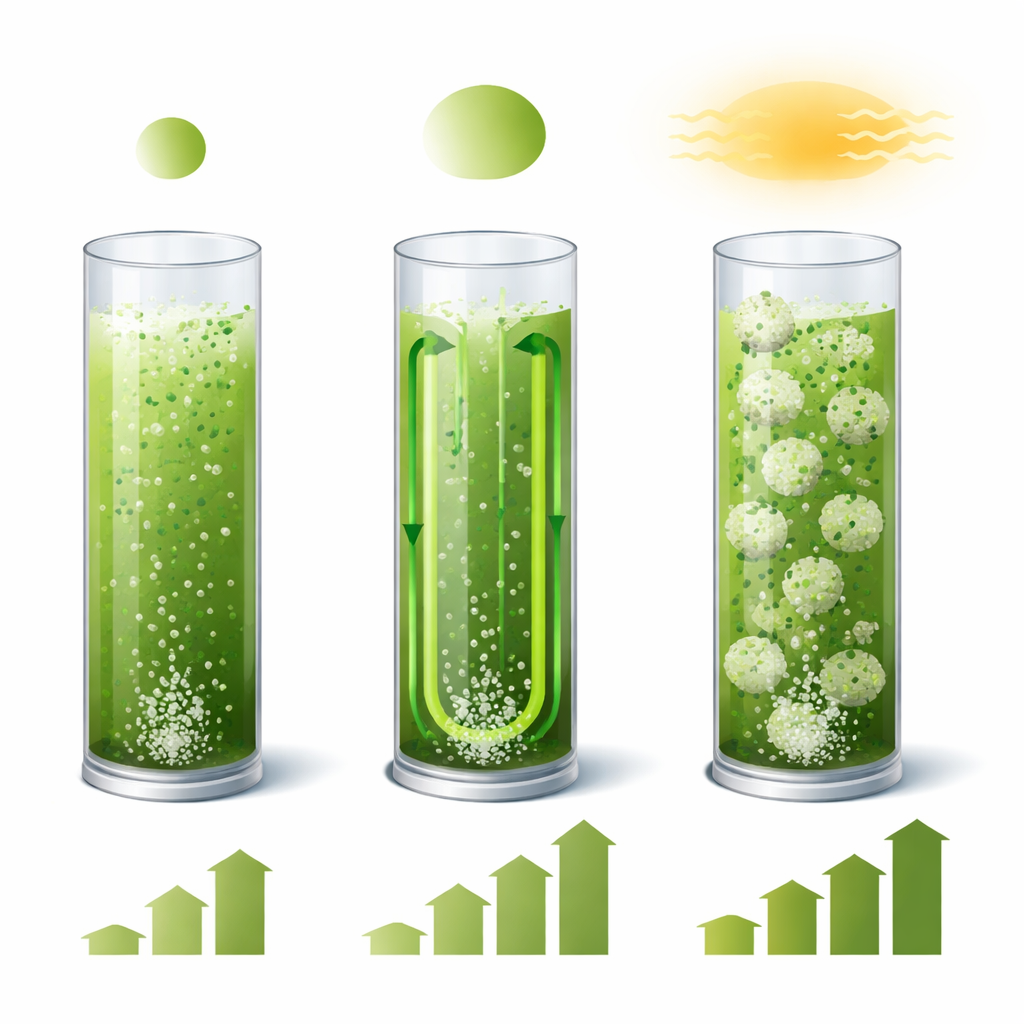
Next, the scientists asked how the physical design of the reactor—the algae’s “home”—affects performance. Using the optimal 6 percent CO2, they compared a simple bubble column, an airlift reactor with an internal tube that promotes circulation, and a bubble column containing floating plastic carriers that offer surfaces for algae to attach. All three designs kept the water at a comfortable, nearly neutral pH. The airlift reactor produced the highest number of cells in the shortest time, making it attractive when rapid growth is needed. However, the simple bubble column ended up with the highest final biomass and removed the most ammonium and phosphorus, though it took a bit longer to get there. The version with carriers slightly improved CO2 use but did not deliver a clear advantage in growth or nutrient removal for this particular algal strain.
Algae as a Platform for Future Fuels
Beyond cleaning water and capturing CO2, microalgae are interesting because their oily components can be turned into biodiesel. The researchers measured proteins, carbohydrates, and different types of fats in the algal biomass. Protein and sugar levels stayed fairly constant across CO2 levels and reactor types, showing that the strain is metabolically stable. In contrast, the fat fraction responded strongly to CO2. Under low CO2, the algae made relatively little fat and favored polyunsaturated molecules associated with cell membranes. At higher CO2, they accumulated much more fat and shifted toward monounsaturated molecules that are better suited for biodiesel, with profiles close to existing fuel standards. Importantly, changing the reactor design did not alter this biochemical makeup, which means engineers can choose reactors based on cost and performance without sacrificing product quality.
What This Means for Cleaner Water and Climate Goals
To a lay observer, this study shows that a robust Nordic alga can turn a problematic waste stream from sewage treatment into cleaner water, captured carbon, and potentially useful biofuels. The work identifies a practical operating window: moderate CO2 enrichment around 6 percent paired with either fast-growing airlift reactors or more thorough-cleaning bubble columns, depending on whether the priority is speed or nutrient removal. While challenges such as harvesting costs and large-scale engineering remain, the results suggest that microalgae-based systems could help cities meet clean water rules, reduce nutrient pollution, and support climate and energy goals by integrating waste treatment with biomass production.
Citation: Mohammadkhani, G., Mahboubi, A., Funk, C. et al. Cultivation of Nordic Chlorococcum sp. in anaerobic digestion effluent: Effects of CO2 concentration and reactor configuration. Sci Rep 16, 13625 (2026). https://doi.org/10.1038/s41598-026-51126-5
Keywords: microalgae wastewater treatment, carbon dioxide capture, anaerobic digestion effluent, algal biofuel potential, photobioreactor design