Clear Sky Science · en
Mitigating salinity stress in Moringa oleifera through seaweed-derived biostimulants
Why salty soils matter for a useful tree
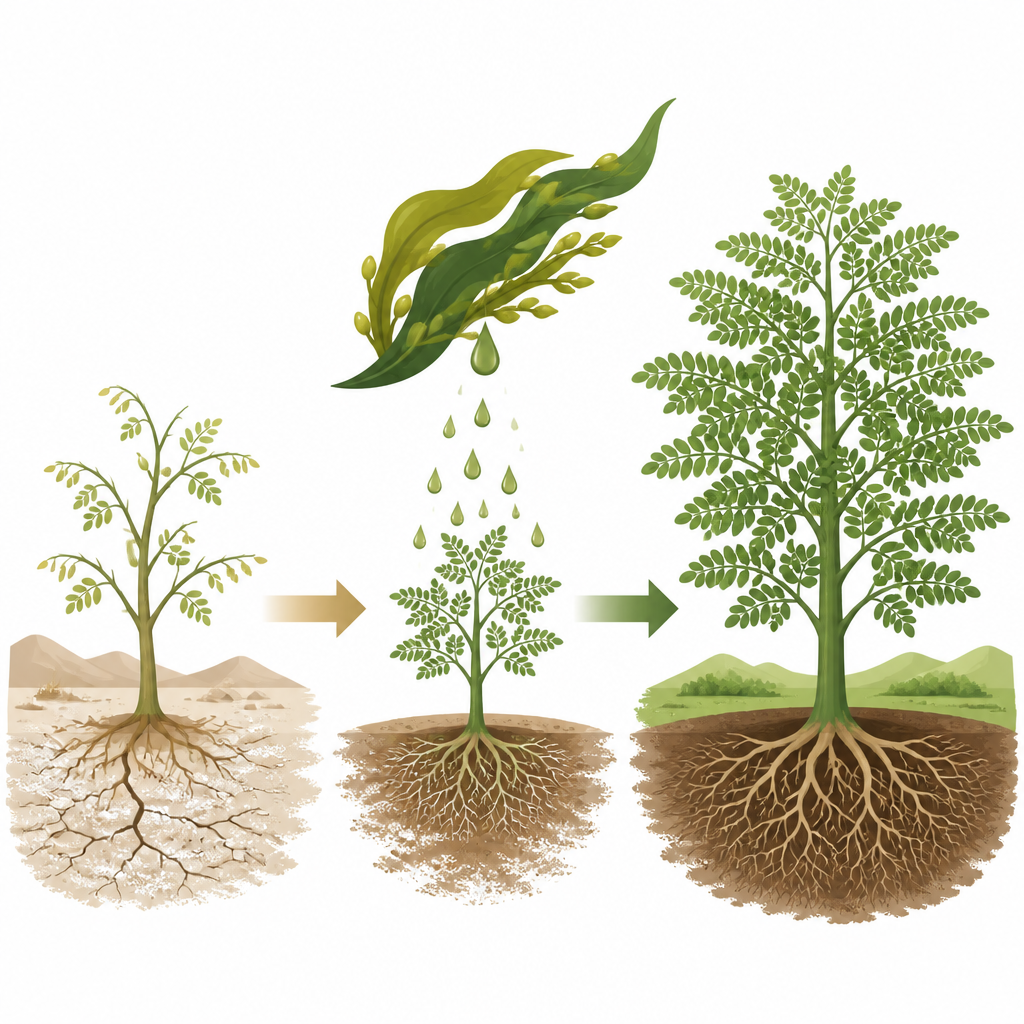
Moringa, sometimes called the drumstick or miracle tree, is prized as both food and traditional medicine, especially in regions already struggling with poor soils and rising salinity. As climate change and intensive farming make farmland saltier, even hardy crops like moringa can falter. This study explores whether simple sprays made from common seaweeds can help moringa seedlings stay healthy and productive in salty conditions, offering a low-cost tool for farmers facing harsh environments.
A tree full of food and medicine
Moringa oleifera is a fast-growing tree whose leaves, seeds, and other parts are rich in protein, vitamins, oils, and natural antioxidants. Communities in many developing countries already rely on it to boost nutrition and support traditional remedies for a wide range of ailments. Because of this nutritional importance, keeping moringa productive under tough field conditions is more than a gardening challenge; it is closely linked to food security and public health in vulnerable regions.
How salt weakens crops
In arid and semi-arid areas, heavy use of chemical fertilizers, poor irrigation, and high evaporation can leave behind excess salt in the soil. This salt makes it harder for plants to take up water and nutrients, disrupts photosynthesis, and can stunt growth or kill roots. In greenhouse tests, the researchers exposed moringa seedlings to increasing levels of salt. As salinity rose, both shoots and roots lost fresh and dry weight, green pigments in the leaves declined, and simple sugars dropped, while stress-related phenolic compounds increased. Root growth was especially sensitive, and at the highest salt level roots stopped growing altogether in untreated plants.
Seaweed as a natural plant booster
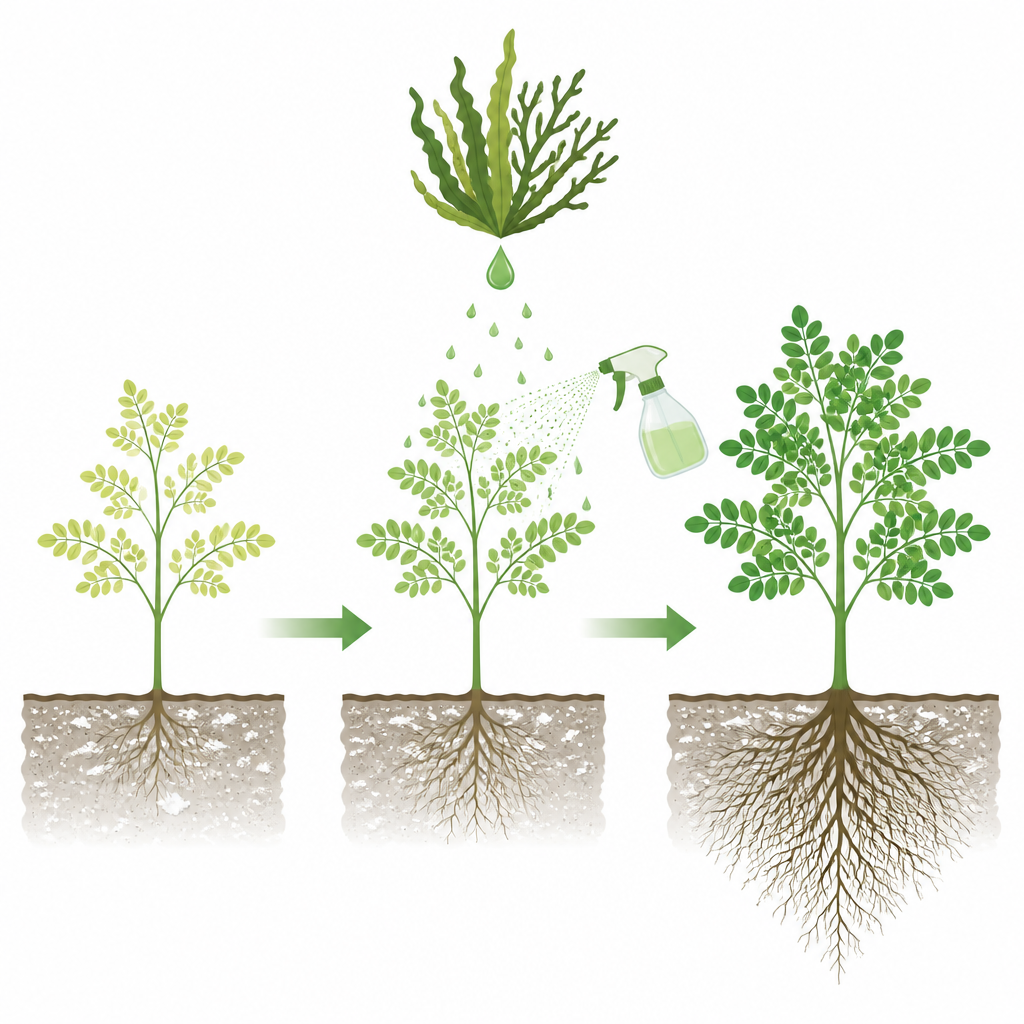
To see if seaweeds could help, the team collected two species from the Red Sea, Turbinaria ornata and Actinotrichia fragilis, and prepared water-based extracts. These liquids, rich in minerals, fatty acids, vitamins, and other bioactive molecules, were sprayed on moringa leaves twice a week while the plants grew in salty soil. Chemical analysis showed that both extracts contained useful nutrients, but T. ornata was particularly high in magnesium and potassium, elements tied to chlorophyll formation and water balance in plants. The extracts also contained compounds with antioxidant and growth-promoting properties, suggesting several ways they might shield plants from stress.
What happened to moringa under salt and spray
Compared with unsprayed controls, moringa plants treated with seaweed extracts grew much better under salt stress. At a moderate salt level, treated plants had far heavier shoots and roots than untreated ones, and the benefit was especially strong for roots. Leaf pigments such as chlorophyll a, chlorophyll b, and carotenoids, which had dropped under salt alone, rebounded with seaweed spraying, again more strongly with T. ornata. Soluble sugars in both leaves and roots also rose, helping plants adjust to salty surroundings by balancing internal water pressure. At the same time, the high phenolic levels triggered by salt declined when seaweed was applied, which the authors interpret as a sign that the plants were under less oxidative stress and therefore did not need to ramp up these defensive compounds as much.
Patterns across many plant traits
To pull all of these measurements together, the researchers used a heat map that grouped treatments by their overall effect on growth, pigments, sugars, and phenolics. Moderate salt combined with either seaweed extract clustered with higher biomass and richer pigment and sugar levels, indicating clear relief from stress. The harshest salt treatment still damaged plants, but even there seaweed sprays offered some improvement. Across traits, T. ornata extract consistently outperformed A. fragilis, likely due to its particular mineral and phytochemical makeup, although the exact modes of action remain to be worked out.
What this means for farmers and the future
The study shows in simple terms that leaf sprays made from common seaweeds can help moringa plants cope with salty conditions, keeping them greener, heavier, and less stressed without relying solely on synthetic fertilizers. For farmers in dry regions, such seaweed-based biostimulants could become a practical, more sustainable way to maintain moringa yields on degrading soils. The authors stress that more work is needed to uncover the plant signaling pathways involved and to compare seaweed products directly with standard fertilizers, but their results point toward a natural toolkit that could support both crop productivity and environmental health.
Citation: Alwaleed, E.A., Alzain, M.N. & Loutfy, N. Mitigating salinity stress in Moringa oleifera through seaweed-derived biostimulants. Sci Rep 16, 15706 (2026). https://doi.org/10.1038/s41598-026-51052-6
Keywords: moringa, salinity stress, seaweed extract, biofertilizer, plant resilience