Clear Sky Science · en
Evaluating the influence of magnetic iron as an eco-friendly soil amendment applications on agronomic and fruit quality parameters of ‘Fremont’ mandarin
Healthier mandarins from the ground up
Sweet, easy to peel mandarins are a favorite snack around the world, but growing high quality fruit in harsh, dry soils is not easy. This study explores whether a simple, rock based soil additive made of magnetic iron can help mandarin trees grow better, use water more efficiently, and produce tastier, more nutritious fruit without relying on heavy chemical inputs.
Turning iron rich rock into a helpful soil partner
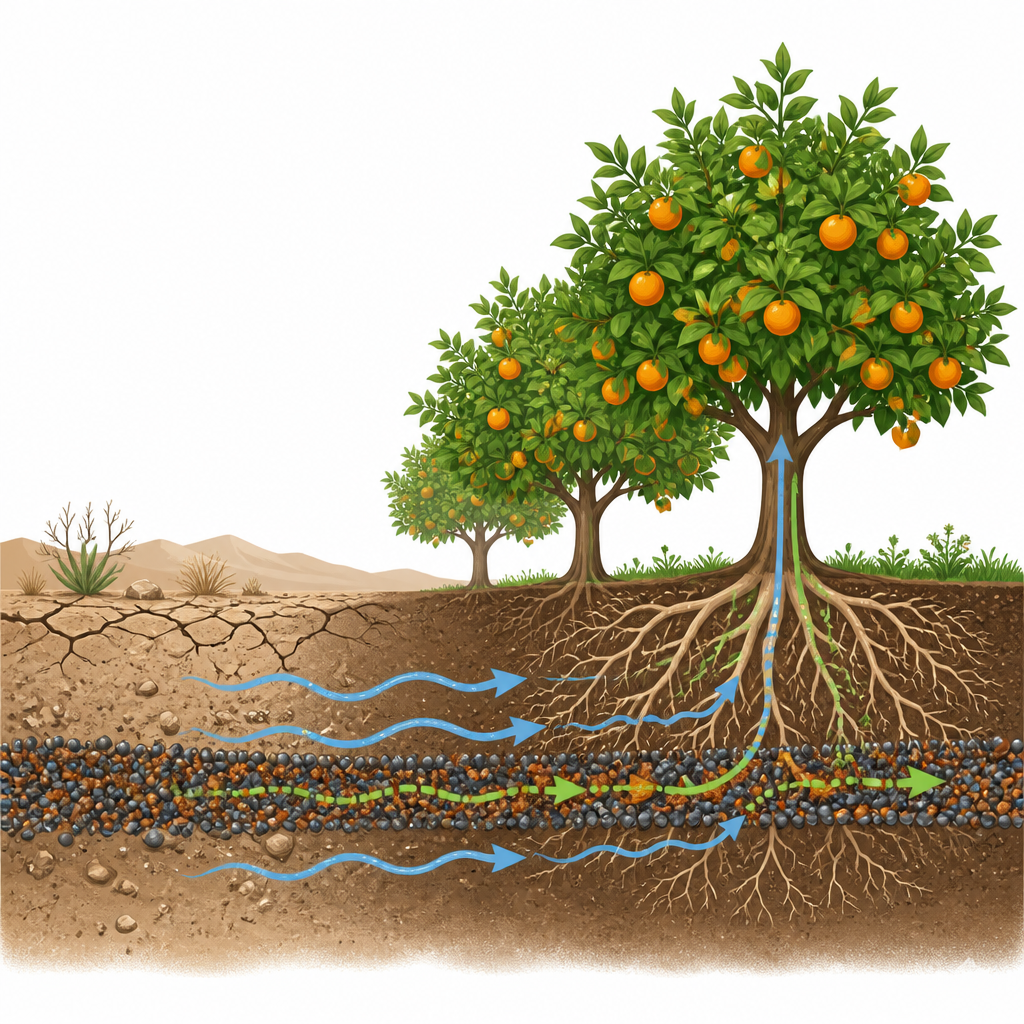
The researchers focused on a popular citrus variety called Fremont mandarin grown in a semi arid region of Egypt. The orchard soil there is sandy, low in organic matter, and not ideal for holding nutrients or water. The team tested adding different amounts of a natural iron rich rock called magnetic iron to the soil around the trees. Four groups of trees were compared over two seasons: some received no magnetic iron, while others received low, medium, or high doses once each year, mixed into the soil under the drip irrigation lines. All trees otherwise received the same water and fertilizer program, so any differences in growth or fruit could be traced back to the magnetic iron treatment.
Stronger trees with fuller canopies
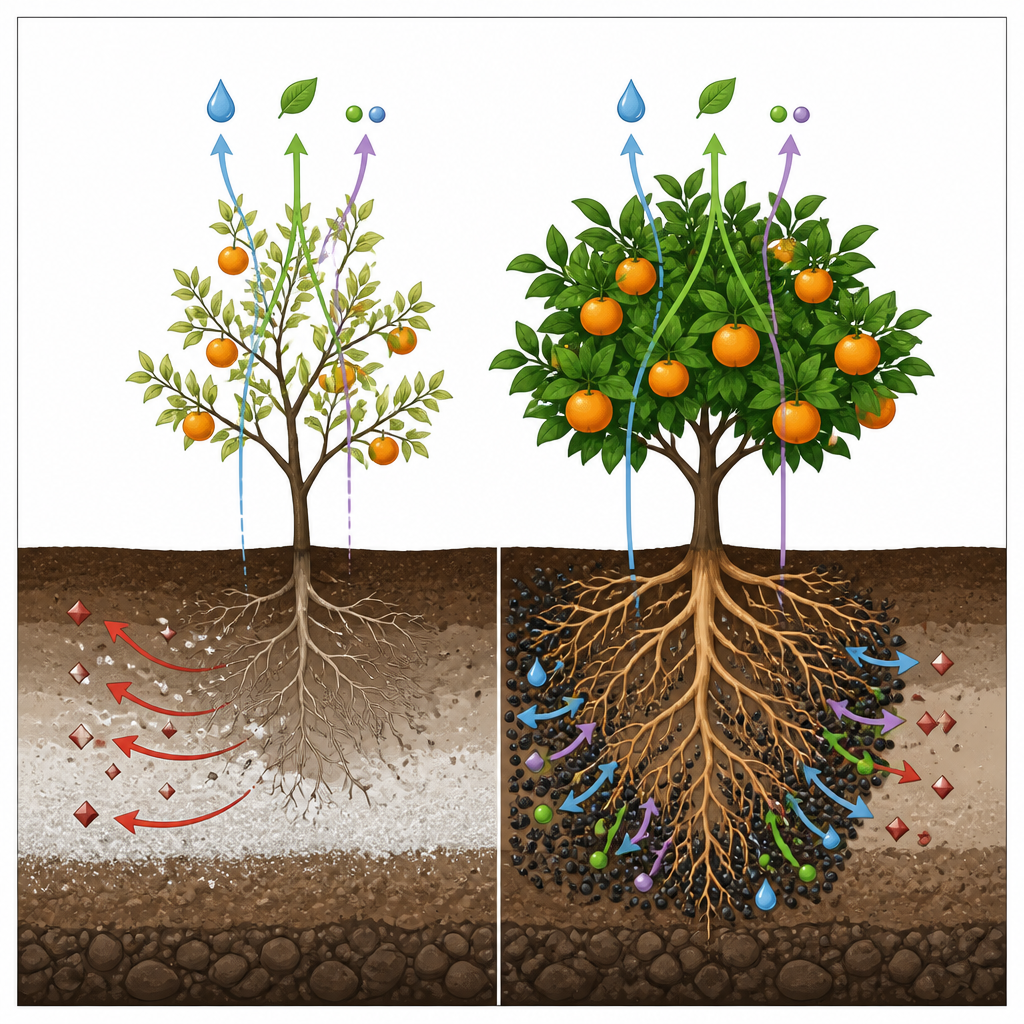
Trees growing in soil amended with magnetic iron quickly became larger and more vigorous than untreated trees. By the end of the study, the highest dose produced canopies more than twice the volume of the control trees, meaning more leaves to harvest sunlight and more branches to bear fruit. Leaf tests showed that trees receiving magnetic iron had higher levels of key nutrients such as nitrogen, phosphorus, potassium, and iron itself. At the same time, they contained less sodium and chloride, two salts that can quietly build up in dry regions and damage sensitive crops like citrus. The leaves also held more chlorophyll, the green pigment that powers photosynthesis, and stayed better hydrated, signs that the trees were functioning more efficiently.
Less stress inside the leaves
Leaf chemistry revealed that magnetic iron did more than simply feed the trees. Untreated trees had high amounts of proline, a small molecule plants often build up when they are under stress from drought or salt. As magnetic iron rates increased, proline levels steadily fell, suggesting that the trees were feeling less environmental pressure. Another group of protective compounds, called phenolics, also declined in leaves at the higher doses, consistent with the idea that the trees could shift resources away from defense and toward growth. Together with the improved water status and reduced salt in the leaves, these changes paint a picture of trees better buffered against the subtle but chronic stresses of farming in semi arid, sandy soils.
Heavier fruit, more juice, and better taste
The benefits below the surface showed up clearly at harvest. Trees grown with magnetic iron, especially at medium and high doses, produced more fruit by weight per tree, with total yields rising by around 70 percent at the highest rate compared with untreated trees. Individual fruits were heavier, larger, and firmer, traits that matter for both shoppers and shippers. The mandarins also contained more juice and more vitamin C. Measures of flavor showed small but important gains: the balance between natural sugars and acids shifted toward a sweeter taste without causing an excessive jump in sugar content. These changes point to better movement of water and nutrients into the fruit and more efficient use of sunlight to build sugars and antioxidants.
What this means for growers and consumers
For growers facing light, nutrient poor soils and rising water costs, the study suggests that adding a moderate amount of magnetic iron rock to the root zone can be a practical way to support tree health and fruit quality over multiple seasons. The material improved nutrient use, reduced the buildup of harmful salts in leaves, and increased yield and juice quality without raising heavy metal levels in the fruit. For consumers, the result is larger, juicier Fremont mandarins with higher vitamin C and a more pleasing sweet tart taste. While the authors recommend longer term studies and economic checks before wide adoption, their results indicate that a simple, eco friendly mineral amendment could help citrus orchards thrive under challenging conditions.
Citation: Hamdy, A.E., Mekky, A.E., Abdel-Aziz, H.F. et al. Evaluating the influence of magnetic iron as an eco-friendly soil amendment applications on agronomic and fruit quality parameters of ‘Fremont’ mandarin. Sci Rep 16, 14737 (2026). https://doi.org/10.1038/s41598-026-51001-3
Keywords: magnetic iron, citrus orchards, soil amendment, semi arid agriculture, fruit quality