Clear Sky Science · en
Longitudinal associations between internet access and cognitive decline in older adults
Staying sharp in a wired world
As more of daily life moves online, many families wonder whether helping grandparents get connected is just a convenience or if it truly supports healthy aging. This study followed thousands of middle aged and older adults in China to see whether simply having access to the internet was linked with clearer thinking over time, and whether staying in touch with family helped explain that link.
Why brain health in later life matters
Cognitive decline, which includes problems with memory, attention, and everyday thinking, is a growing concern in aging societies. It increases the risk of dementia, disability, and loss of independence. In China, millions of older adults already live with mild cognitive problems or dementia, placing heavy emotional and financial strain on families. Finding practical ways to protect brain health, especially those that can be built into daily routines, has become a public health priority.
The digital divide among older adults
While younger people are almost always online, many older adults are still on the wrong side of the digital divide. Barriers such as cost, lack of nearby infrastructure, and limited confidence with devices keep many from getting connected. Researchers in this study focused on the most basic layer of digital life: whether a person had access to the internet at all, defined as having used it in the past month. They argued that this simple measure captures who even has the chance to benefit from online activities, regardless of how skillful or frequent their use may be. 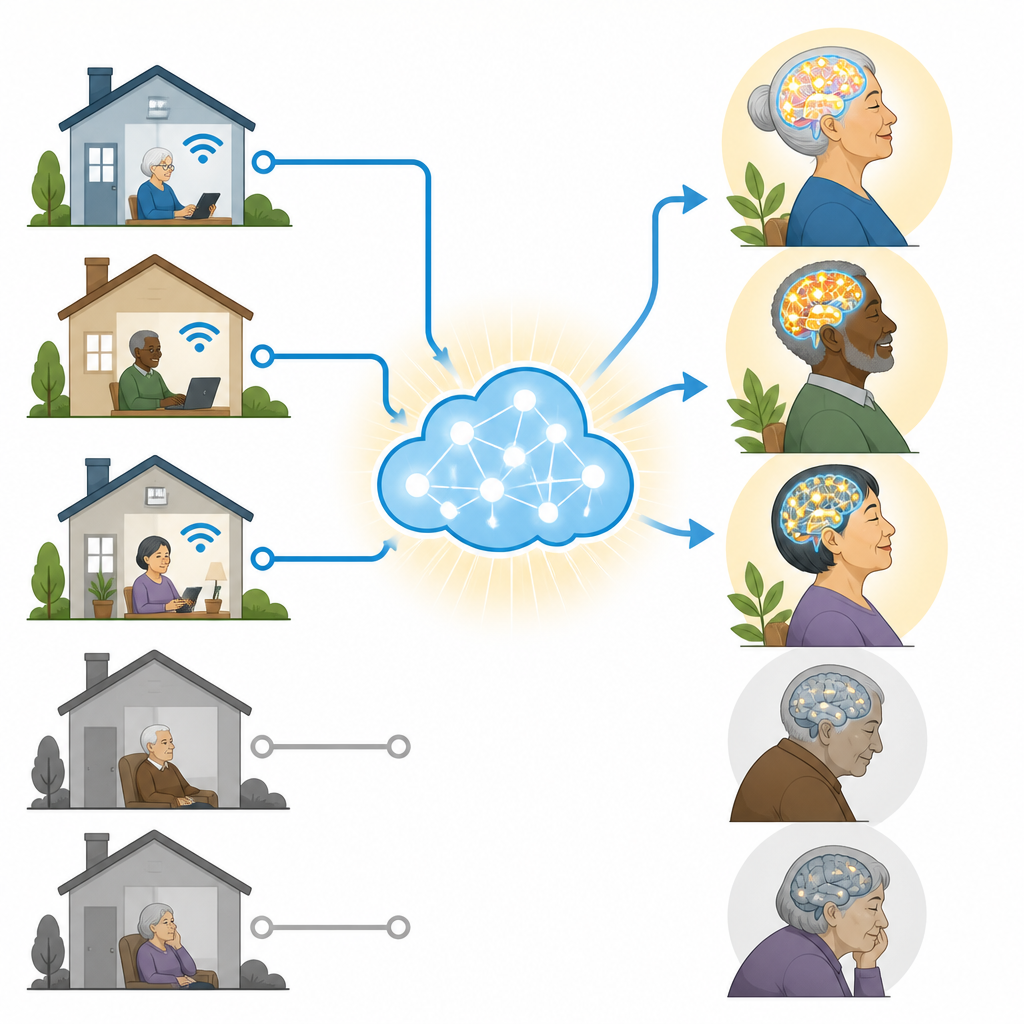
Tracking thinking skills over time
The team drew on data from the China Health and Retirement Longitudinal Study, a large national survey that follows adults as they age. They analyzed 7721 people aged 50 and older who completed thinking tests in both 2015 and 2018. Two key abilities were measured. One was episodic memory, captured by how many words people could recall from a short list, both right away and after a few minutes. The other was mental status, which covered simple math, knowing the date, and copying a shape. Higher scores meant better cognitive performance.
What internet access was linked to
Using statistical models that took into account age, sex, education, health conditions, mood, and earlier test scores, the researchers found that having internet access at the start of the study was linked to better thinking scores three years later. People with access showed greater gains in both memory and mental status than those without access. These patterns held even when the team limited the analysis to more educated participants or removed people who already showed signs of serious cognitive problems. When results were broken down by age, internet access was especially related to stronger memory in adults aged 50 to 59, and to better mental status in those aged 60 to 69.
Family ties as a key pathway
The study also examined whether connections with children helped explain the link between going online and brain health. Family connection was measured by whether older adults lived with a child, had a child nearby in the same community, and were in contact with their children at least once a week. A chain mediation analysis suggested that internet access was associated with stronger family connection, both at the beginning of the study and three years later, and that stronger family ties in turn were associated with better thinking scores. In other words, going online may help older adults stay in closer touch with their children, and this emotional and social support may contribute to healthier thinking. 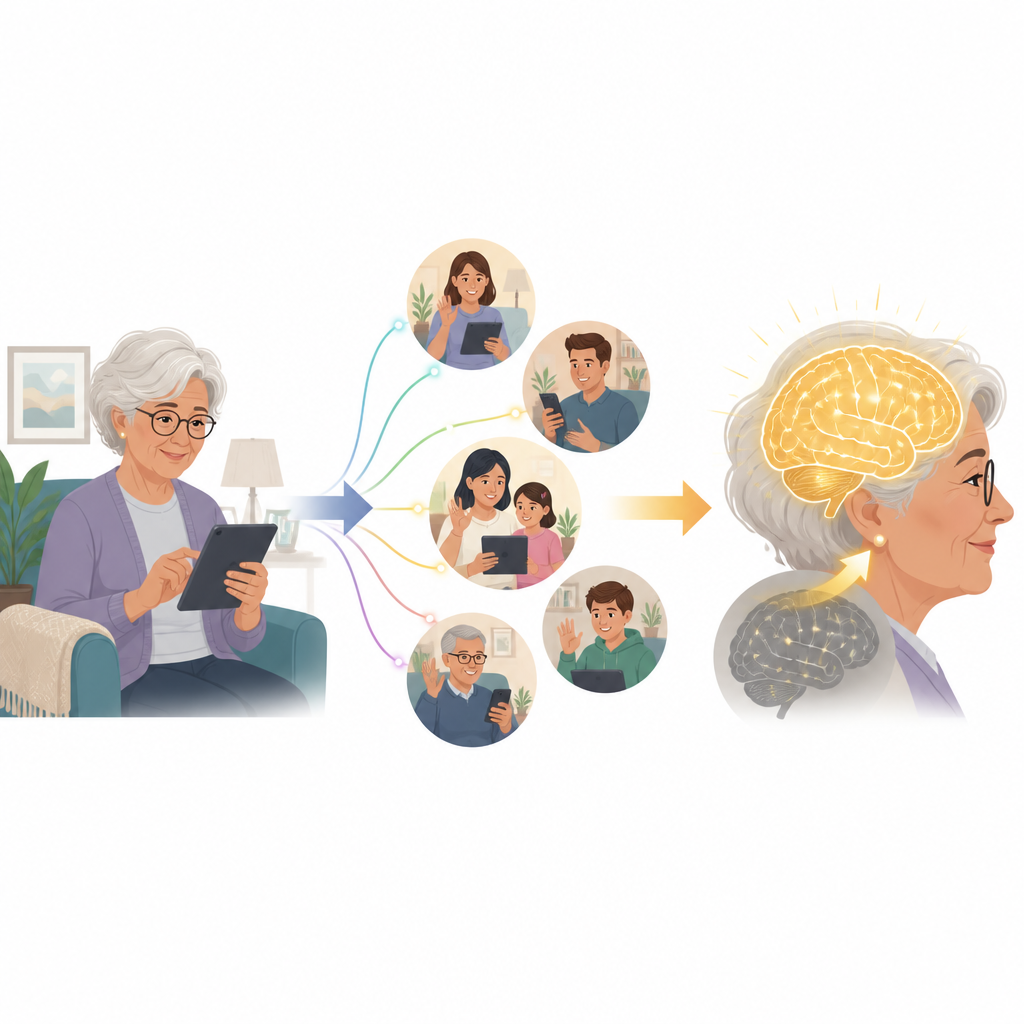
What this means for healthy aging
For a general reader, the takeaway is straightforward: in this large Chinese sample, older adults who had access to the internet tended to maintain or improve their thinking skills more than those who stayed offline, and part of this advantage seemed to come from closer family relationships. The study cannot prove cause and effect, and it used simple measures of both internet access and family connection, but it highlights digital inclusion as more than a matter of convenience or entertainment. Making it easier and more inviting for older adults to get online, and encouraging families to use digital tools to stay in touch, may be a practical part of helping minds stay clearer for longer.
Citation: Wang, H., Wang, Y., Wei, Y. et al. Longitudinal associations between internet access and cognitive decline in older adults. Sci Rep 16, 15476 (2026). https://doi.org/10.1038/s41598-026-50958-5
Keywords: internet access, cognitive decline, older adults, family connection, digital divide