Clear Sky Science · en
Designing a multi-epitope subunit vaccine against chikungunya virus using immunoinformatics and molecular simulation approaches
Why this mosquito-borne disease matters
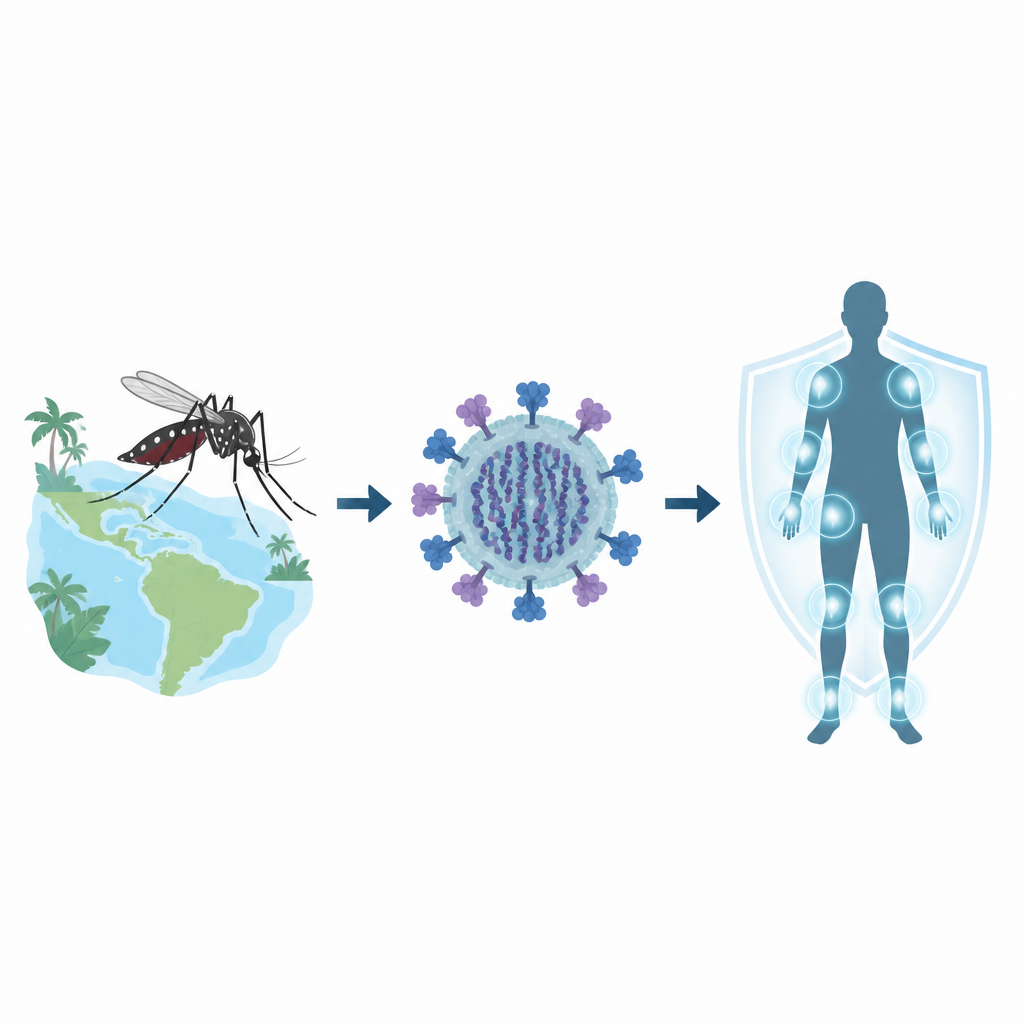
Chikungunya is a viral disease spread by mosquitoes that can leave people with high fever, rash, and crippling joint pain that sometimes lasts for months or even years. Outbreaks have struck countries in Asia, Africa, the Indian Ocean region, and the Americas, yet there is still no widely approved vaccine. This study describes a computer-designed vaccine that aims to protect people around the world by teaching the immune system to recognize several key pieces of the chikungunya virus at once.
Understanding the virus and its impact
The chikungunya virus carries its genetic material as RNA and is wrapped in several structural proteins that form its shell and outer coat. These proteins help the virus enter human cells and are also the main features our immune system can recognize. Because infections can lead to long-lasting joint problems and affect vulnerable groups such as newborns and older adults, scientists are eager to prevent disease rather than only treat symptoms. Earlier vaccine efforts have often focused on single viral proteins or limited sets of targets, which may not work equally well against all strains or in all populations.
Building a vaccine on a computer
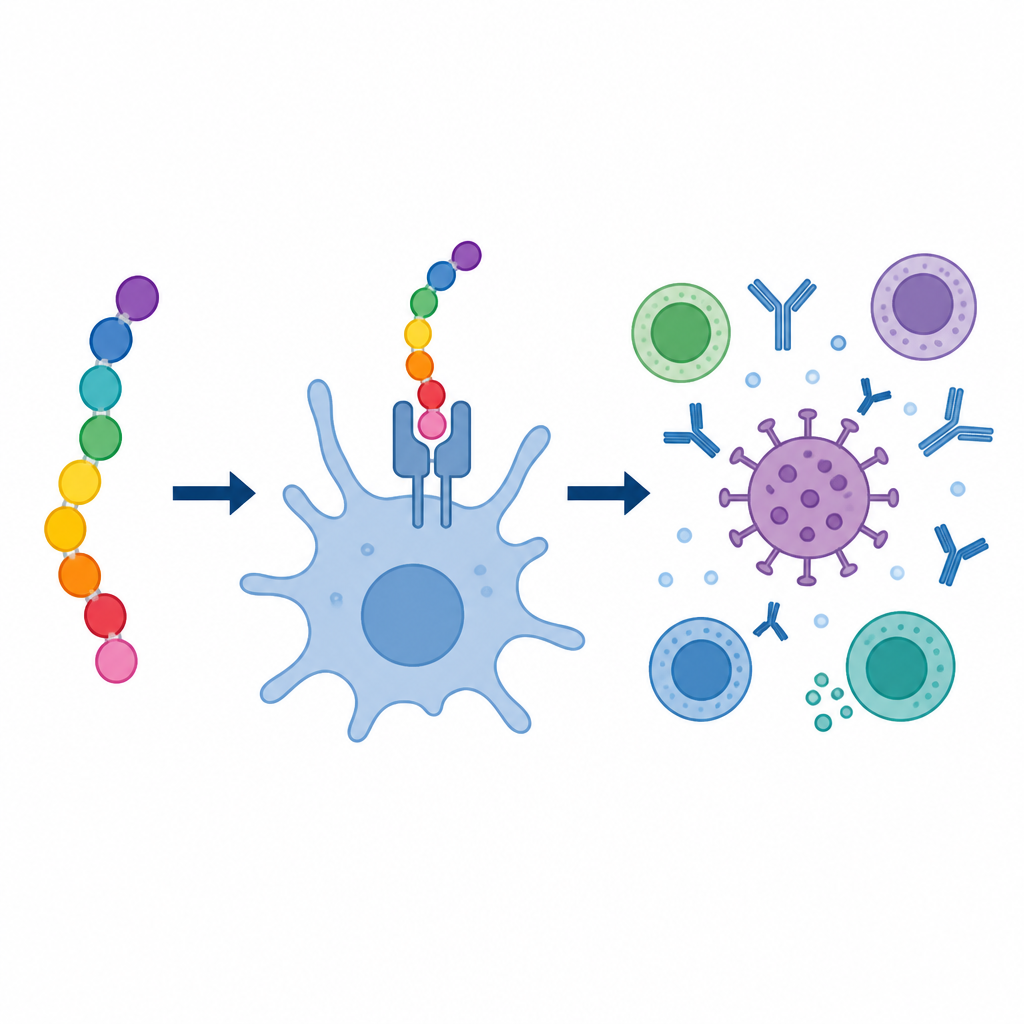
In this work, the researchers used a field called immunoinformatics, which applies computer tools to predict how the immune system will react to viral proteins. They started from a large structural “polyprotein” of chikungunya that includes all major building blocks on the virus surface. From this, they searched for small segments, known as epitopes, that immune cells are most likely to notice. They selected short pieces predicted to stimulate killer T cells, helper T cells, and B cells, while filtering out those that might be toxic, trigger allergies, or resemble human proteins. They also checked that these pieces are highly conserved across more than 1,500 virus samples, increasing the chance that a single vaccine could work against many different strains.
Designing a multi-piece vaccine molecule
Once the most promising epitopes were chosen, the team stitched them together into a single artificial protein, adding short spacer segments to keep the pieces from interfering with each other. At one end they attached an extra component, derived from a natural human defense protein, to help rouse the early immune response. Computer programs predicted that the resulting 402-amino-acid vaccine molecule would be stable, soluble, and strongly noticed by the immune system. The analysis also suggested that people worldwide, with very different genetic backgrounds, would have a high chance of responding to at least some of the included epitopes, with an estimated population coverage of more than 90 percent.
Testing fit and response in virtual experiments
The researchers then went a step further and modeled how the vaccine molecule might physically interact with a key immune sensor on human cells, a protein called TLR4, as well as another sensor, TLR2. Computer docking and long molecular simulations indicated a tight and stable fit, supported by many molecular contacts, suggesting the vaccine could efficiently trigger early warning signals. A separate immune simulation, which mimics how immune cells behave over time, showed repeated “virtual” vaccinations leading to rising levels of antibodies, growth of memory B cells, and strong helper and killer T cell responses. These patterns are typical of a protective response that could clear the virus more quickly during a real infection.
Preparing for lab production
Because any protein vaccine must be manufactured before it can be tested, the team also redesigned the genetic code of the vaccine for efficient production in common laboratory bacteria. They optimized the DNA sequence so that bacterial machinery could read it easily, and used computer tools to check that the resulting messenger RNA would fold in a stable way inside cells. Virtual cloning into a standard production plasmid suggested that large-scale manufacturing should be technically feasible once lab work begins.
What this means and what comes next
Overall, the study presents a detailed computer-based blueprint for a chikungunya vaccine built from many carefully chosen viral fragments. The analyses suggest this candidate should be safe, stable, highly visible to the immune system, and likely to protect people in many regions of the world. However, all of these results are predictions. The next steps will require laboratory experiments to produce the vaccine protein, test how immune cells actually respond, and eventually see whether it can protect animals and, later, humans from chikungunya infection.
Citation: Ahmed, S., Mondal, A., Hossain, A. et al. Designing a multi-epitope subunit vaccine against chikungunya virus using immunoinformatics and molecular simulation approaches. Sci Rep 16, 16260 (2026). https://doi.org/10.1038/s41598-026-50862-y
Keywords: chikungunya virus, multi-epitope vaccine, immunoinformatics, subunit vaccine, mRNA vaccine design