Clear Sky Science · en
EEG-based stress classification using time-domain features and segmentation techniques
Why stress in the brain matters to everyday life
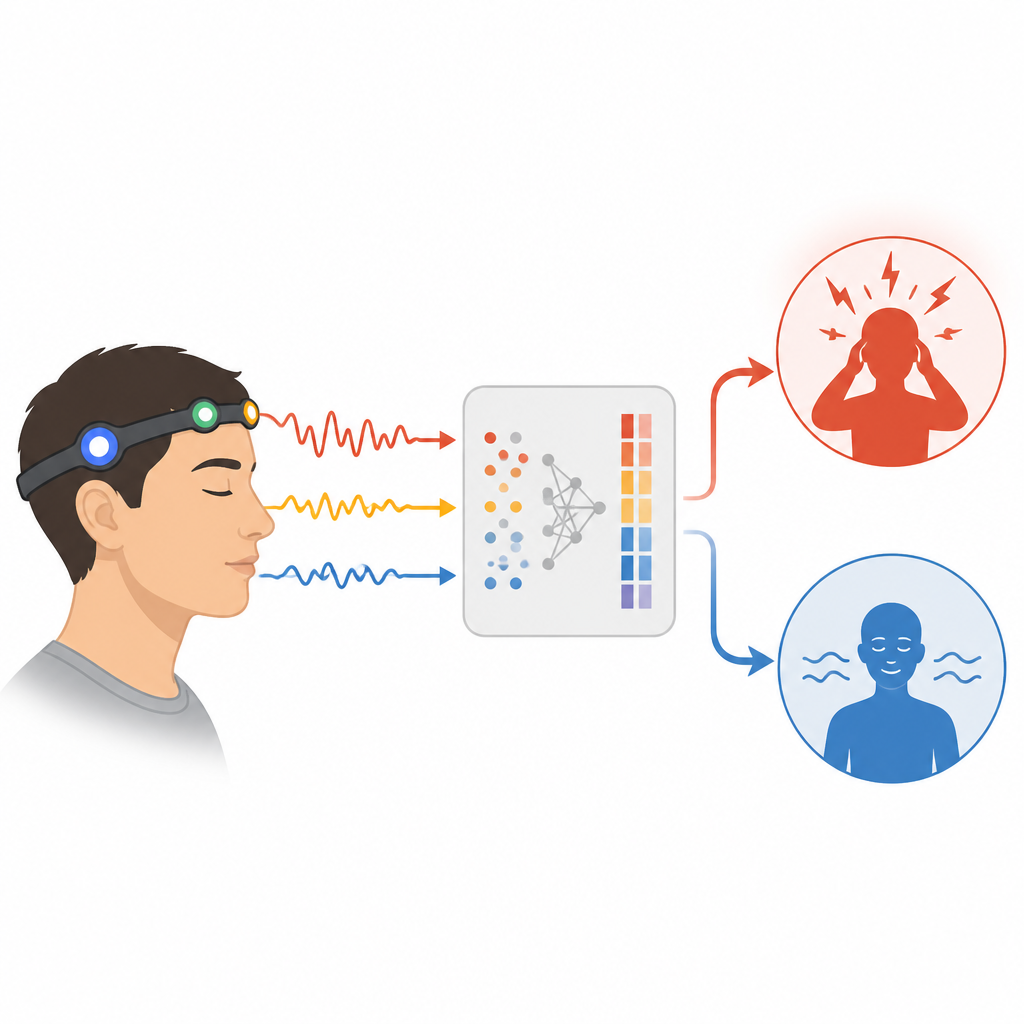
Stress shapes how we feel, think, and work, but it is usually tracked with surveys that ask people how they feel. These tools are valuable yet subjective and cannot watch stress rise and fall over the course of a day. This study explores whether a small set of brainwave sensors can offer an objective, fast way to tell who is stressed and who is not, using methods simple enough to fit into future headbands or other wearable gadgets.
Listening to stress through brainwaves
The researchers turned to electroencephalography, or EEG, which records the electrical activity of the brain from sensors placed on the scalp. They used a large public dataset of healthy volunteers whose stress levels had already been scored with a standard questionnaire. Instead of relying on many sensors, they focused on just four placed over the forehead and sides of the head, regions linked to emotion and stress control. Each person had about eight minutes of resting brain activity recorded, giving a long stretch of data in which stress related patterns might be hiding.
Chopping long signals into short snapshots
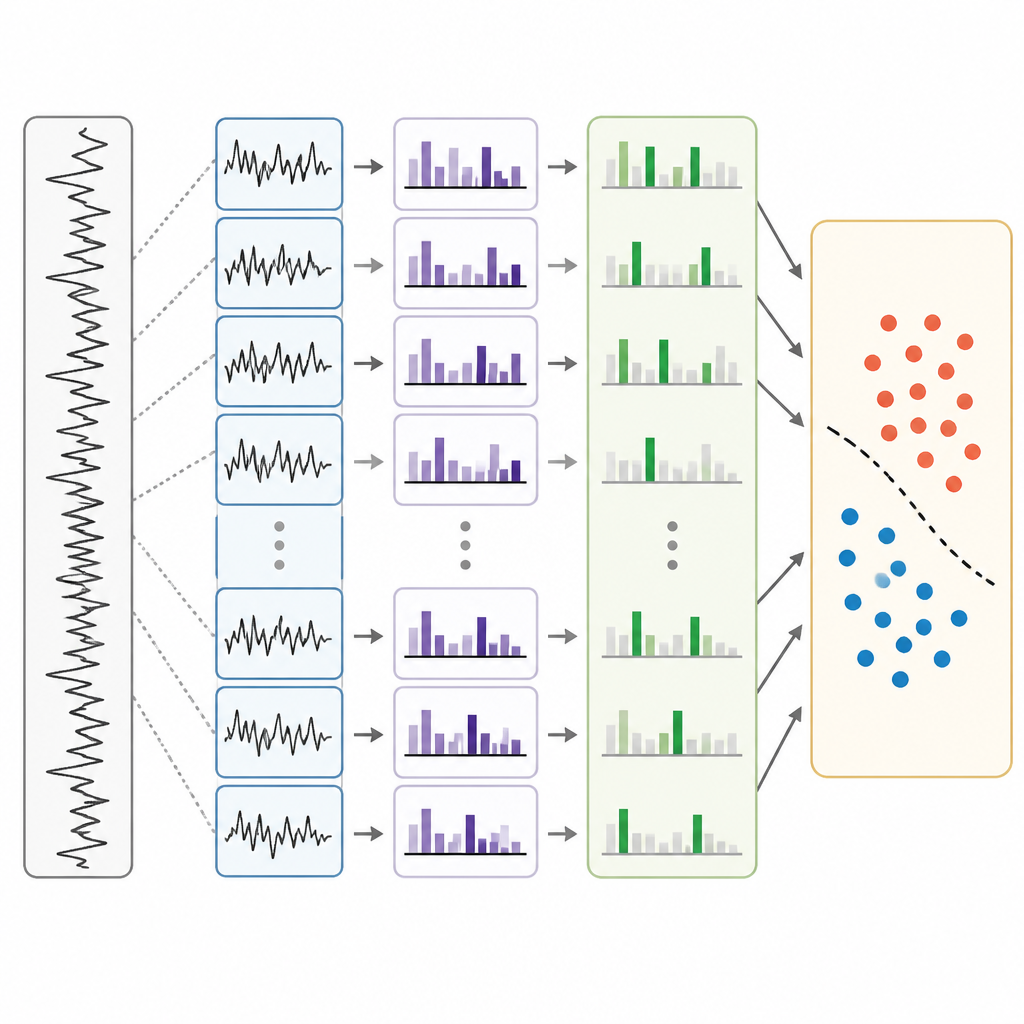
To make sense of these long recordings, the team sliced each person’s EEG into short pieces, or windows. They tried two simple strategies. In the non overlapping approach, the eight minute signal was cut into back to back ten second chunks that did not share any data. In the overlapping approach, windows slid along the recording with shared portions, producing more but partly repeated snapshots. Comparing these two ways of chopping the data helped the team see which gave cleaner, more useful information about stress.
Turning raw waves into numbers a computer can read
Once the windows were defined, each chunk of brainwave data was reduced to a set of basic numerical features that capture its shape and variability. These included familiar ideas such as average value, spread, and energy, as well as how sharply the signal rises and falls and how predictable it is. From 20 such features per window, an information based method then picked out the ones that carried the most useful clues about whether the person belonged to the stressed or non stressed group. In many cases, features drawn from a single frontal sensor over the right side of the head stood out as especially informative.
Letting simple algorithms sort stressed from calm
With a compact set of features in hand, the authors tested five off the shelf machine learning methods to see how accurately they could separate stressed volunteers from non stressed ones. They used a standard testing approach in which the data are repeatedly split into training and testing portions to estimate performance fairly. Across these trials, a method called k nearest neighbors, which classifies each new example by comparing it to its closest neighbors in the data, performed best. Using non overlapping windows from the four sensors, it correctly labeled stress status in about 96 out of 100 cases, beating several other popular methods that are often used for EEG studies.
What this means for future stress tracking
For readers, the key message is that accurate stress detection may not require deep learning or bulky, high channel brain scanners. This work shows that a modest number of sensors, simple ways of chopping signals into short segments, and straightforward numerical summaries can together provide strong clues about who is stressed. While more work is needed to test such systems in everyday settings and on new groups of people, the study suggests that future headbands or other wearable devices might quietly track stress through brain activity and help people notice and manage it earlier.
Citation: Rauf, U., Zahid, A., Qadeer, A. et al. EEG-based stress classification using time-domain features and segmentation techniques. Sci Rep 16, 16568 (2026). https://doi.org/10.1038/s41598-026-50857-9
Keywords: EEG stress detection, brainwaves, machine learning, wearable sensors, mental health monitoring