Clear Sky Science · en
Development and evaluation of a propolis, tea tree oil, and jojoba oil nanoemulgel with enhanced antioxidant, anti-inflammatory, and wound-healing activities
Natural help for damaged skin
Scrapes, burns, and chronic wounds are more than minor annoyances; when skin does not heal well, it raises the risk of infection, pain, and scarring. Many people also prefer gentle, plant based remedies over harsh synthetic drugs. This study explores a gel made from three familiar natural products, shaped into tiny droplets, to see whether it can help skin wounds close faster and more cleanly.
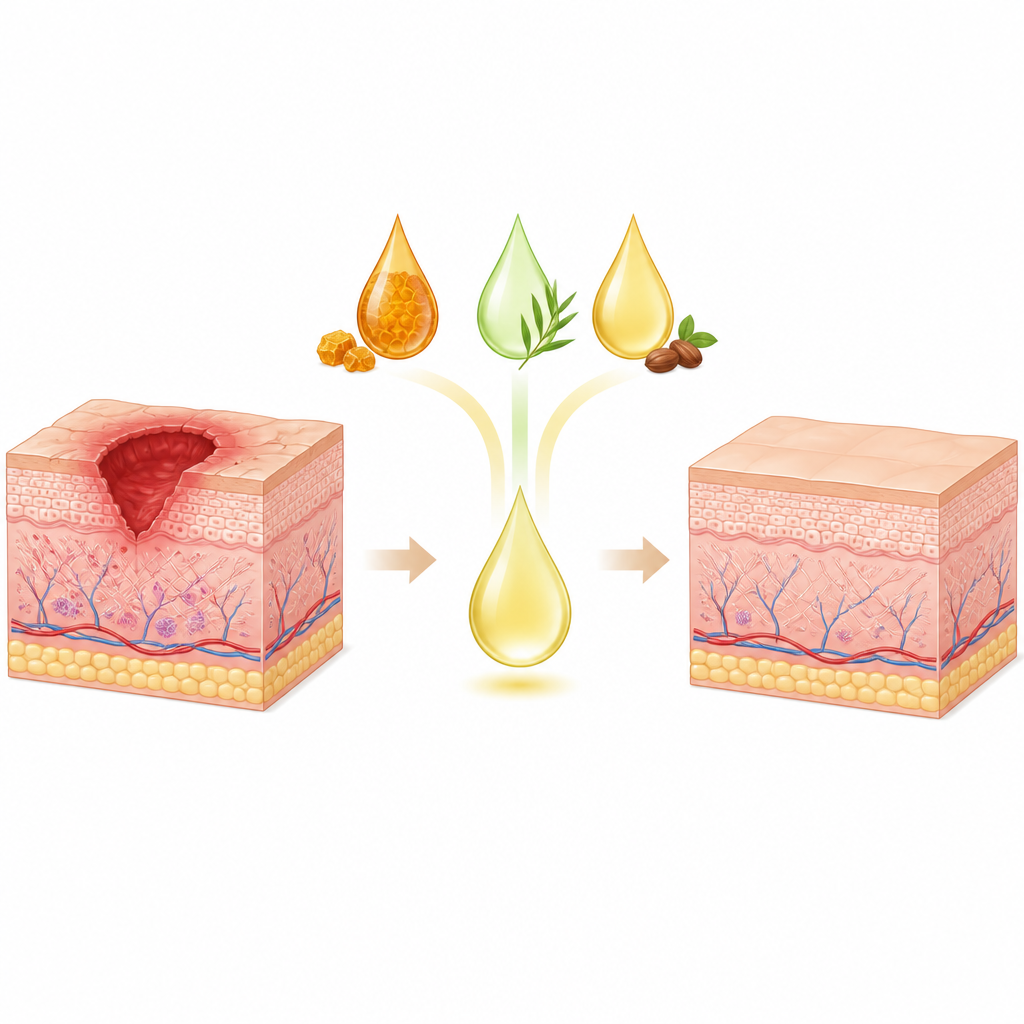
Three gifts from bees and plants
The researchers focused on propolis, tea tree oil, and jojoba oil. Propolis is a resin that bees collect from plants and use to seal and protect their hives; it is rich in natural compounds with germ fighting and soothing properties. Tea tree oil is well known for helping with skin infections, and jojoba oil is widely used in cosmetics because it calms irritation and supports the skin barrier. While each of these ingredients has helpful effects on its own, the team wanted to see whether combining them in a modern skin friendly formulation could create a stronger, more reliable wound treatment.
Tiny droplets in a soft gel
Instead of applying the oils directly, the scientists trapped them in extremely small droplets, tens to hundreds of nanometers across, suspended in water. This structure, called a nanoemulsion, helps oily ingredients spread evenly and slip into the outer skin layers. They then mixed the best performing nanoemulsion into a clear gel base to make a "nanoemulgel" that stays on the skin surface without running. Careful measurements showed that the chosen formula formed stable, uniform droplets with a negative surface charge, which helps keep them from clumping together. Tests in the lab confirmed that the gel steadily released propolis over time and that far more of it entered and stayed in the skin compared with a simple propolis gel.
Fighting irritation and cell stress
To understand how the gel might help a wound, the team tested it on skin related cells. In cell based assays, the nanoemulsion strongly reduced signs of protein damage and mopped up harmful free radicals, both of which are tied to inflammation and delayed healing. When cells were pushed into an inflamed state, treatment with the propolis, tea tree, and jojoba nanoemulsion lowered key alarm signals linked to swelling and pain. At the same time, it boosted the cells’ own defense systems that guard against oxidative stress and tuned the balance of molecules involved in cell survival, suggesting that the formulation protects healthy cells while calming overactive responses.
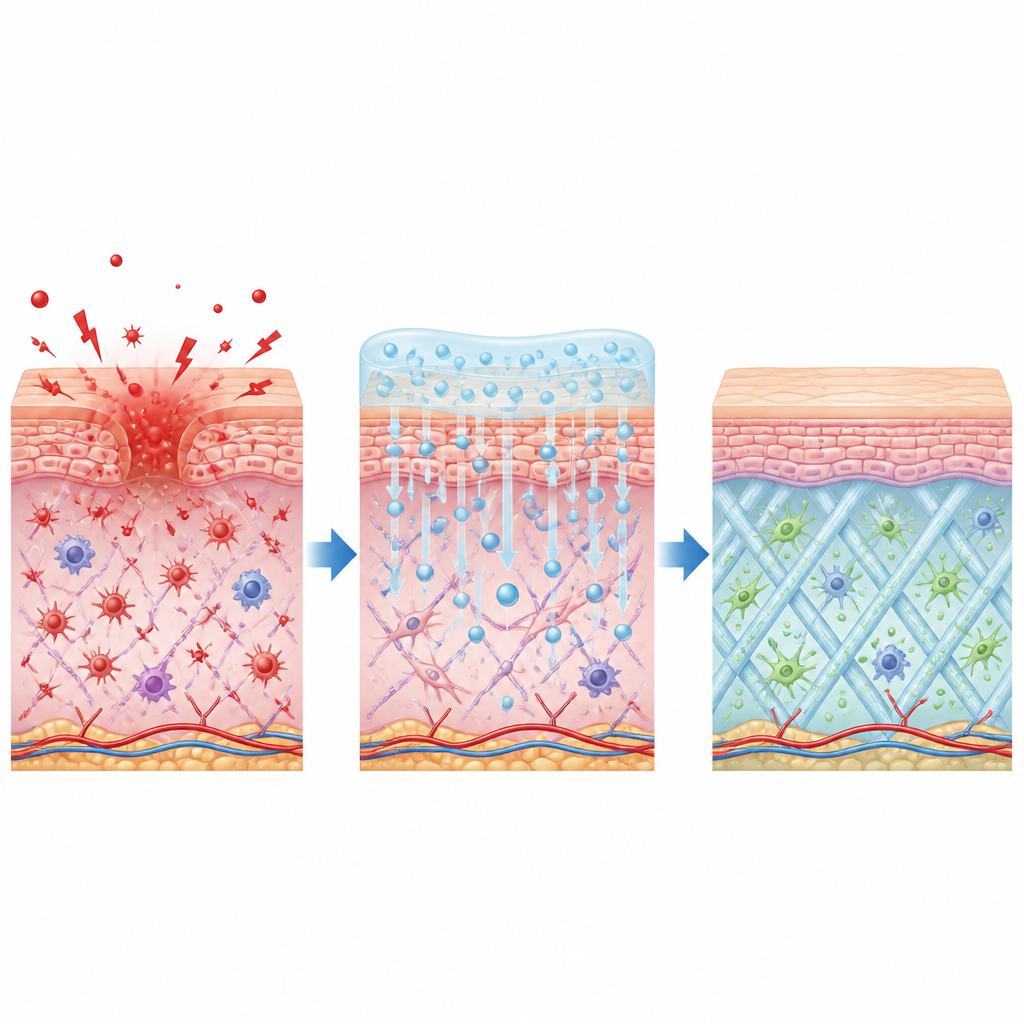
Faster healing in animal wounds
The most telling test came from experiments in rats with carefully created skin wounds. One group received no treatment, another received a similar gel without propolis, and a third received the full propolis nanoemulgel. Over two weeks, the treated wounds were photographed and analyzed. The animals treated with the full gel showed quicker narrowing of the wound area and nearly complete closure by day 14. Chemical markers in the healing tissue showed lower levels of oxidation and inflammation, along with higher activity of protective enzymes. Under the microscope, wounds treated with the full gel had fewer inflammatory cells, thicker and more organized collagen fibers, and a more complete new skin layer than the other groups.
What this could mean for everyday care
In plain terms, the study suggests that packaging bee resin and plant oils into tiny droplets inside a gel can help wounds close faster and with less irritation, at least in animals and lab grown cells. The combined gel appears to calm inflammation, reduce oxidative stress, and support the rebuilding of healthy tissue better than gels without propolis or with crude extracts. While more research is needed in long lasting and infected wounds, and in human patients, this work points toward a future where a natural, eco friendly gel might be used as a simple topical aid to support the body’s own wound healing process.
Citation: Saad, M.H., Kandil, S.M., Farid, A. et al. Development and evaluation of a propolis, tea tree oil, and jojoba oil nanoemulgel with enhanced antioxidant, anti-inflammatory, and wound-healing activities. Sci Rep 16, 16143 (2026). https://doi.org/10.1038/s41598-026-50846-y
Keywords: wound healing, propolis, tea tree oil, nanoemulgel, antioxidant