Clear Sky Science · en
Harnessing eco-friendly synthesis: the in vitro bioactivity and biocompatibility of ceramic spinels
Why greener bone repair materials matter
Broken bones and worn joints are often repaired with metal screws, cements, or ceramic implants that do not fully blend with the body. This study looks at a new class of ceramic materials that could one day help bone regrow more naturally while being made with a cleaner, more sustainable process. The researchers compare two closely related ceramics, one based on manganese and the other on zinc, to see which is safer for cells and better at attracting new bone-like mineral.
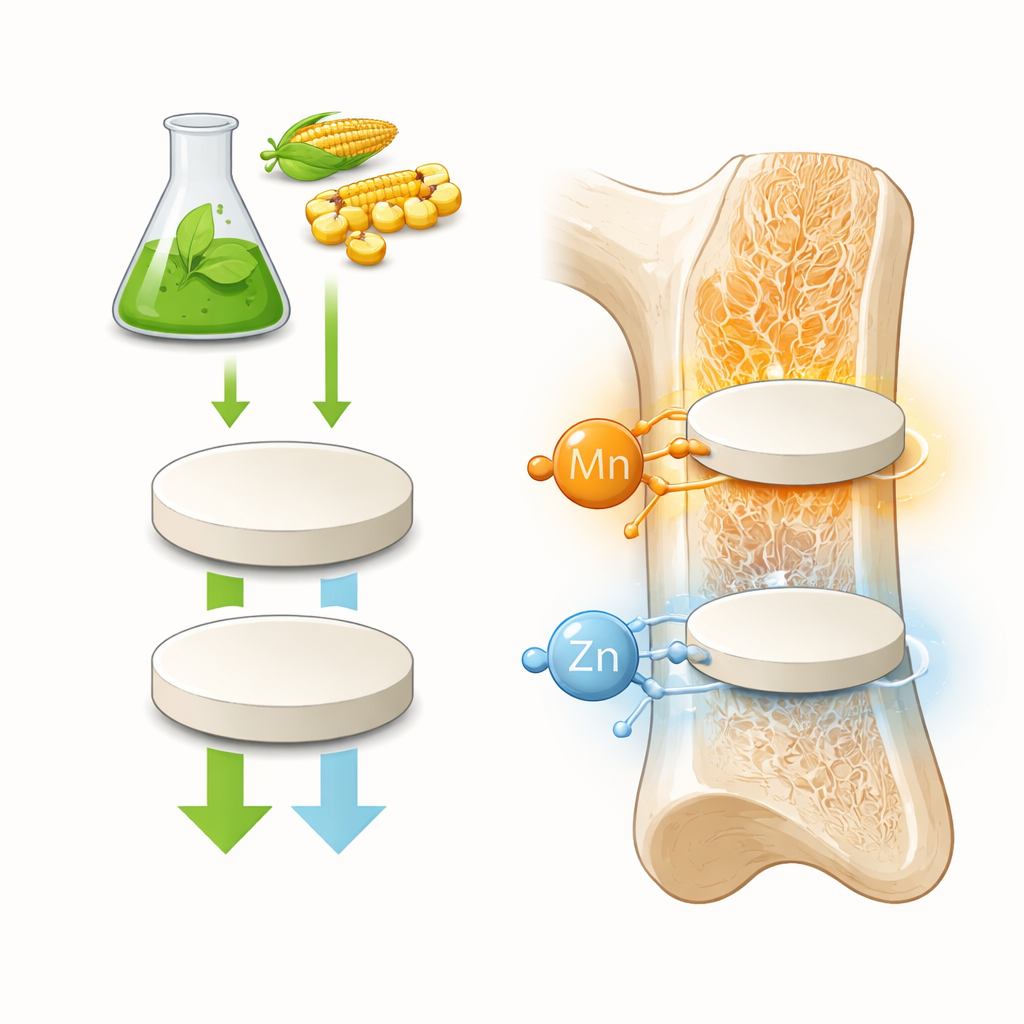
Building bone-friendly ceramics from simple ingredients
The team focused on two spinel ceramics, manganese aluminate and zinc aluminate, which are sturdy mixed-oxide materials already known for their stability. They devised an eco-friendly way to make these powders using common corn starch as a natural gelling agent. In hot water, starch forms a thick network that holds metal ions in place, helping them mix evenly at the nanoscale. After gentle heating to a relatively modest 1000 °C, the organic starch burns away, leaving behind pure, well-formed ceramic crystals made from biologically relevant elements.
Peering into structure, size, and surface
To understand what they had made, the researchers used a set of laboratory tools that reveal crystal structure, chemical bonds, and particle size. Both ceramics showed clean, highly ordered spinel structures with no unwanted phases. The key differences emerged at smaller scales. The manganese ceramic formed much finer particles, around 80 nanometers wide, while the zinc ceramic particles were several times larger. Infrared measurements also showed that the manganese surface carried many more hydroxyl groups and adsorbed water, making it more welcoming to ions in liquid. Together, the smaller size and wetter surface suggested that the manganese material would interact more readily with body-like fluids.
Testing how well the ceramics invite bone growth
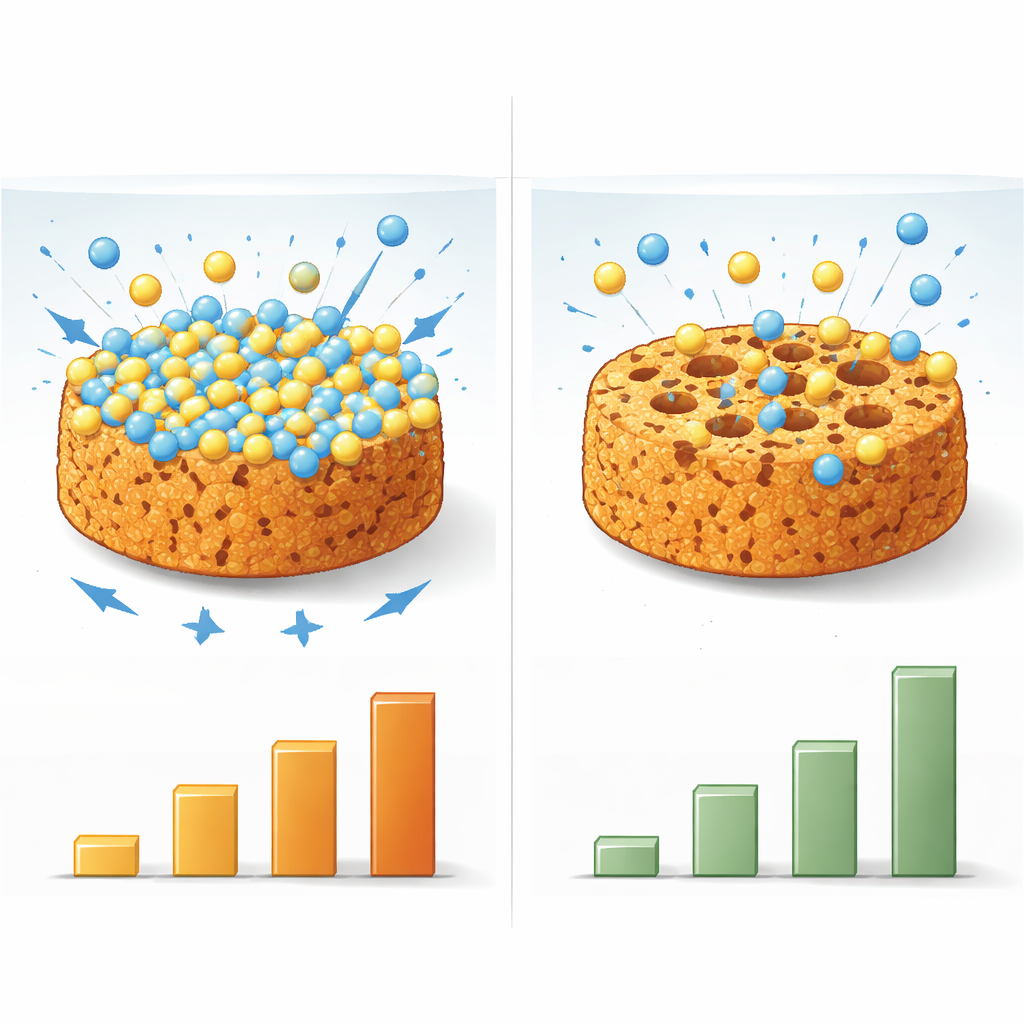
The next step was to see how each ceramic behaves in a liquid that mimics human blood plasma, known as simulated body fluid. When a material is truly bone friendly, it encourages a calcium phosphate layer to form on its surface, similar to the mineral found in real bone. Both ceramics produced such a layer, but the manganese version did so faster and more completely. The calcium-to-phosphorus ratio on its surface was close to that of natural bone mineral, and its pores gradually filled with this new deposit. As mineral built up, the manganese ceramic became denser, its porosity dropped, and its compressive strength rose by about 42 percent over 28 days, outpacing the zinc ceramic at every time point.
How living cells respond to the new materials
Any potential implant must be safe for nearby cells. The researchers exposed human skin fibroblasts, a sensitive cell type that often encounters implants first, to liquid extracts from both ceramics for several days. The manganese ceramic maintained cell health across all tested concentrations and times, while the zinc ceramic began to cut cell viability by about one fifth after five days. Measurements of dissolved ions showed that zinc was released more quickly and in higher amounts, which may push it toward harmful levels, whereas manganese was released more steadily and moderately. Both materials boosted alkaline phosphatase activity, a marker related to bone-forming processes, but only the manganese ceramic paired this stimulation with consistently low toxicity.
What this means for future bone repair
Put together, the findings show that the manganese-based ceramic combines several desirable traits: it is made through a greener route, it attracts bone-like mineral quickly, it gains strength as it spends time in a body-like fluid, and it remains kind to human cells over several days. The zinc ceramic still shows useful activity but carries a higher risk of cell stress over time. While these results do not mean the manganese material is ready for clinics yet, they highlight it as a strong candidate for future bone grafts and implants that can share load, support healing, and be produced in a more environmentally friendly way.
Citation: Kenawy, S.H., El-Bassyouni, G.T., Hamzawy, E.M. et al. Harnessing eco-friendly synthesis: the in vitro bioactivity and biocompatibility of ceramic spinels. Sci Rep 16, 14732 (2026). https://doi.org/10.1038/s41598-026-50766-x
Keywords: bioactive ceramics, bone regeneration, manganese aluminate, zinc aluminate, biocompatibility