Small wearable sensors that track blood sugar every few minutes are moving from diabetes clinics into everyday life. They promise effortless food logging, personalized diet advice, and smarter digital health tools. But to turn raw sugar curves into useful feedback, computers first have to answer a deceptively simple question: when did you eat? This study asks how well different computer methods can spot meals from sugar data alone in young, healthy adults.
How computers watch your sugar curve
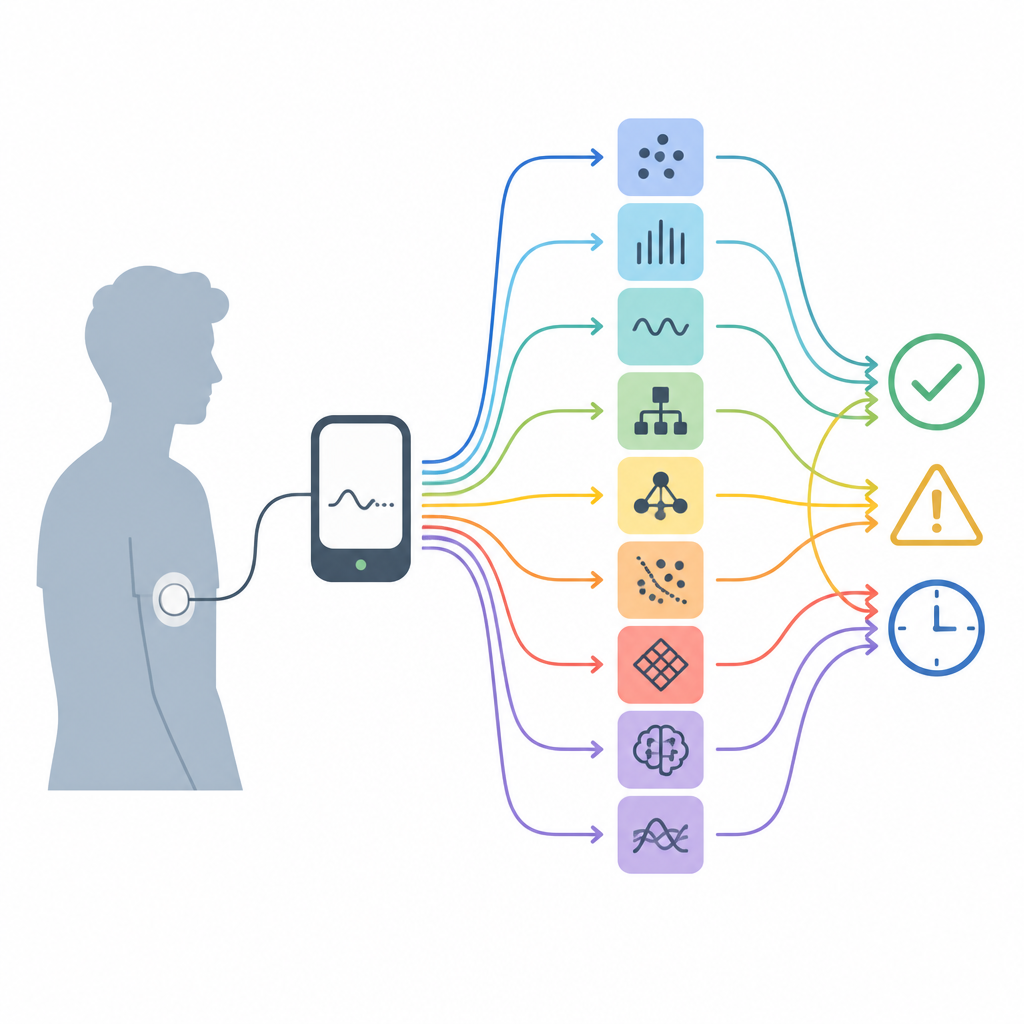
The researchers looked at continuous glucose monitoring, or CGM, which uses a patch on the arm to measure sugar in the fluid just under the skin. Every meal leaves a fingerprint in this sugar curve, with a gentle rise after eating. Over the past years, scientists have created many “meal detection” recipes for computers, from simple rules that look for quick jumps in sugar to more advanced systems that imitate how the body handles sugar or learn patterns from data. Most of these methods, however, were tested separately on different groups of people, making it hard to know which approach truly works best.
Putting nine approaches to the test Figure 1. How body worn sugar sensors and smart algorithms work together to detect when people eat in daily life
To make a fair comparison, the team re-created nine published algorithms that rely only on CGM signals. They applied them to data from 16 young, healthy adults who wore sensors for three weeks while following either a low-carbohydrate or a standard diet. Meals were logged in a phone app. For each person, part of the data was used to tune each algorithm, part to refine settings, and the rest was held back as an unseen test. The researchers judged performance by three simple measures: how many meals were correctly detected, how many “false alarms” occurred per day, and how long after a meal the alert appeared.
Speed versus reliability in spotting meals
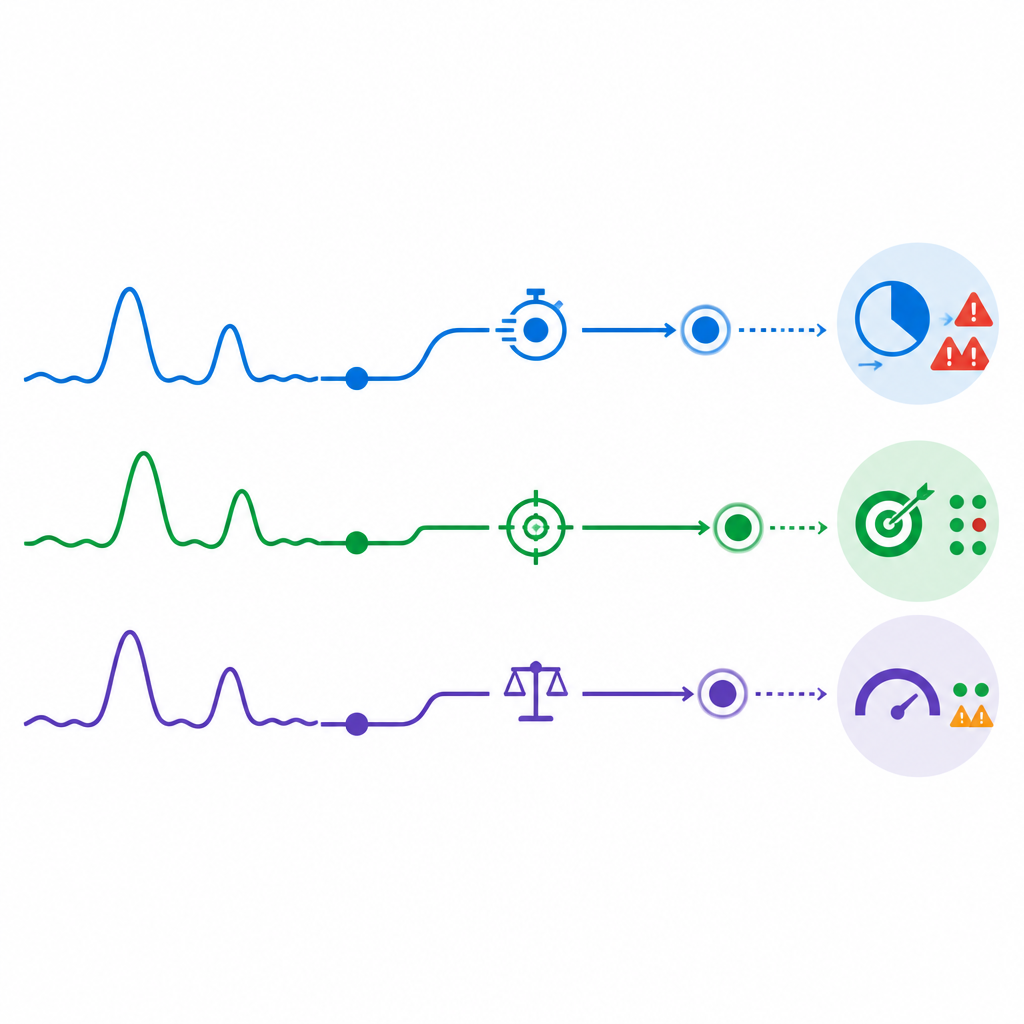
The head-to-head test showed that no single method was best on all three measures. Some algorithms based on fuzzy logic or detailed computer simulations of sugar behavior caught the largest share of meals, approaching nine out of ten, but they were slower to react and triggered more false alerts. Pattern recognition methods, which learn typical shapes of sugar curves, and a physiology-based model offered the most balanced mix of high detection, few false alarms, and moderate delay. Simpler rule-based methods that look mainly at how fast sugar is rising were quickest to signal a meal, often within about 37 minutes, but they missed more eating events. In everyday terms, users must choose between a system that is very alert but a bit jumpy, one that is cautious but slower, or a middle ground.
How diet and body shape change the picture Figure 2. Different algorithm paths trade speed, accuracy, and false alerts when reading meal patterns from sugar curves
The study also found that meal detectability depends on the person and what they eat. Participants on a standard, higher-carbohydrate diet showed larger sugar bumps after meals, making it easier for all algorithms to recognize eating events. Those on a low-carbohydrate plan had smaller sugar changes, which reduced detection odds across the board. Higher daily carbohydrate intake was linked to more false positives, likely because longer sugar rises are easier to misread. Slightly higher body weight was associated with marginally lower detection rates, which may relate to known quirks of the specific sensor used. These findings underline that there is no one-size-fits-all threshold for spotting meals from sugar data.
What this means for future food tracking
For people using CGM to monitor habits or support diet coaching apps, occasional false alerts may be acceptable if most meals are captured, since users can quickly confirm or dismiss an alert. In that case, algorithms that favor sensitivity may be preferred. In clinical tools such as automated insulin delivery, however, false alarms can be risky, so safer choices may be those that trade some speed or sensitivity for fewer mistakes. The authors conclude that rather than hunting for a single “best” method, designers should match the algorithm to the job, and future work should focus on cutting detection time while keeping accuracy high and expanding tests to more diverse groups.
Citation: Höchsmann, C., Weber, J.T., Hechenbichler Figueroa, S. et al. Performance of continuous glucose monitoring-based meal detection algorithms in young healthy adults.
Sci Rep16, 15714 (2026). https://doi.org/10.1038/s41598-026-50699-5