Clear Sky Science · en
Identification of physiological races of Puccinia striiformis f. sp. tritici and molecular docking of some biological treatments as prospective fungal inhibitor candidates in wheat
Why protecting wheat matters
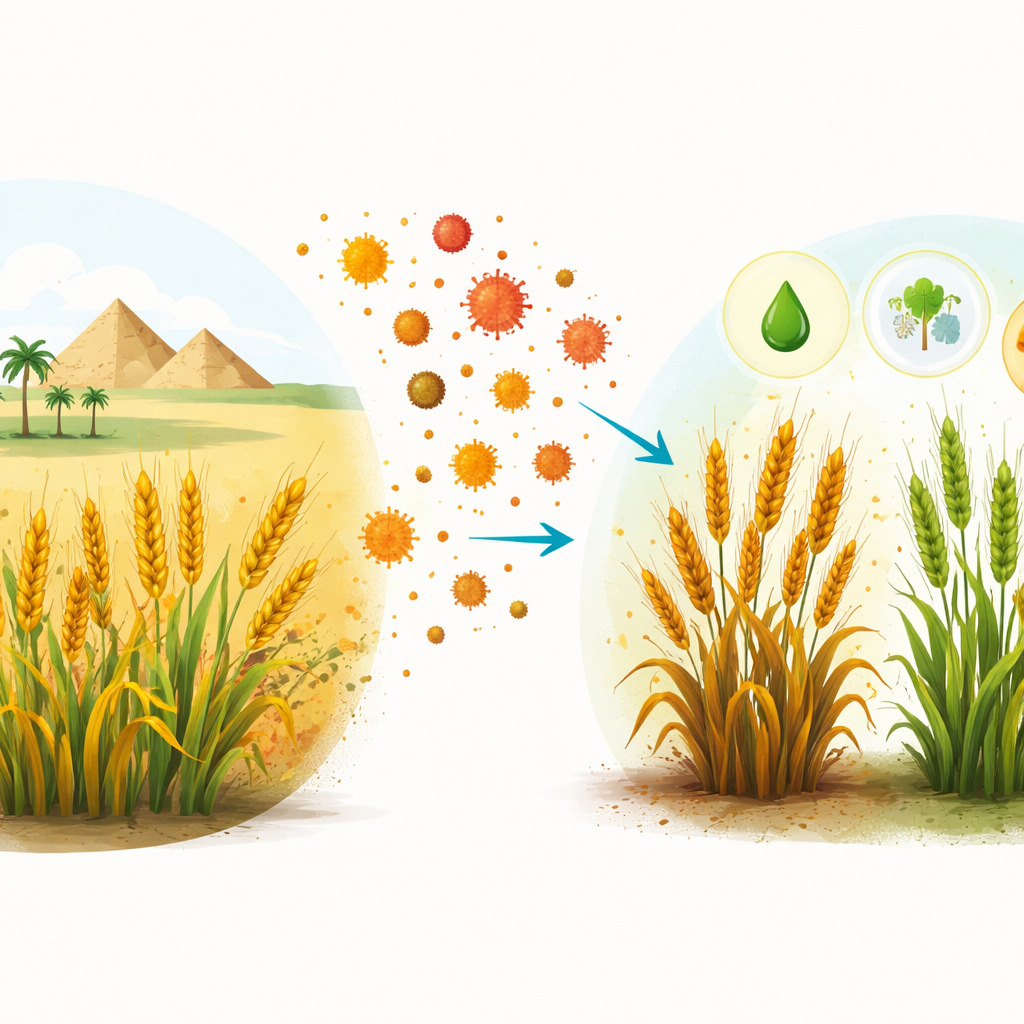
Wheat is a cornerstone of the human diet, and in countries like Egypt it is especially critical for daily bread. Yet a tiny fungus that paints yellow stripes on leaves—known as stripe rust—can wipe out whole fields, slashing harvests and threatening food security. This study tracks new, highly aggressive forms of the stripe rust fungus in Egypt and explores greener ways to stop them using natural products from seaweed, helpful fungi, and chitosan nanoparticles instead of relying only on chemical sprays.
A spreading wheat disease
Stripe rust thrives in cool, moist conditions and has a remarkable talent for changing its genetic makeup, allowing it to outsmart wheat varieties that once resisted it. Egypt sits squarely in a global “rust belt,” and some outbreaks there have caused near-total crop losses. During the 2023 and 2024 growing seasons, the researchers collected infected leaves from dozens of fields across Egypt’s northern Delta. By testing these samples on special “indicator” wheat lines with known resistance genes, they could tell which forms—or physiological races—of the fungus were present and how dangerous they were.
Finding new dangerous rust races
To go beyond field symptoms, the team turned to DNA analysis. They focused on tiny one-letter differences in the fungus’s genetic code, called single nucleotide polymorphisms. Using a specific gene as a marker, they amplified and sequenced DNA from the most aggressive isolates. Comparing these sequences with global databases confirmed that all belonged to the stripe rust fungus Puccinia striiformis f. sp. tritici and revealed how closely related the Egyptian strains were to others worldwide. Five particularly aggressive races were identified for the first time in Egypt and were registered in GenBank so other scientists can track them. These new races could infect many of the resistance genes that breeders currently rely on, underscoring how quickly the pathogen is evolving.
Which wheats can still fight back?
The researchers then tested 20 Egyptian wheat varieties and 52 breeding lines from the international center CIMMYT, at both seedling and adult plant stages. Most commercial Egyptian varieties turned out to be vulnerable, especially as adult plants, meaning they could be hit hard in real fields. A few, such as Misr-4 and Giza 168, consistently showed strong or near-immune reactions. Among the CIMMYT lines, several carrying particular resistance genes—especially lines with genes known as Yr5, Yr15 and YrSp—remained robust against all five new races. These standout lines are valuable parents for future breeding programs aimed at producing wheat that can withstand the next waves of stripe rust.
Nature-based shields against rust
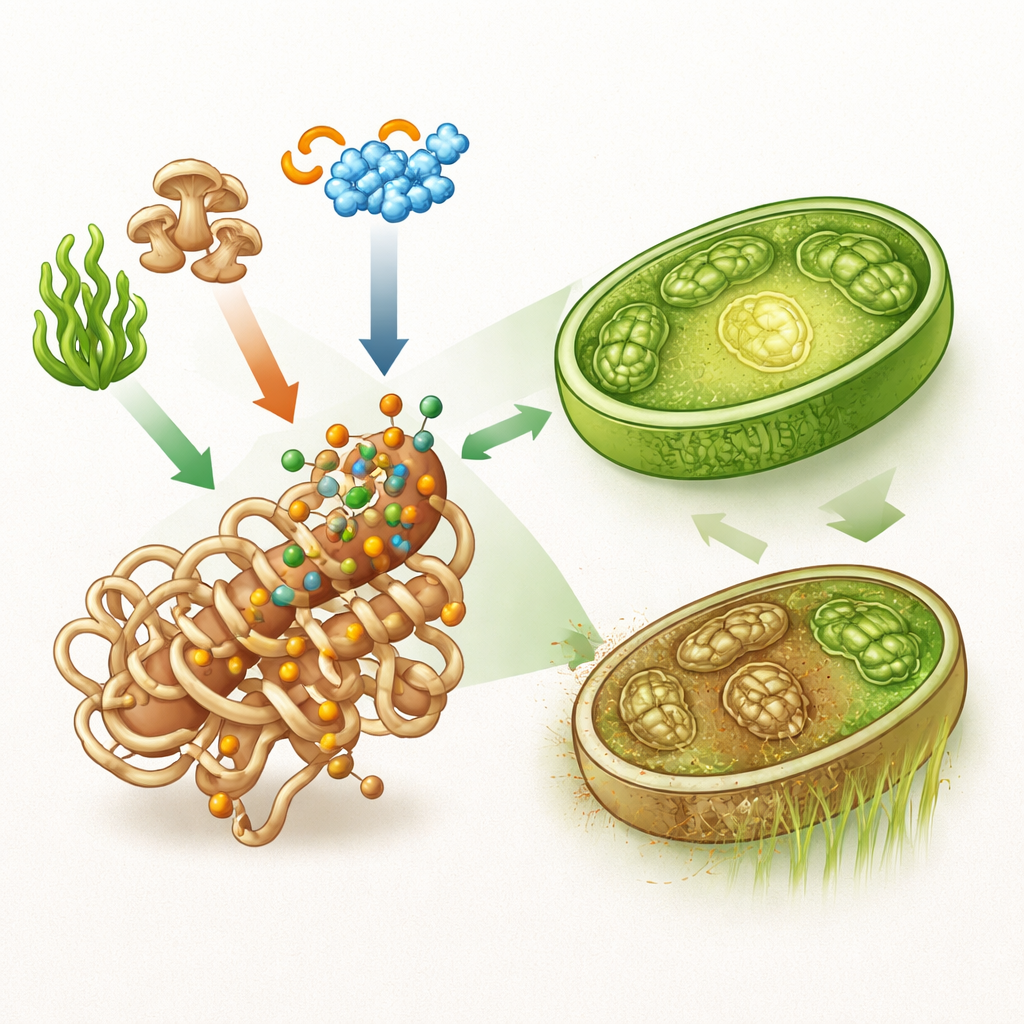
Because breeding new varieties takes time, the team also tested more immediate, eco-friendly defenses. They sprayed wheat with three biological treatments: an extract from the brown seaweed Sargassum latifolium, a beneficial soil fungus called Trichoderma harzianum, and chitosan nanoparticles made from a natural polymer similar to the material in crab shells. In greenhouse and field trials, all three treatments significantly reduced stripe rust severity compared with untreated plants, and their performance approached that of a standard fungicide. Chitosan nanoparticles gave the strongest disease reduction, followed closely by the seaweed extract; Trichoderma was somewhat less potent but still helpful. Treated plants not only stayed healthier but also produced heavier, better-filled grains, boosting yield.
Peering into the fungus at the molecular level
To understand how these natural treatments work, the scientists used computer-based molecular docking—essentially virtual chemistry experiments. They built a three-dimensional model of a key fungal protein called Pst11215, an effector that the rust uses to weaken wheat’s defenses by tampering with energy-related channels in plant cells. Then they simulated how individual compounds from the seaweed extract, Trichoderma, and chitosan might fit into this protein, like keys into a lock. Several seaweed molecules, including pigments and polyphenols, and Trichoderma compounds such as chitinase and viridin, were predicted to bind tightly to the effector’s active sites. This suggests they could block its function, allowing wheat’s own defense reactions to proceed and making infection more difficult.
Toward safer protection for bread wheat
In simple terms, this study shows that Egypt’s stripe rust fungus is getting tougher, with new genetic races capable of breaking much of the existing wheat resistance. At the same time, it offers a hopeful path forward: combining carefully chosen resistant wheat lines with biological treatments derived from seaweed, friendly fungi, and chitosan-based particles. These natural tools can weaken the fungus at a molecular level, cut disease levels in the field, and improve grain yield, all while reducing dependence on synthetic fungicides. Together, they point toward a more sustainable strategy for protecting the wheat that underpins food security for millions.
Citation: Omar, H.S., Shahin, A.A., Sehsah, M.D. et al. Identification of physiological races of Puccinia striiformis f. sp. tritici and molecular docking of some biological treatments as prospective fungal inhibitor candidates in wheat. Sci Rep 16, 14423 (2026). https://doi.org/10.1038/s41598-026-50602-2
Keywords: wheat stripe rust, biological control, wheat breeding, plant disease management, molecular docking