Clear Sky Science · en
Pathomolecular characterization of recently isolated duck Astrovirus from domestic ducklings in Egypt
Why sick ducklings matter to all of us
Duck farms help feed millions of people, and sudden losses of young birds can threaten both livelihoods and food supplies. This study from Egypt investigates mysterious outbreaks of rapid death in ducklings, tracing them to a little known virus and showing how it damages the birds from the inside. Understanding this hidden enemy is a key step toward better vaccines, safer farms, and more secure poultry production.
Mystery deaths in young ducks
From 2022 to 2023, several duck farms in three Egyptian regions reported sudden deaths in very young ducklings, even though the birds had been vaccinated against a well known duck liver disease. The ducklings showed nervous problems such as loss of balance, twisted necks, and paddling movements before dying. When the birds were opened after death, farmers and veterinarians saw badly damaged livers, enlarged spleens, bleeding on the brain surface, and areas of dead tissue in the pancreas. These signs looked similar to classic duck viral hepatitis, raising the question of whether a different culprit was at work.

Hunting for the hidden virus
The research team collected liver and other organ samples from eight affected farms raising different duck breeds. First, they tested for the usual suspects: highly pathogenic bird flu and two common types of duck hepatitis virus. All of these tests came back negative. The scientists then searched for another group of viruses known to affect birds, called astroviruses. Using genetic tests that copy and detect tiny fragments of viral RNA, they found the same astrovirus signal in all forty liver samples they examined. To study the virus more closely, they grew it in special pathogen free chicken eggs, where it produced clear areas of dead tissue on a thin membrane just under the shell.
Zooming in on the virus and its damage
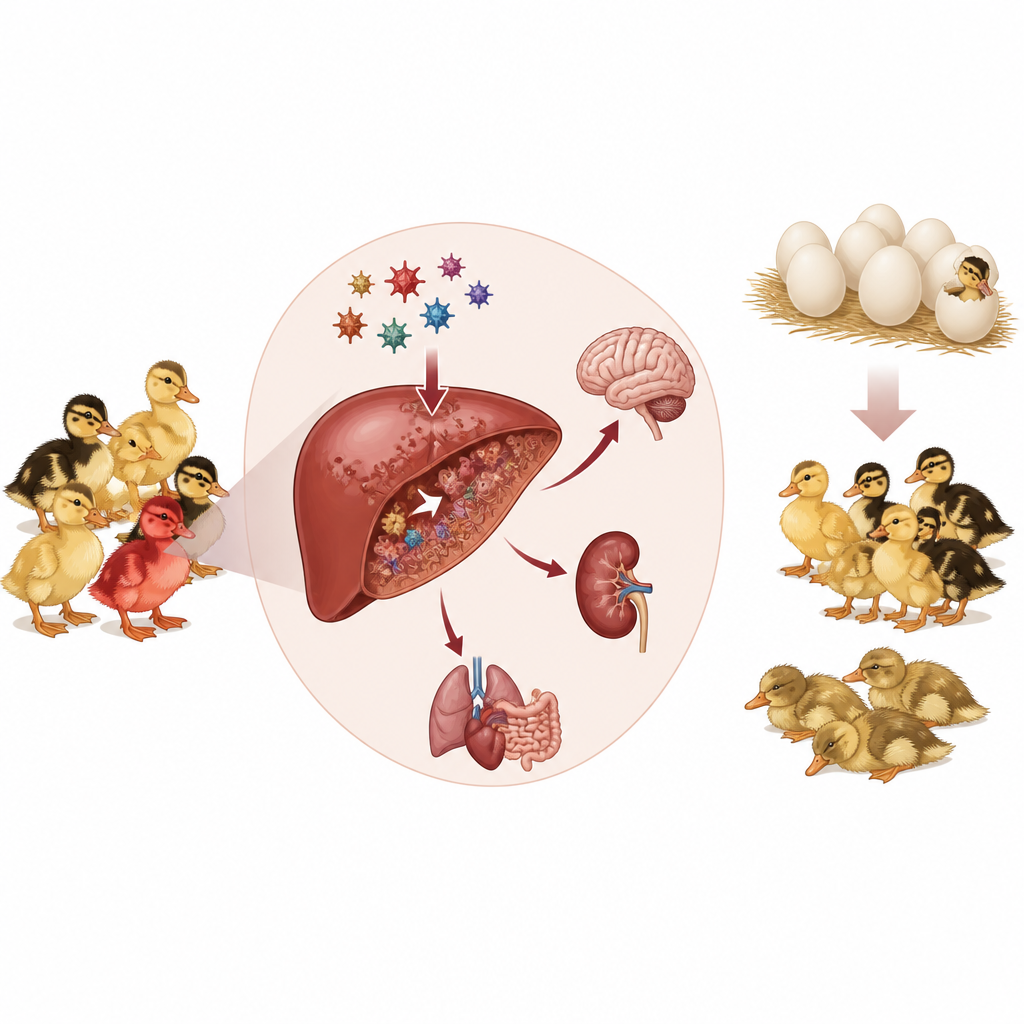
Genetic sequencing showed that the Egyptian virus belonged to duck astrovirus and matched a strain previously found in China almost exactly, suggesting international links in how these viruses spread. Under a powerful transmission electron microscope, the team saw round virus particles with a star like outline, a classic hallmark of astroviruses. To test how dangerous it was, they exposed one day old ducklings to the isolated virus. All infected birds died within about two days, after showing the same nervous signs seen on the farms. Their livers were striped with red “paintbrush” streaks, and other organs also showed signs of severe injury.
What the tissues reveal
By examining thin slices of organs under a microscope, the scientists could see how deeply the virus harmed the ducklings. Liver cells were swollen, fatty, and often dead, with blood vessels overflowing and immune cells crowding into the damaged areas. The pancreas, which helps digest food, showed loss of its normal granules and spots of dead tissue. The spleen, a key immune organ, was depleted of its usual protective cells. Kidneys, heart muscle, intestines, and even the brain showed widespread damage, including meningitis and injured nerve cells. These findings explain why the disease progresses so fast and affects both movement and basic body functions.
Steps toward protection on farms
This study confirms that duck astrovirus is one of the causes of acute, deadly liver disease in Egyptian ducklings and documents its close relationship to a known foreign strain. For farmers and veterinarians, it highlights that existing vaccines against other hepatitis viruses are not enough to prevent these outbreaks. The authors recommend building a locally tailored vaccine based on the newly isolated strain, alongside strict hygiene and biosecurity on farms. Taken together, these measures could help protect young ducks, stabilize production, and reduce the risk that such viruses continue to spread between regions and species.
Citation: EL-Nagar, E.M., Gamal, M.A., El-Saied, M.A. et al. Pathomolecular characterization of recently isolated duck Astrovirus from domestic ducklings in Egypt. Sci Rep 16, 15994 (2026). https://doi.org/10.1038/s41598-026-50596-x
Keywords: duck astrovirus, duck hepatitis, poultry disease, viral liver infection, Egypt duck farms