Clear Sky Science · en
Nano-enabled Control of A. flavus and F. proliferatum: inhibition of fungal growth and mycotoxin biosynthesis by zinc oxide nanoparticles
Why safer grain matters
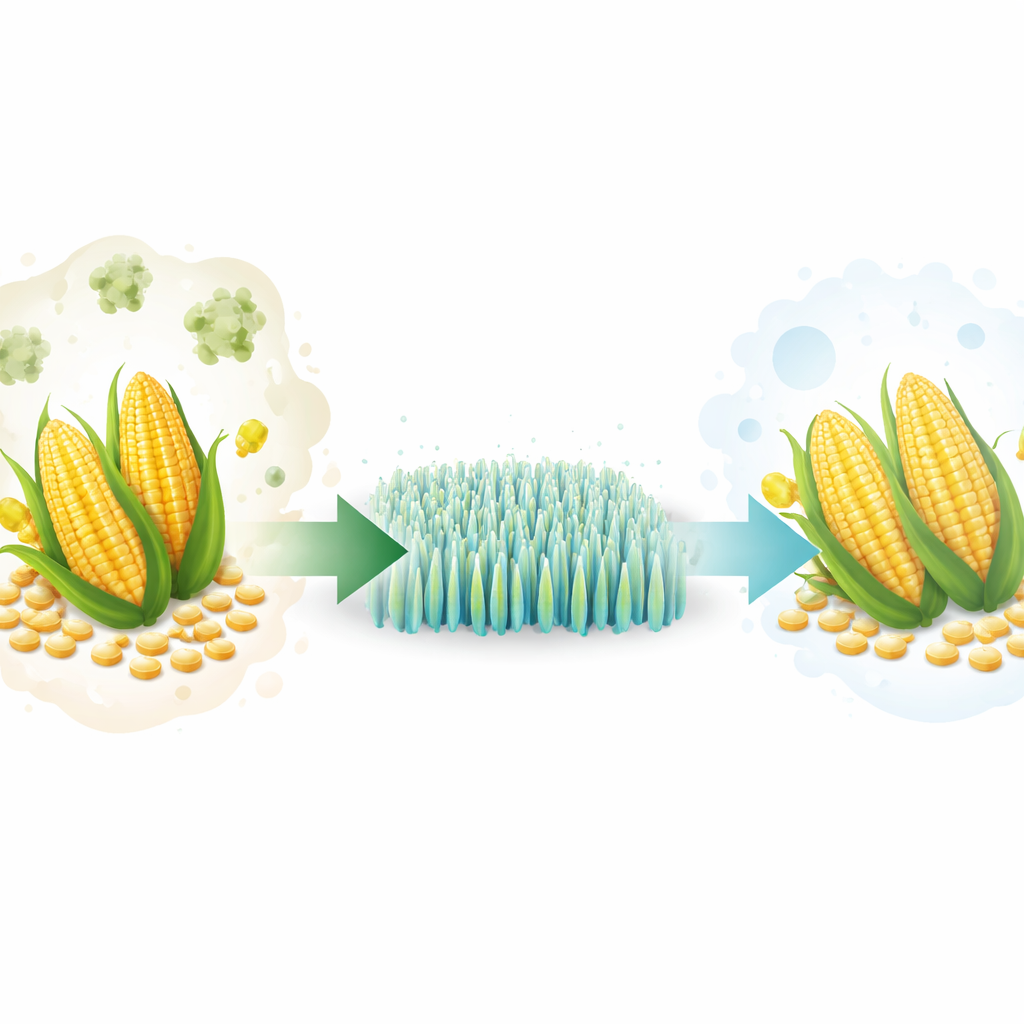
Maize, or corn, is one of the world’s most important staple foods, feeding people and livestock across the globe. Yet this familiar grain can quietly harbor toxic molds that damage the liver, weaken the immune system, and even promote cancer. Traditional chemical treatments to keep these fungi at bay can leave their own residues and raise environmental concerns. This study explores a new twist from nanotechnology: using tiny particles of zinc oxide to stop both the growth of dangerous fungi and the production of their toxins in maize-based systems.
Tiny particles with a big job
The researchers focused on two notorious culprits that frequently contaminate maize: Aspergillus flavus, which produces aflatoxins, and Fusarium proliferatum, which makes fumonisin B1. These toxins are among the most harmful known food contaminants. Instead of conventional fungicides, the team made zinc oxide nanoparticles—ultra-small, rod-shaped crystals of a material already used in sunscreens, coatings, and food packaging. Using microwave-assisted heating, they produced highly pure, well-formed zinc oxide nanorods and carefully checked their size, shape, and structure with tools such as X-ray diffraction and electron microscopy.
How the fungi are stopped
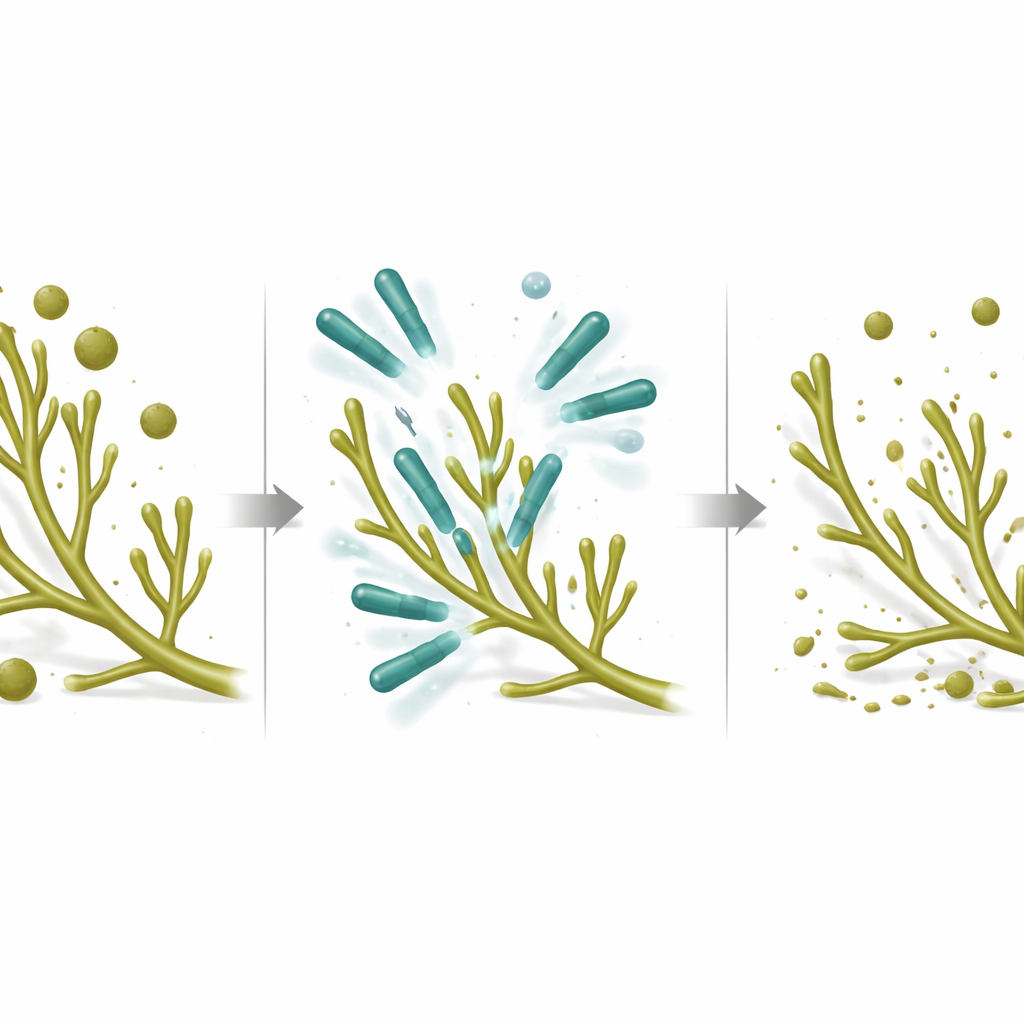
To see whether these nano-sized rods could fight fungi, the scientists exposed the two mold species to different nanoparticle concentrations. At 150 parts per million—a relatively low level—the particles cut the growth of A. flavus by about three quarters and nearly wiped out the growth of F. proliferatum. Ordinary zinc salt, in contrast, had no such effect under the same conditions. High‑magnification imaging of treated fungi revealed shrunken, collapsed filaments and disturbed spore formation, showing that the nanoparticles physically damaged the fungal cells and interfered with their ability to reproduce.
Silencing the hidden poisons
Even more striking than the slowdown in growth was what happened to toxin production. At the same 150 parts per million, zinc oxide nanoparticles almost completely shut down aflatoxin formation—reducing two major aflatoxins by 99–99.9 percent—and cut fumonisin B1 levels by about 85 percent. Chemical analyses of the culture liquids showed that toxin signals nearly vanished in treated samples. This strong drop in toxins was greater than would be expected just from the reduced amount of fungal growth, suggesting that the nanoparticles were disrupting the molds’ internal machinery for making secondary metabolites, not merely starving or killing them.
Clues to the inner workings
The team discusses several interconnected ways these particles may work. The nanorods can generate highly reactive oxygen species at their surfaces, which impose oxidative stress on fungal cells. At the same time, zinc ions can leak from the particles and interfere with membranes and signaling processes. Direct contact between the sharp nanorods and the fungal surface likely further disrupts cell walls and nutrient uptake. Together, these stresses may disturb the genetic control systems that switch on toxin-making pathways, so that aflatoxin and fumonisin production collapses even before all the fungal biomass is eliminated.
Promise and precautions for safer food
Because zinc oxide is already classified as generally recognized as safe in some uses, the authors see these nanoparticles as promising tools for food and feed protection, especially in coatings, packaging, or grain storage systems where they could act as fixed barriers against mold. Their dual action—suppressing both fungi and their toxins—offers a clear advantage over many current treatments that tackle only one side of the problem. At the same time, the study emphasizes that any real‑world deployment must consider long‑term safety and environmental impacts, such as how nanoparticles behave in soil, water, and the food chain. With careful dose control, smart packaging designs that immobilize the particles, and thorough toxicological testing, zinc oxide nanoparticles could become part of a more sustainable strategy to keep maize and other foods safer from invisible fungal threats.
Citation: Hassan, E.A., Kilany, A.H.A.M., Mahmoud, A.L.E. et al. Nano-enabled Control of A. flavus and F. proliferatum: inhibition of fungal growth and mycotoxin biosynthesis by zinc oxide nanoparticles. Sci Rep 16, 14428 (2026). https://doi.org/10.1038/s41598-026-50553-8
Keywords: mycotoxins, zinc oxide nanoparticles, maize safety, food nanotechnology, antifungal control