Clear Sky Science · en
Complete chloroplast genome features and phylogenetic analysis of Clematis cadmia
Why this climbing plant matters
Clematis cadmia is a delicate climbing vine found along rivers in subtropical China. Gardeners prize it for its showy flowers, and local traditions use it as a medicinal plant. Yet, until now, scientists knew very little about its genetic blueprint. This study takes readers inside the tiny green factories in its leaves, the chloroplasts, to reveal how this plant is related to its cousins and how its genetic information can support conservation and breeding.
Peeking inside the leaf
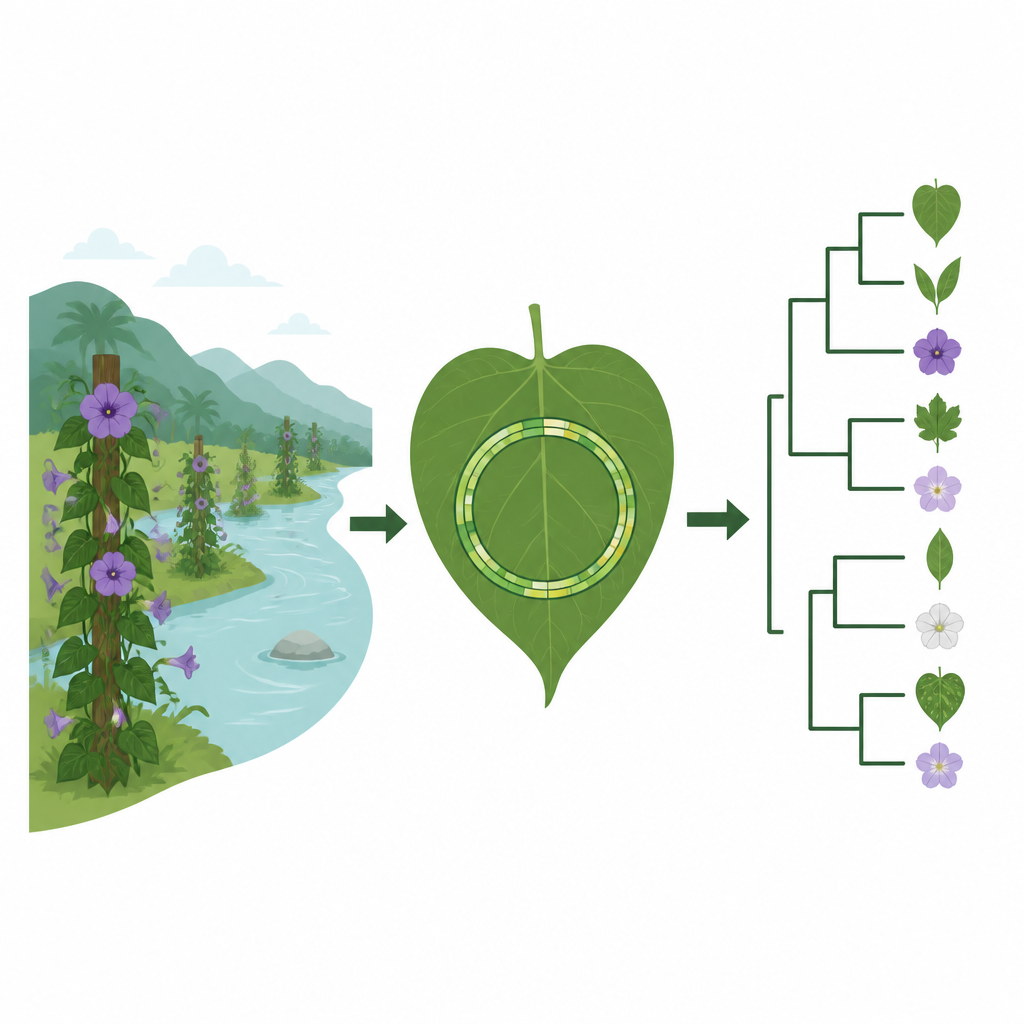
Plants depend on chloroplasts, the structures in their cells that capture sunlight and power growth. Each chloroplast carries its own small circular genome, separate from the main DNA in the cell nucleus. The researchers used high-throughput sequencing to read, for the first time, the complete chloroplast genome of Clematis cadmia. They found a familiar layout also seen in many flowering plants: a large single region, a smaller single region, and two mirror-image segments that help keep the genome stable. Altogether, they identified 136 genes, most of which support photosynthesis and the chloroplast’s own maintenance.
Hidden patterns in repeated codes
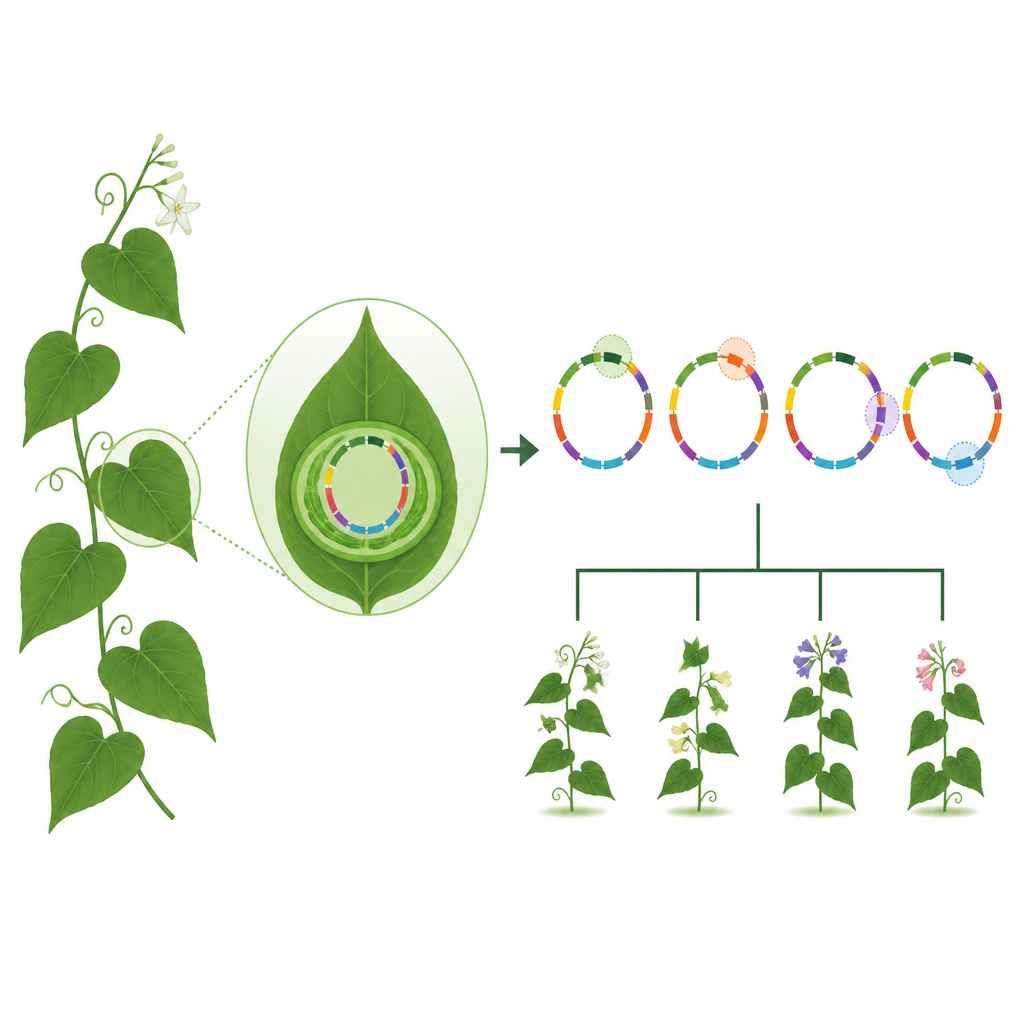
Beyond the list of genes, the team looked for simple repeated stretches of DNA, known as SSRs, scattered across the chloroplast genome. These repeats, many built from the basic letters A and T, vary more quickly than other regions and are useful as genetic barcodes. In C. cadmia, most of these repeats were found between genes rather than inside them, and they were especially common in one of the large regions of the genome. This pattern matches what has been observed in other flowering plants and suggests a rich source of markers for tracking populations in the wild or guiding selective breeding.
Comparing cousins to trace family ties
To understand how C. cadmia fits into the broader Clematis family tree, the scientists compared its chloroplast genome with those of nine closely related Clematis species and several other members of the buttercup family. The overall structure was strikingly similar across Clematis, with no major rearrangements, only small shifts at the boundaries between the main regions. By scanning for places where the DNA differed the most, the team pinpointed a handful of especially variable stretches that could serve as handy signposts for distinguishing species. When they used shared genes to build a family tree, C. cadmia grouped most closely with the ornamental Clematis florida, while the whole Clematis group formed a tightly linked branch next to the genus Pulsatilla.
Signals of slow and fast change
The study also tracked how quickly different genes have changed over time. Many chloroplast genes in C. cadmia and its relatives showed signs of purifying selection, meaning that harmful changes are weeded out, keeping the sequence very stable. This was especially true for genes essential to photosynthesis, which remained almost unchanged across species. A few genes related to other chloroplast functions showed evidence of faster change, hinting that they might be involved in fine-tuning how these plants adapt to their environments. Together, these patterns sketch a picture of a mostly conservative genome with a few flexible spots where evolution can act.
What this means for gardeners and conservation
By charting the complete chloroplast genome of Clematis cadmia and comparing it with its relatives, the researchers have created a detailed genetic map for this attractive climbing plant. For non-specialists, the key message is that C. cadmia shares a stable core blueprint with other Clematis species but carries its own distinctive signatures in certain regions of its chloroplast DNA. These signatures can be turned into practical tools to identify varieties, manage wild populations, and support breeding programs that aim to enhance ornamental traits or preserve natural diversity.
Citation: Liu, S., Du, W., Guo, L. et al. Complete chloroplast genome features and phylogenetic analysis of Clematis cadmia. Sci Rep 16, 16269 (2026). https://doi.org/10.1038/s41598-026-50489-z
Keywords: chloroplast genome, Clematis cadmia, plant phylogeny, molecular markers, plant genetics