Clear Sky Science · en
A case control study of subjective sleep characteristics and polycystic ovary syndrome
Why sleep and hormones matter for everyday life
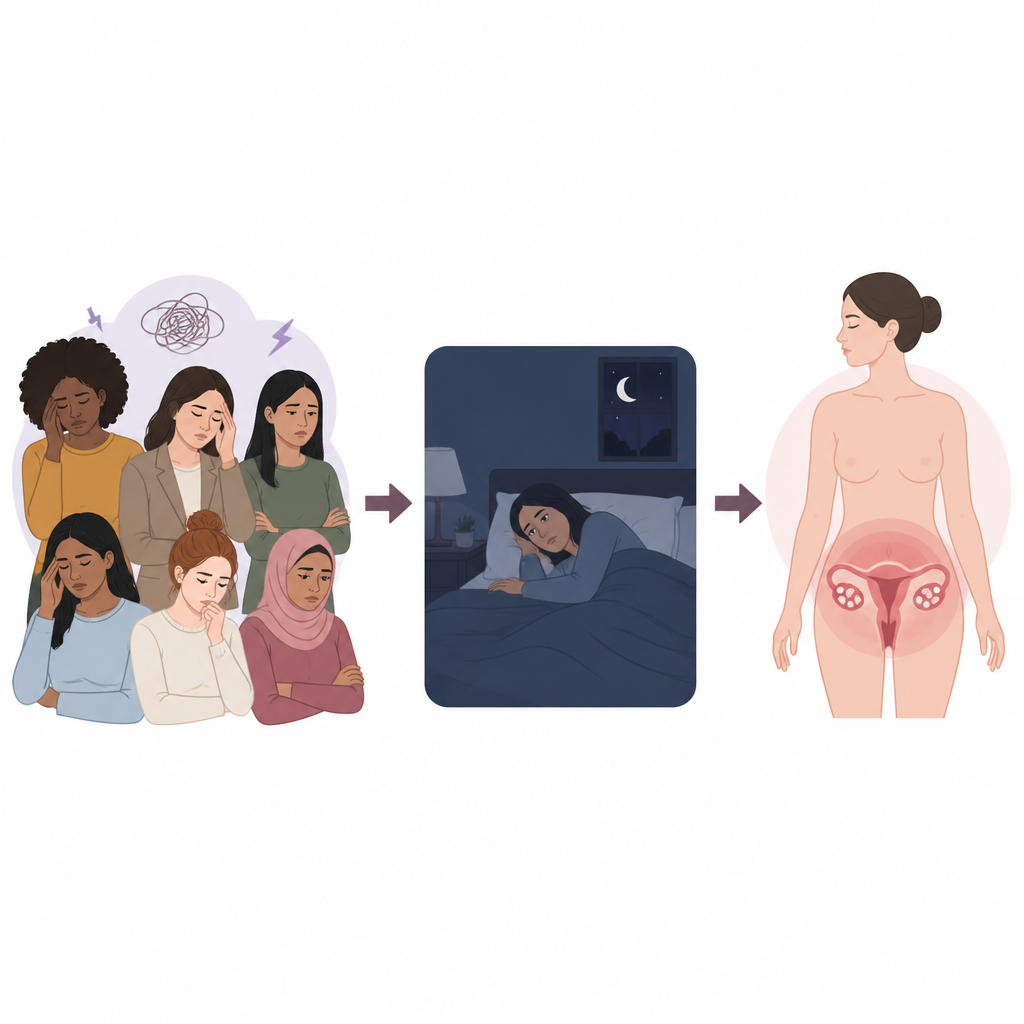
Many women struggle with restless nights, yet might not realize that poor sleep could be linked with common reproductive problems. This study looks at women with polycystic ovary syndrome (PCOS), a condition that affects hormones, periods, fertility, and long term health. By focusing on how women themselves describe their sleep, the researchers explore whether trouble falling or staying asleep may be closely tied to PCOS, even in women who do not have obvious breathing problems at night.
A closer look at PCOS and daily health
PCOS affects an estimated five to twenty percent of women of reproductive age worldwide. It can show up as irregular periods, excess hair, acne, struggles with weight, and difficulty getting pregnant. Many women with PCOS also have insulin resistance, where the body does not respond well to insulin, and low grade inflammation that can raise the risk of diabetes and heart disease. While doctors know a lot about these physical changes, the day to day experiences of women, including how well they sleep, have received less attention.
How the study was carried out
The research team designed a case control study in a gynecology clinic in China. They compared 136 women who had been clinically diagnosed with PCOS with 164 women of similar reproductive age who did not have PCOS. All participants completed a simplified sleep questionnaire built from key items of a standard tool widely used in sleep research. The questions asked about usual bedtime, nightly sleep duration, trouble falling asleep, waking up during the night or too early, feeling unrefreshed in the morning, vivid dreams, and whether the person felt their overall sleep was good or poor. Answers were combined into a total sleep problem score reflecting how disturbed each woman’s sleep felt to her.
What the researchers discovered about sleep
The women with PCOS reported more difficulties with their sleep than women without the condition. About half of the PCOS group said they had trouble falling asleep within half an hour and woke up feeling tired and unrefreshed, compared with roughly one third of the control group. Two thirds of women with PCOS rated their recent sleep as poor, versus just over half of women without PCOS. Reports of frequent vivid dreams were also more common in the PCOS group, although this feature alone was not clearly tied to PCOS when all factors were considered together. When all sleep items were added into a single score, the PCOS group had a higher average sleep problem score than the control group.
Linking sleep problems to PCOS risk
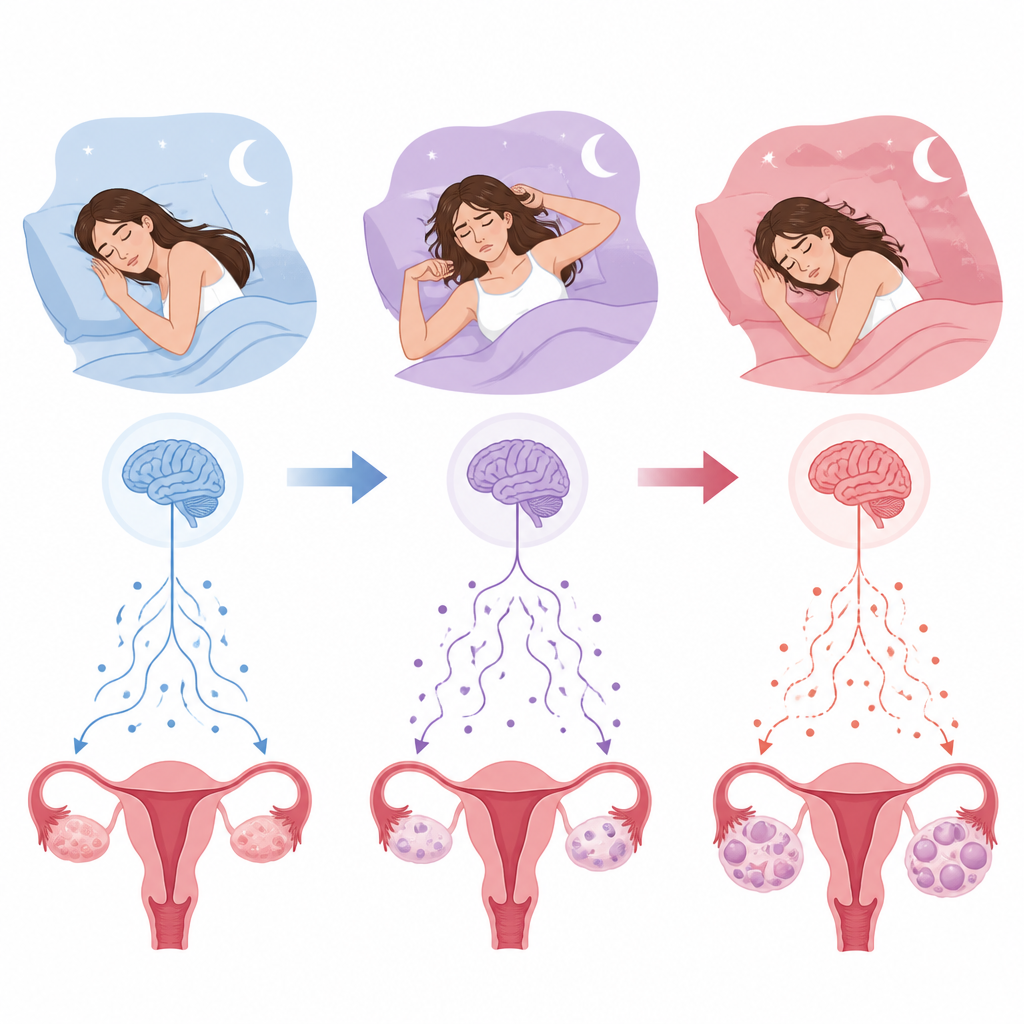
The team then used statistical models to see whether more severe sleep complaints were associated with a higher chance of having PCOS, after taking into account age, work type, education, body mass index, smoking, and alcohol use. Women in the moderate sleep problem group were about twice as likely to have PCOS as those with only mild sleep problems. Those with the highest sleep problem scores also had more than double the odds of PCOS. These links held even after the researchers adjusted for body size, suggesting that the connection between poor sleep and PCOS is not simply a side effect of higher weight or obesity related breathing problems at night.
What this means for women and their doctors
The authors conclude that subjective sleep disturbances such as difficulty drifting off, feeling worn out on waking, and viewing one’s sleep as poor are very common in women with PCOS and are closely linked with the presence of the syndrome. The study cannot prove whether poor sleep helps cause PCOS, results from it, or both, but it suggests that asking about sleep should become a routine part of PCOS care. Paying attention to these nightly struggles may help break a cycle in which restless sleep, hormonal imbalance, and metabolic strain feed into each other and may open the door to more holistic approaches to improving health and quality of life.
Citation: Zhuang, X., Zhang, S., Fu, R. et al. A case control study of subjective sleep characteristics and polycystic ovary syndrome. Sci Rep 16, 15053 (2026). https://doi.org/10.1038/s41598-026-50477-3
Keywords: polycystic ovary syndrome, sleep quality, women's health, insulin resistance, hormone imbalance