Clear Sky Science · en
Predictive functional profiling of 16S rRNA genes amplicons reveals bioremediation and sulfur metabolism capacity in thermophilic hot spring bacteriomes
Hidden Helpers in Scalding Springs
At first glance, the steaming, sulfurous pools of Pharaoh’s Bath in Egypt’s Sinai Peninsula look more like a hostile wasteland than a cradle of life. Yet beneath the surface, heat‑loving microbes are quietly transforming toxic substances and recycling key elements. This study explores who these microscopic residents are and what they might be able to do for us, revealing how natural hot springs could act as self‑running cleanup systems for industrial pollution.
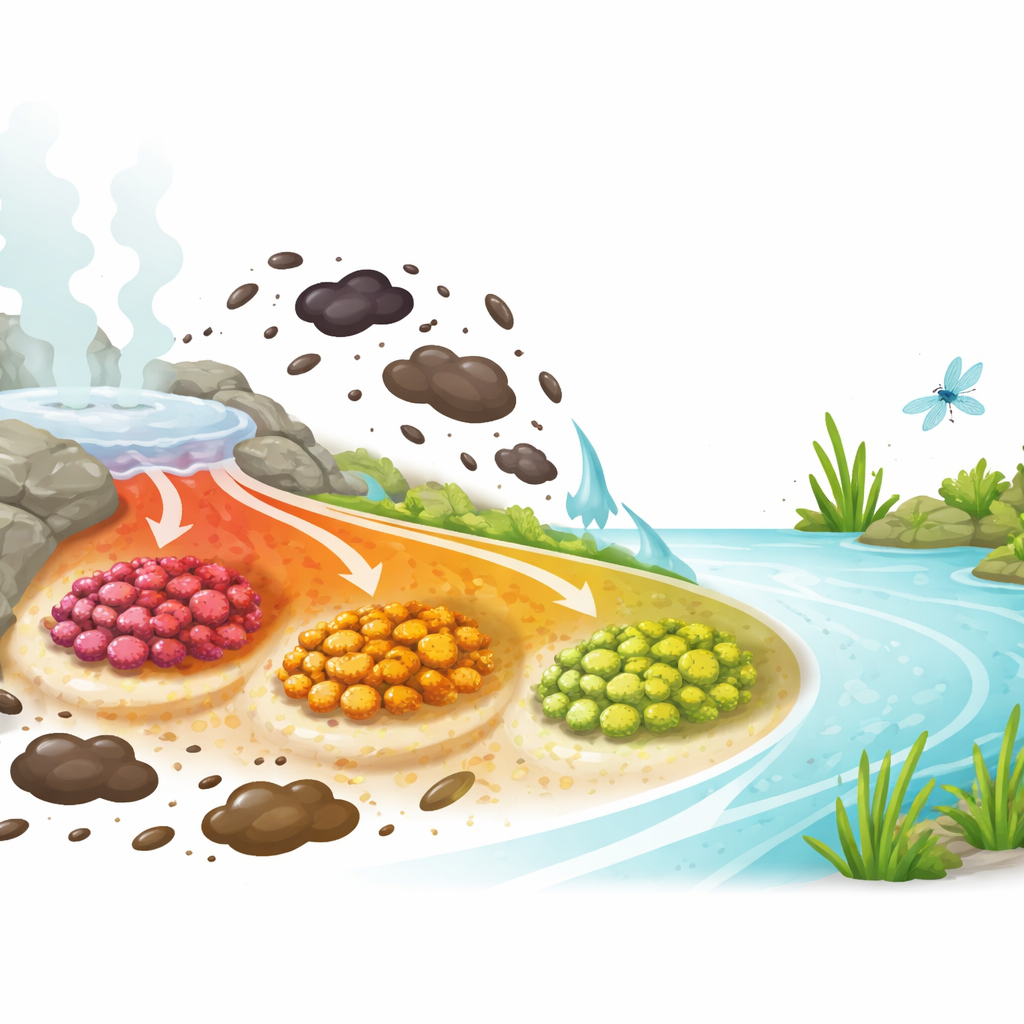
Life Along a Boiling Gradient
The researchers focused on soil, rather than water, from three spots along a short stretch of the hot spring where temperatures drop from about 80 °C to 70 °C. Soil tends to hold more kinds of microbes and acts as a long‑term archive of local life. Using DNA sequencing of a standard genetic marker, they catalogued the bacteria present at each site and measured how evenly different types were represented. One mid‑temperature site (HS2) stood out as the most balanced and varied community, while the hottest site (HS3) was dominated by just a few types, suggesting that only the hardiest specialists can cope with those extreme conditions.
Different Microbial Neighborhoods, Different Strengths
Although all three soils were rich in a broad group of bacteria called Proteobacteria, their detailed makeup differed sharply. The coolest and hottest sites (HS1 and HS3) were overwhelmingly ruled by Proteobacteria, while the mid‑temperature site (HS2) hosted a more mixed community, including a large share of a group called Rhodothermaeota that thrives in salty, hot environments. Looking closer at finer taxonomic levels, each site had its own signature genera. For example, HS3 was heavily populated by Thiomicrospira and Sulfurimonas, bacteria known to specialize in using sulfur compounds for energy. These patterns show how subtle changes in temperature and chemistry can reorganize entire microbial neighborhoods, favoring either broad communities or narrow bands of extreme specialists.
Built‑In Machinery for Breaking Pollutants
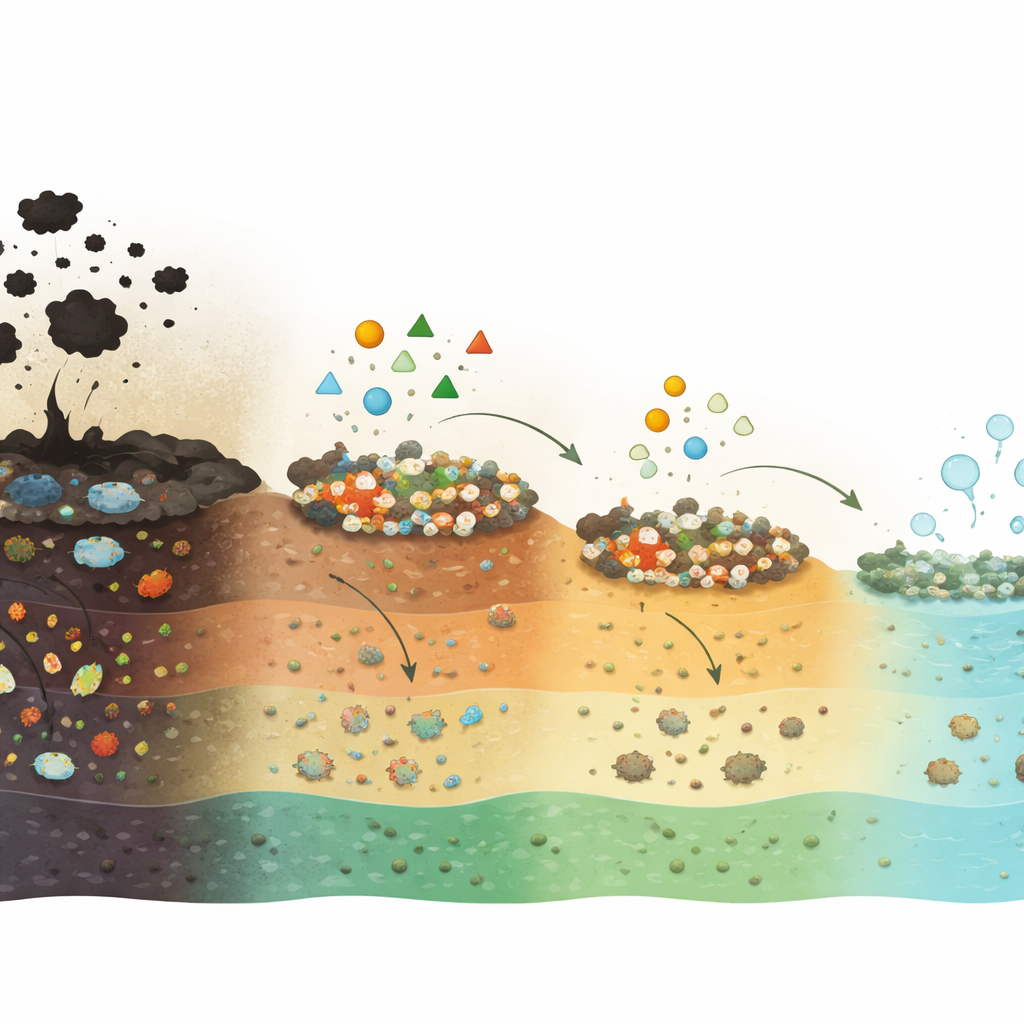
Beyond simply listing who lives there, the team wanted to know what these microbes are capable of doing. Using a predictive tool that links known genomes to the observed community, they inferred which metabolic pathways are likely present. The analysis highlighted 13 key genes tied to the breakdown of stubborn industrial chemicals, including oil components, polycyclic aromatic hydrocarbons from fuels, and halogenated compounds often found in solvents and plastics. These genes fall into a few core “funnel” routes that turn varied pollutants into simpler molecules such as catechol and related compounds, which then feed into the cell’s central energy cycle. The presence of well‑known degrader genera such as Pseudomonas, Acinetobacter, Marinobacter, and others supports the idea that the hot spring soils contain a robust, built‑in toolkit for dismantling complex contaminants, even under conditions that would disable ordinary microbes.
Turning Sulfur and Heat Into an Advantage
Pharaoh’s Bath is not only hot but also naturally rich in sulfur, a key chemical in many industrial effluents. The predictive analysis suggested that different sites specialize in different parts of the sulfur cycle. The mid‑temperature HS2 community appears best equipped for energy‑producing sulfate reduction, an anaerobic process that can drive metal precipitation and other useful reactions. The cooler hot zone HS1, by contrast, seems tuned for assimilatory sulfate use, channeling sulfur into building cellular material, while both HS1 and HS2 show strong potential for oxidizing reduced sulfur back into more benign forms. At the same time, these communities carry a suite of heat‑shock genes—molecular chaperones and proteases that help proteins keep their shape under stress—indicating that the microbes are not merely surviving the heat but are well adapted to it. Some genera combine multiple talents: they tolerate high temperatures, cycle sulfur, and degrade pollutants, making them especially attractive for environmental applications.
From Natural Laboratory to Real‑World Cleanup
Taken together, the findings portray Pharaoh’s Bath as a natural bioreactor, where extreme temperature and chemistry have selected for bacterial communities that both recycle sulfur and possess strong genetic potential for detoxifying diverse pollutants. While these conclusions are based on predictive models rather than direct measurements of chemical breakdown, they provide a roadmap for future work using deeper sequencing, gene expression studies, and pilot‑scale treatment systems. For non‑specialists, the key message is that even the most forbidding hot springs can harbor microbial consortia that may one day help clean up oil spills, industrial wastewaters, and plastic‑derived chemicals—doing heavy‑duty environmental work in places where conventional methods struggle to function.
Citation: Ismaeil, M., Saeed, A.M., Donia, S.A. et al. Predictive functional profiling of 16S rRNA genes amplicons reveals bioremediation and sulfur metabolism capacity in thermophilic hot spring bacteriomes. Sci Rep 16, 14276 (2026). https://doi.org/10.1038/s41598-026-50048-6
Keywords: hot spring microbes, bioremediation, sulfur cycling, thermophilic bacteria, environmental biotechnology