Clear Sky Science · en
Comfort evaluation of dog apparel using 3D virtual fitting with clothing pressure across body size, movement and fabric
Why your dog’s clothes should feel as good as they look
As more people dress their dogs in jackets, sweaters, and matching outfits, a simple question often gets overlooked: how comfortable are these clothes for the animal actually wearing them? This study explores that question using virtual dogs and digital try-ons to see where vests squeeze or press on a dog’s body, and how that pressure changes with size, fabric, and everyday movement.
From fashion statement to everyday gear
Pet clothing has grown into a multibillion-dollar market, with brands offering everything from padded winter coats to light mesh tops. Yet most designs still focus on style and the owner’s taste rather than the dog’s comfort. Previous research has shown that too much pressure from clothing or collars can make breathing harder, reduce exercise tolerance, or add stress, especially for certain breeds. Despite this, there has been little scientific work that measures how pet garments actually press on the body in different situations. The authors of this study wanted to shift attention toward the dog’s experience by examining how vest-style garments behave on different body sizes during everyday movements.
Using virtual dogs instead of live test subjects
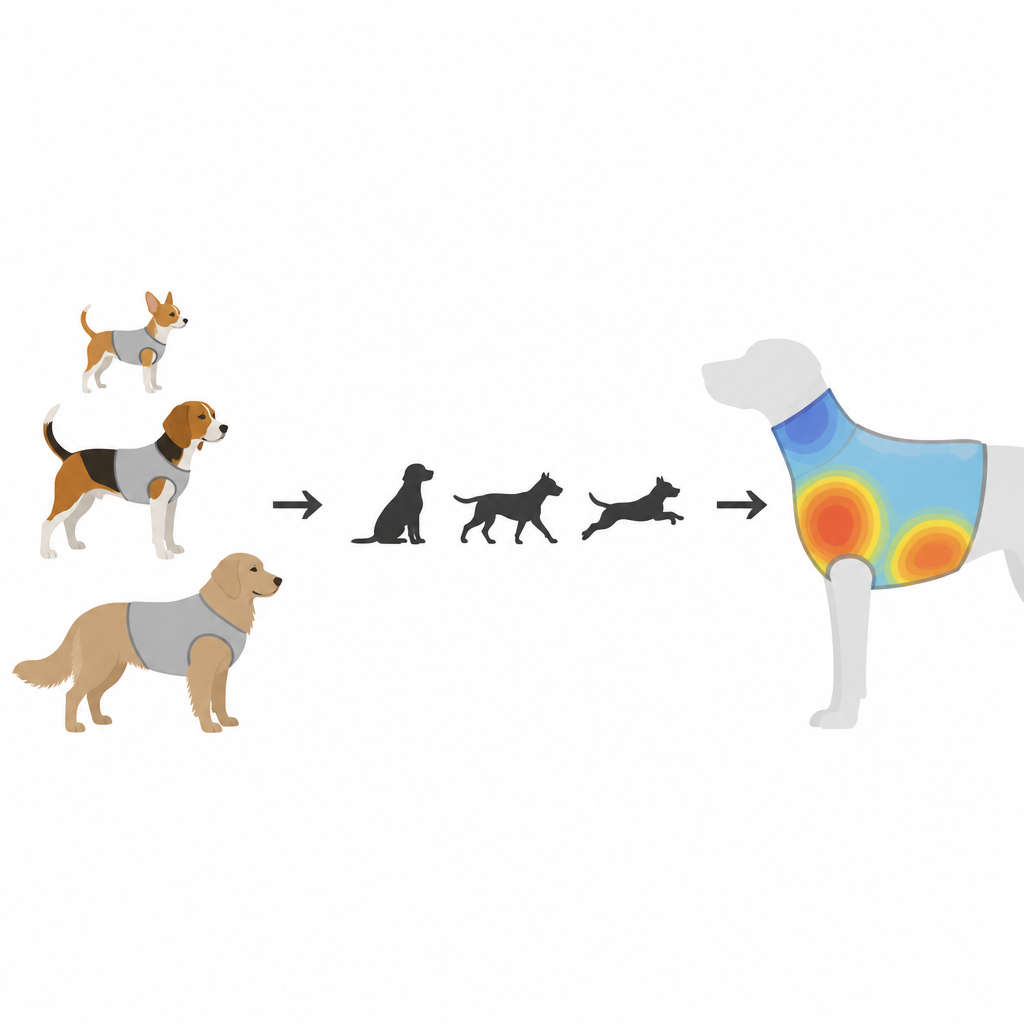
To avoid stressing real animals and to tightly control the test conditions, the researchers used CLO 3D, a fashion design program that can simulate clothing on digital bodies. They created simple vest patterns sized for small, medium, and large dogs, based on breeds with different body shapes. They then dressed virtual dogs in three common fabrics: cotton for all-purpose wear, mesh for summer, and thick padded fabric for winter. For each size and fabric, the virtual dogs performed three basic actions: sitting, walking, and running. At the end of each movement, the software recorded how strongly the vest pressed on four key regions: neck, chest, back, and abdomen.
Where and when dogs feel the squeeze
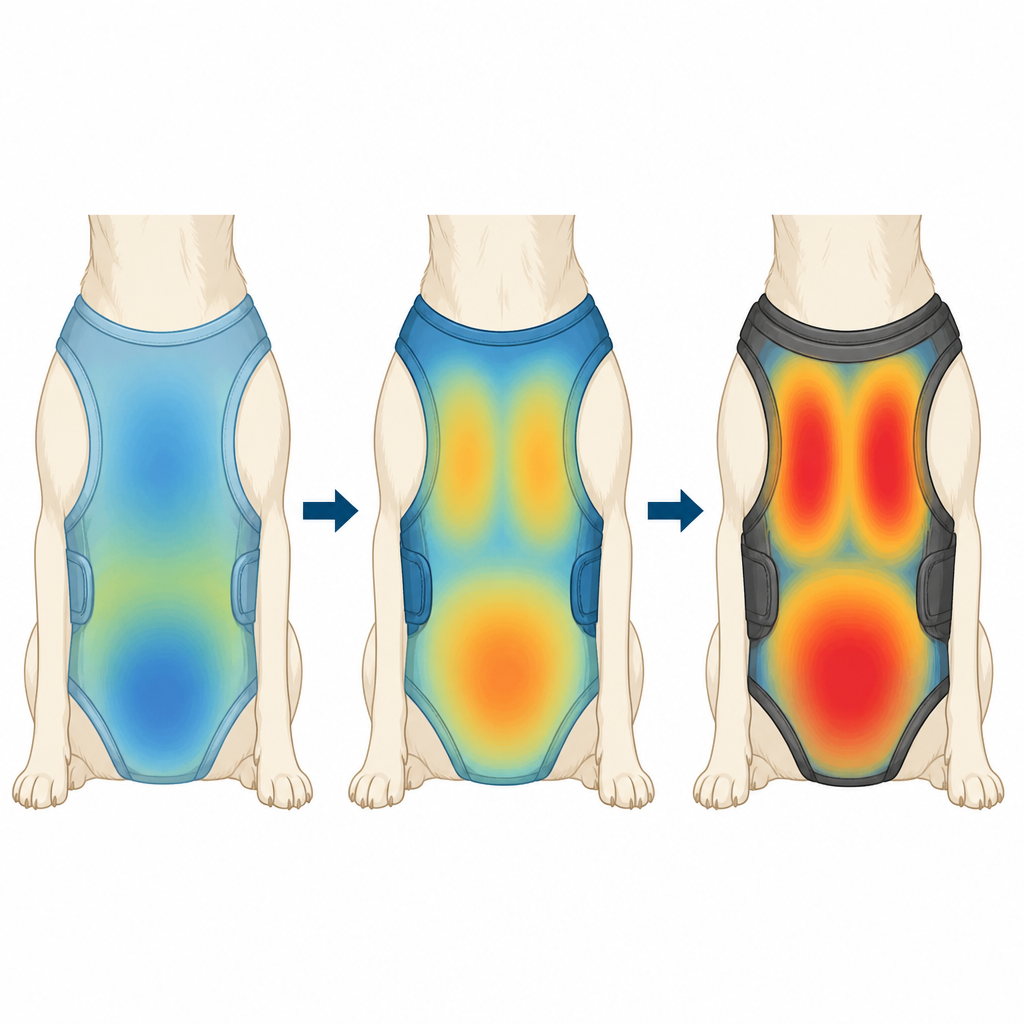
The simulations revealed clear patterns in how pressure builds up. Across nearly all conditions, padded vests produced the highest pressure, followed by mesh, with cotton the gentlest. The chest and especially the abdomen showed the greatest pressure, while the back stayed relatively low. Running produced higher pressure than walking, and sitting was generally the easiest on the body. Larger dogs tended to show higher average pressure than smaller ones, particularly at the chest and belly, although this size effect was not strong enough in the statistics to be called decisive. The colorful pressure maps built into the software were helpful for spotting hotspots, but sometimes the colors did not perfectly match the underlying numbers, showing that pictures alone can be misleading without careful measurement.
What the digital dogs can and cannot tell us
Because CLO 3D was designed for human clothing, the study also uncovered areas where dog simulations still fall short. Creating realistic dog body shapes and lifelike movements required a lot of manual work. The program does not yet fully capture how fur cushions and changes the contact between fabric and skin, and subtle shifts during complex movements like running may not be accurately reproduced. The authors suggest several upgrades for future versions, such as built-in dog avatars, dog-specific motion presets, better zoom and readouts for pressure maps, and special settings to account for fur. They also emphasize that the numbers from virtual try-ons must eventually be checked against physical tests using safe models or carefully designed animal studies.
What this means for pet owners and designers
For a general reader, the takeaway is straightforward: not all dog vests feel the same, and fabric choice and how a dog moves matter as much as size. Thick padded vests may keep a dog warm but can also concentrate pressure on the chest and belly, especially when the dog is active. Lighter, more flexible fabrics tend to be kinder to the body. This study shows that virtual fitting tools can help designers spot potential problem areas early, before garments ever reach real pets. While the results are not a substitute for real-world testing, they offer a structured, animal-friendly way to compare designs and move toward pet clothing that keeps comfort and health at the center, not just looks.
Citation: Kim, J., Chae, Y. Comfort evaluation of dog apparel using 3D virtual fitting with clothing pressure across body size, movement and fabric. Sci Rep 16, 15515 (2026). https://doi.org/10.1038/s41598-026-50013-3
Keywords: dog clothing comfort, petwear design, clothing pressure, virtual fitting, CLO 3D