Clear Sky Science · en
The therapeutic potential of zinc-nanoparticles against the cerebellar neurotoxicity induced by bacterial lipopolysaccharides in female rats and their pups
Why this research matters for mothers and babies
Infections during pregnancy can quietly affect a baby’s developing brain, with consequences that may only appear years later. This study explores whether tiny particles of the essential mineral zinc can help shield a key brain region, the cerebellum, from damage caused by a powerful bacterial toxin in pregnant rats and their pups. Although done in animals, the work offers a window into how inflammation in the womb might alter brain development and how better control of oxidative stress could help protect it.
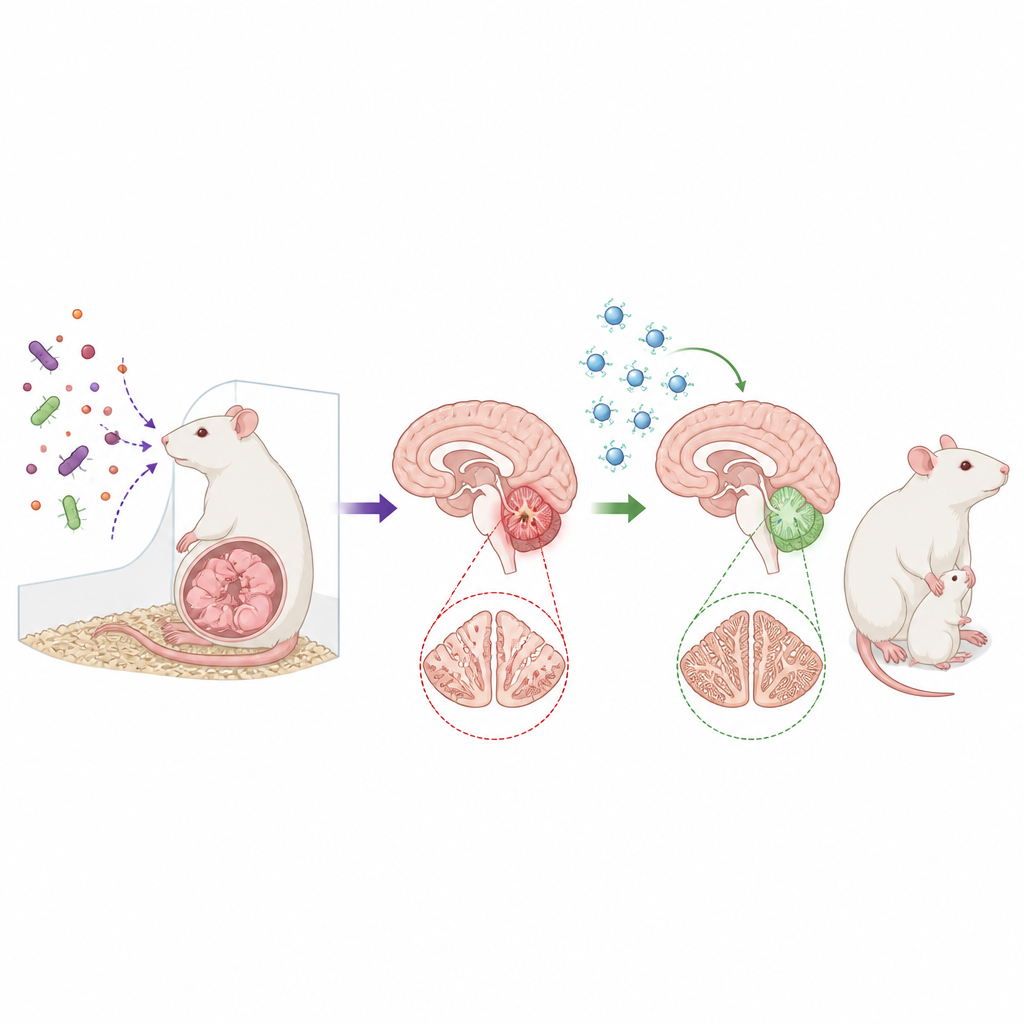
Infection signals that can disturb the growing brain
The researchers focused on lipopolysaccharide, or LPS, a molecule that sits on the outer surface of many harmful bacteria and strongly triggers inflammation. When mothers encounter LPS during pregnancy, prior work has linked it to problems such as preterm birth, poor fetal growth, and long lasting changes in learning and behavior in offspring. In this experiment, pregnant rats were given LPS at specific days in early pregnancy to mimic bacterial infection, then their brains and their pups’ brains were examined after birth, with special attention to the cerebellum, a region that helps coordinate movement and contributes to learning and emotion.
Tiny zinc particles as potential brain protectors
Zinc is a natural micronutrient required for normal growth, brain development, and antioxidant defenses. The team used zinc in the form of engineered nanoparticles, which are extremely small, mostly spherical particles between about 9 and 18 nanometers across. Because such particles can reach brain tissue efficiently, the scientists asked whether giving zinc nanoparticles by mouth to pregnant rats, starting later in pregnancy and continuing through nursing, could lessen the harmful impact of earlier LPS exposure on mothers and pups. Rats were divided into four groups: untreated controls, a zinc nanoparticle group, an LPS only group, and an LPS plus zinc nanoparticle group.
What happened to growth, brain chemistry, and blood fats
Rats exposed to LPS during pregnancy showed clear signs of strain. Both mothers and pups weighed less than controls, and their blood carried lower levels of the mood related messengers dopamine and serotonin. Their blood fat pattern also shifted in an unhealthy direction, with higher total cholesterol, triglycerides, and “bad” LDL, and lower “good” HDL. When zinc nanoparticles were added to the mothers’ regimen, body weights in both dams and pups moved closer to normal, and dopamine and serotonin rose significantly compared with the LPS only group, though not all the way back to control levels. The disturbed blood fat pattern also improved, suggesting a broader effect of zinc on metabolism as well as on the brain.
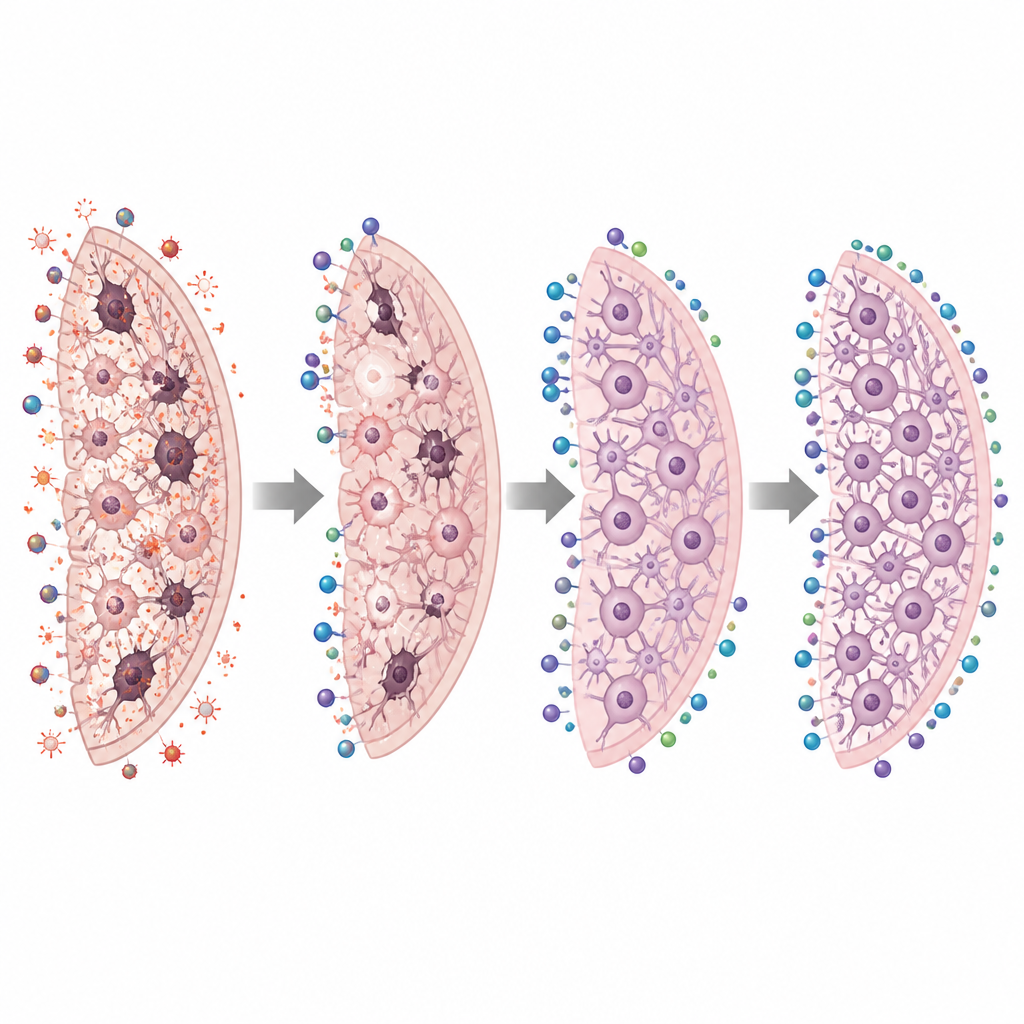
Inside the cerebellum: stress, structure, and cell death
Looking directly at cerebellar tissue revealed how strongly LPS stressed the brain. Markers of oxidative damage were higher, while key antioxidant defenses such as superoxide dismutase, catalase, and glutathione were lower. Under the microscope, cerebellar layers in LPS exposed mothers and pups contained shrunken and vacuolated nerve cells, loss of the large Purkinje cells that act as central hubs, and disrupted fine structure of cell membranes and internal compartments. Molecular markers also told a worrying story: proteins linked to abnormal nerve signaling and injury (chromogranin A and neuron specific enolase) were increased, while a synaptic protein important for communication between neurons (synaptophysin) was reduced. Flow cytometry, which counts and classifies individual cells, showed more cells switching on the death related protein P53, more inflammatory TNF alpha, and higher rates of apoptosis and necrosis. With zinc nanoparticles on board, all of these changes shifted toward healthier patterns. Antioxidant levels rose, damage markers fell, cerebellar layers looked more normal, synaptic markers improved, and cell death and inflammatory signals dropped, though usually not entirely back to control values.
What these findings suggest for future protection
Taken together, the results indicate that in this rat model, maternal exposure to a bacterial toxin can harm the developing cerebellum of both mother and offspring by driving oxidative stress, inflammation, and programmed cell death. Supplementing the mothers with zinc nanoparticles during late pregnancy and nursing did not erase the effects of LPS, but it substantially softened them across many levels, from body weight and blood chemistry to cell structure and survival. For lay readers, the key message is that maintaining robust antioxidant defenses, and in particular adequate zinc, may be an important part of how the brain defends itself against inflammatory challenges during development. While far more work is needed before any application to human pregnancy, this study maps out specific pathways by which zinc based strategies might help keep the growing brain on a healthier track.
Citation: El-Beltagy, AF.B.M., Eladad, M., Kamel, K. et al. The therapeutic potential of zinc-nanoparticles against the cerebellar neurotoxicity induced by bacterial lipopolysaccharides in female rats and their pups. Sci Rep 16, 14629 (2026). https://doi.org/10.1038/s41598-026-50012-4
Keywords: zinc nanoparticles, maternal infection, cerebellum, oxidative stress, neurodevelopment