Clear Sky Science · en
Plant extract mixture shows anti-inflammatory and barrier-strengthening effects and activates aryl hydrocarbon receptor in a 2D psoriasis model
Why Plants and Skin Make an Intriguing Pair
Psoriasis is more than just dry, flaky skin. It is a chronic immune-driven disease that can itch, burn, and take a heavy emotional toll. Many treatments calm the immune system but can have side effects, especially when used long term. This study explores a surprisingly simple idea: can a carefully designed mixture of everyday plants—apple, curly kale, and green tea—help quiet inflammation, strengthen the skin’s outer wall, and reduce harmful stress inside skin cells in a lab model of psoriasis?
How Psoriasis Disrupts the Skin’s Protective Wall
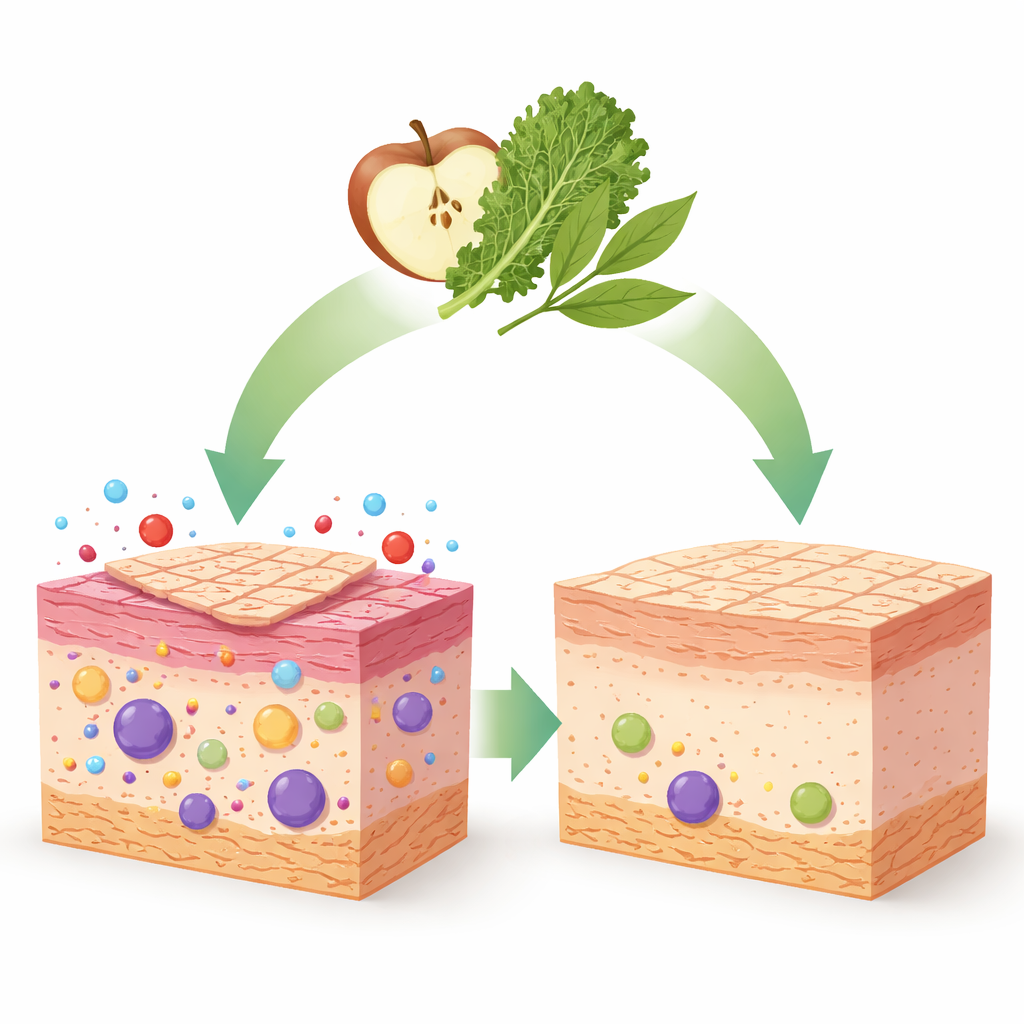
Healthy skin relies on a tightly packed outer layer that keeps moisture in and irritants out. In psoriasis, immune messengers flood the skin and push cells to grow too fast. As a result, key building blocks of the barrier, such as the protein filaggrin, are reduced, while inflammation-related molecules and natural germ-fighting peptides surge. This combination weakens the barrier, fuels redness and scaling, and invites more immune cells into the tissue, creating a self‑sustaining loop of irritation and damage.
Building a Psoriasis-Like Skin Model in the Lab
To test their plant extract mixture, the researchers used human skin cells grown as a flat sheet and bathed them in a cocktail of immune messengers that mimic those found in psoriatic skin. In this state, the cells showed many hallmarks of psoriasis: barrier proteins like filaggrin and loricrin dropped, inflammatory signals and blood‑vessel growth factors rose, and antimicrobial peptides were strongly overproduced. This made the system a controlled stand‑in for diseased skin, where the team could add the plant extract and watch what changed at the level of genes and proteins.
Plants That Calm, Shield, and Clean Up
When the plant extract mixture was added to the psoriasis‑like cells, several encouraging shifts occurred. The weakened barrier started to recover as filaggrin levels rose toward normal, suggesting tighter, more protective cell layering. At the same time, many inflammatory markers and antimicrobial peptides were sharply reduced, and the signal that promotes new blood vessel growth fell back to baseline. The extract also lowered the activity of a key molecular switch, IκBζ, that helps drive psoriasis‑related genes, hinting that it tamps down one of the central control hubs of psoriatic inflammation.
A Receptor Switch and Internal Rust Control
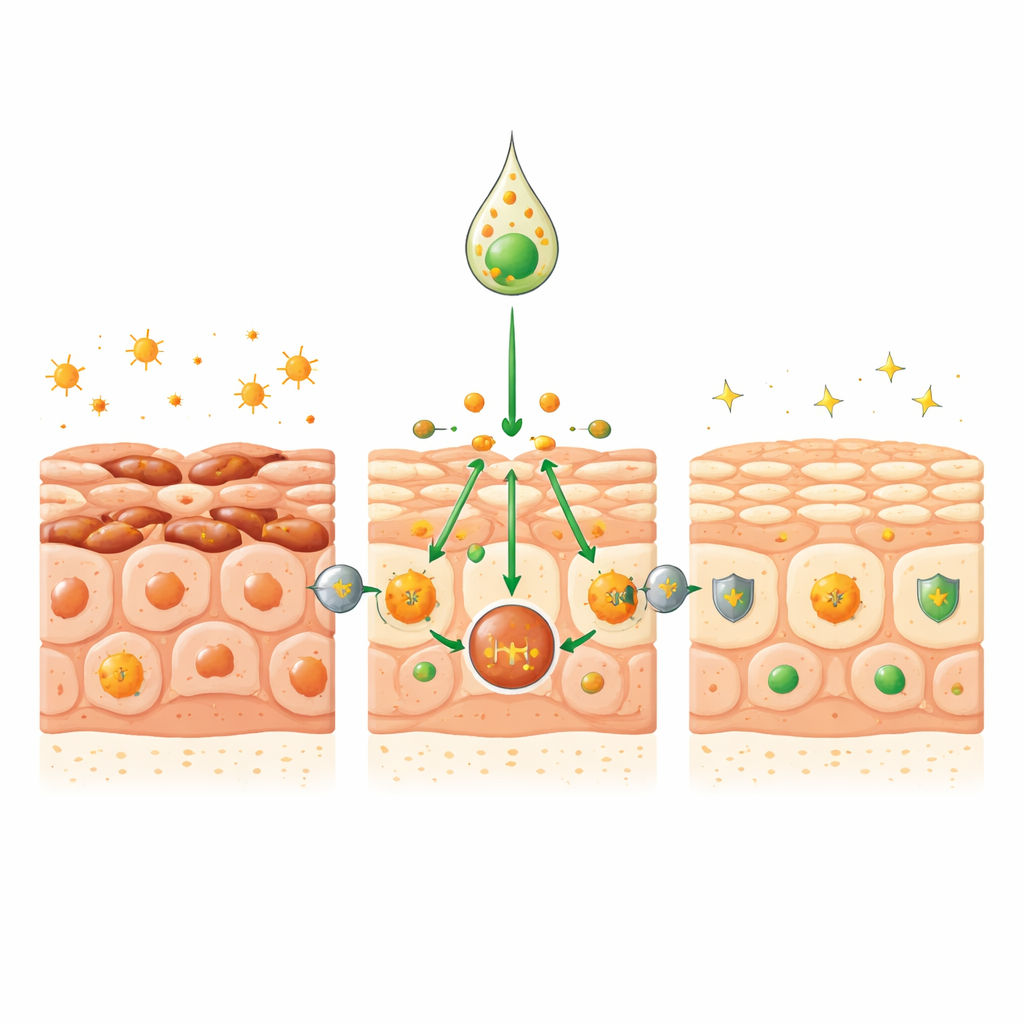
The team then asked how the plant mixture was exerting these effects. They found that it activated a protein inside skin cells known as the aryl hydrocarbon receptor, a kind of sensor that responds to specific small molecules and can influence both barrier formation and inflammation. Blocking this receptor prevented the extract from boosting filaggrin, showing that barrier repair depended on this switch. Interestingly, the anti‑inflammatory effects did not rely on this pathway, pointing to additional routes—such as dampening the NF‑κB system—that the plants may influence. The extract also helped cells cope with “internal rust”: it restored an antioxidant enzyme and reduced levels of reactive oxygen species, damaging molecules that are elevated in psoriasis and can worsen inflammation and blood‑vessel growth.
What This Could Mean for Future Skin Treatments
Taken together, the findings suggest that a well‑crafted mixture of common plant extracts can, in a lab model, simultaneously strengthen the skin’s outer wall, cool inflammatory signaling, and ease oxidative stress—all processes central to psoriasis. While these results come from cell cultures, not patients, they point toward the possibility of future creams or lotions based on such plant blends as gentle, targeted partners to existing therapies. Further work in more complex skin models and clinical studies will be needed, but the study offers an intriguing glimpse of how everyday plants might one day help protect and calm psoriatic skin.
Citation: Heinemann, N., Rademacher, F., Vollert, H. et al. Plant extract mixture shows anti-inflammatory and barrier-strengthening effects and activates aryl hydrocarbon receptor in a 2D psoriasis model. Sci Rep 16, 13638 (2026). https://doi.org/10.1038/s41598-026-50000-8
Keywords: psoriasis, skin barrier, plant extracts, inflammation, antioxidants