Clear Sky Science · en
Synergetic anticancer activity of psidium guajava–mediated palladium nanoparticles via apoptosis induction and metastasis suppression in osteosarcoma cells
From Fruit Tree to Cancer Treatment
Osteosarcoma, a serious bone cancer that often strikes teenagers, is still difficult to treat with today’s surgery and chemotherapy alone. This study explores an unexpected ally: the common guava tree. By using compounds from guava leaves to create tiny particles of the metal palladium, the researchers tested whether this plant–metal pairing could more safely and effectively kill bone cancer cells in the lab while sparing healthy cells.
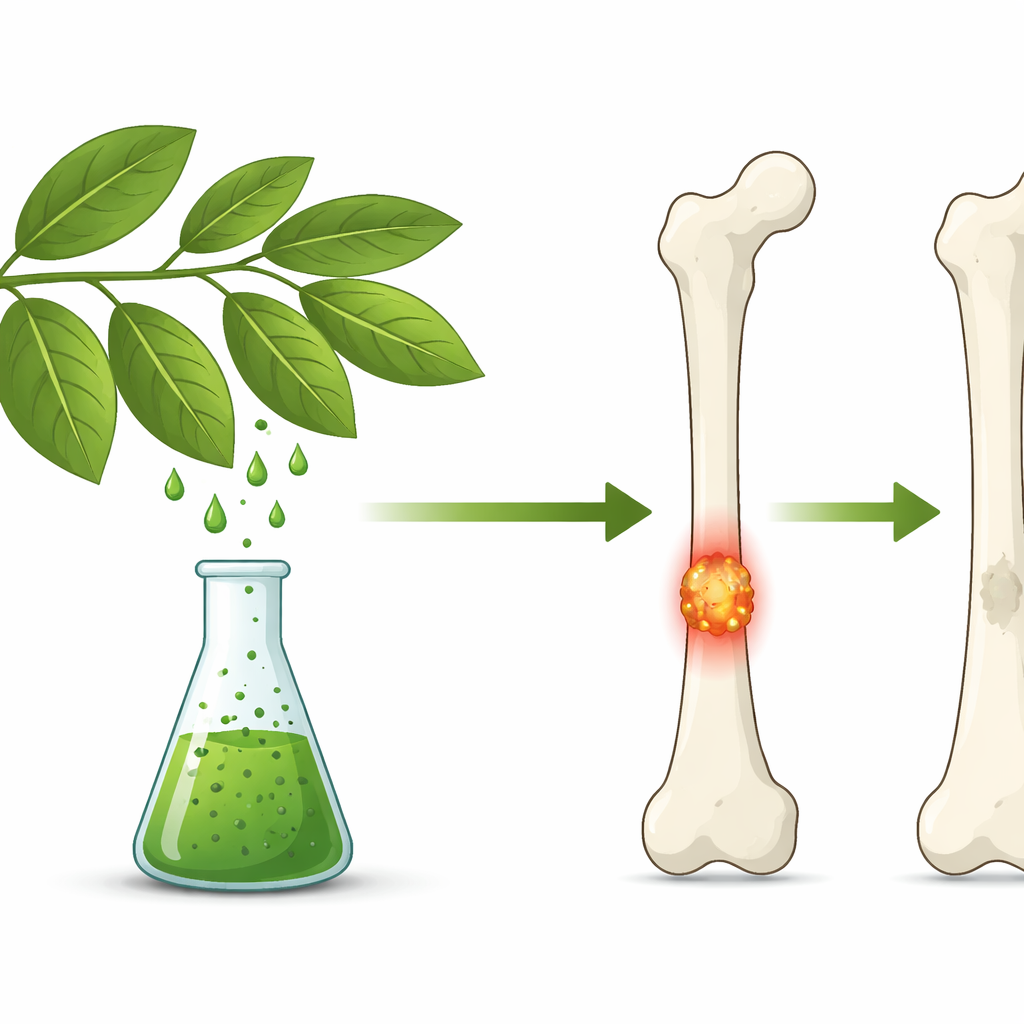
Turning Guava Leaves into Tiny Tools
The team began by making a simple water-based extract from dried guava leaves, rich in natural plant chemicals such as phenolics and flavonoids, which are known for their antioxidant and anti-inflammatory effects. Instead of relying on harsh industrial chemicals, they used this leaf extract to transform dissolved palladium salt into “green” palladium nanoparticles—metal particles only a few billionths of a meter across. Microscopy and other tests showed that the particles were mostly spherical, only about five nanometers in diameter, and carried a negative surface charge that helps them remain stable in liquid and resist clumping.
How the New Particles Attack Bone Cancer Cells
The researchers compared three treatments on human osteosarcoma MG‑63 cells grown in dishes: guava leaf extract alone, palladium nanoparticles alone, and the nanoparticles kept suspended in the guava extract. All three could slow cancer cell growth, but the combination—extract-suspended palladium nanoparticles—was clearly the most potent, needing the lowest dose to kill half of the cancer cells. Under the microscope, treated cancer cells became rounded and shrunken, classic signs of programmed cell death, while normal lung cells remained largely unharmed at the same concentrations, suggesting some selectivity for cancer over healthy tissue.
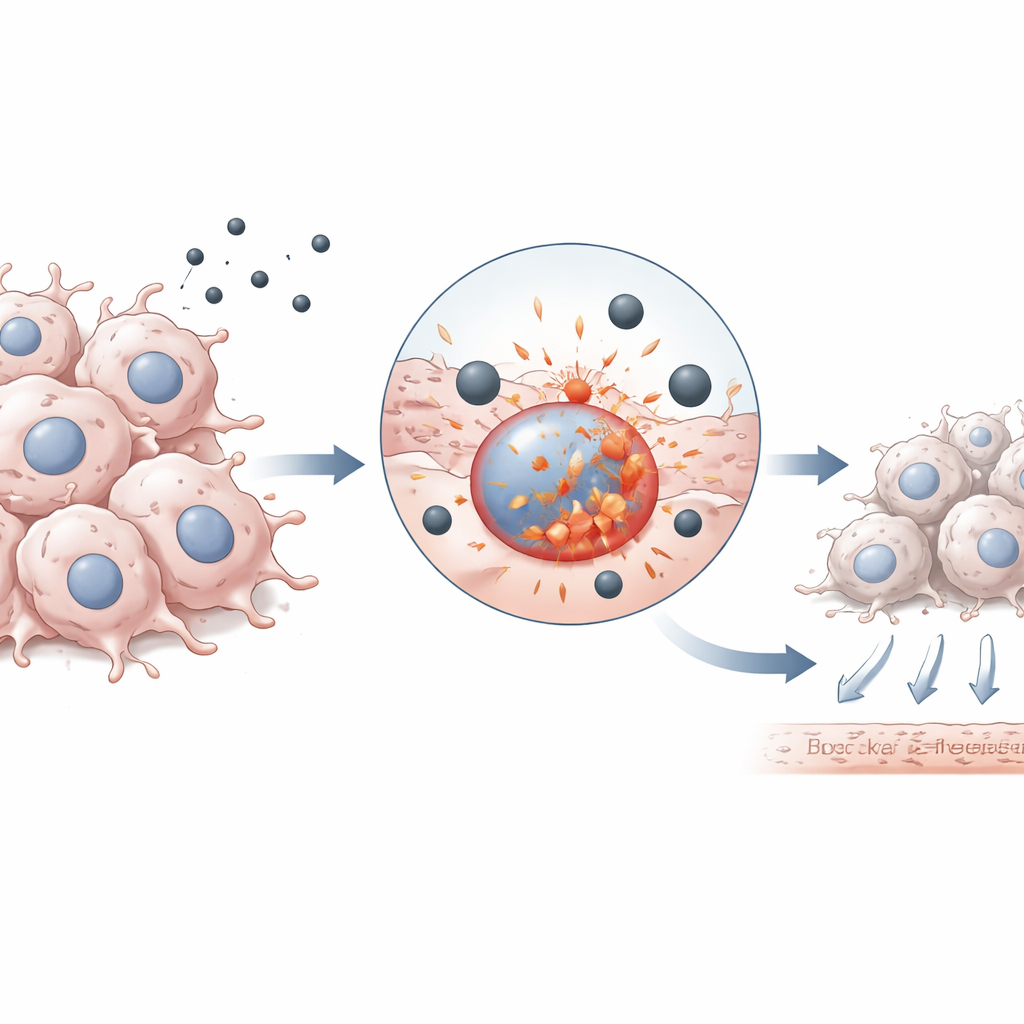
Forcing Cancer Cells to Self‑Destruct and Stay Put
To understand what was happening inside the cells, the team used several assays that track cell death, DNA damage, and cell division. The guava–palladium combination drove many more cancer cells into apoptosis, a controlled self‑destruct process, than either the extract or nanoparticles alone. DNA damage tests showed strong fragmentation, and analysis of cell-cycle stages revealed that this combined treatment halted cells in the S phase, when DNA is being copied, preventing successful division. At the molecular level, proteins that encourage cell death (such as Bax, active caspase‑3, and p53) rose, while survival and growth proteins (including Bcl‑2 and key cell‑cycle regulators) fell. Proteins that help cancer cells chew through surrounding tissue and spread—MMP‑2 and MMP‑9—were also reduced, and in scratch‑wound assays the treated cells migrated more slowly, formed far fewer colonies, and were less able to close gaps, all pointing to weaker metastatic behavior.
Natural Defenses and Added Benefits
Beyond its direct anticancer effects, the guava-based formulation showed strong antioxidant activity in a standard free-radical test, nearly matching vitamin C at higher doses. This dual role is important: while uncontrolled oxidation can damage healthy tissues, carefully targeted oxidative stress inside cancer cells can help trigger their demise. The plant compounds on the nanoparticle surface likely both drive the green synthesis and cooperate with the palladium core to boost anticancer and antioxidant actions, creating a synergy that neither component achieves alone.
What This Could Mean for Future Care
In simple terms, the study suggests that a familiar tropical plant and a precious metal can be combined, using water and mild conditions, to build tiny particles that strongly attack bone cancer cells while limiting their ability to grow and spread. The work is still at the cell-culture stage and does not yet prove safety or effectiveness in animals or humans. However, it highlights how “green” nanotechnology can turn everyday plant materials into precise experimental tools that push cancer cells toward self‑destruction. With further testing in living systems, guava‑mediated palladium nanoparticles could one day contribute to more targeted, less toxic treatments for osteosarcoma and perhaps other tumors.
Citation: Hanna, D.H., Taher, B.M. & El-Desouky, M.A. Synergetic anticancer activity of psidium guajava–mediated palladium nanoparticles via apoptosis induction and metastasis suppression in osteosarcoma cells. Sci Rep 16, 14701 (2026). https://doi.org/10.1038/s41598-026-49913-1
Keywords: osteosarcoma, green nanotechnology, palladium nanoparticles, guava leaf extract, cancer apoptosis