Clear Sky Science · en
Techno-economic optimization of a grid-connected solar–wind - pumped hydro hybrid system for energy and desalination in Ras Ghareb, Egypt
Power and Water for a Growing Coastal Town
In Egypt’s desert landscapes, some coastal cities struggle to secure both reliable electricity and clean drinking water. Ras Ghareb, a wind‑swept town on the Gulf of Suez, is one of them. This study explores whether a carefully designed mix of solar panels, wind turbines, and water‑based energy storage can supply thousands of homes, farms, and a large seawater desalination plant—while also earning money by selling extra green power to the national grid.
Why This Corner of the Red Sea Matters
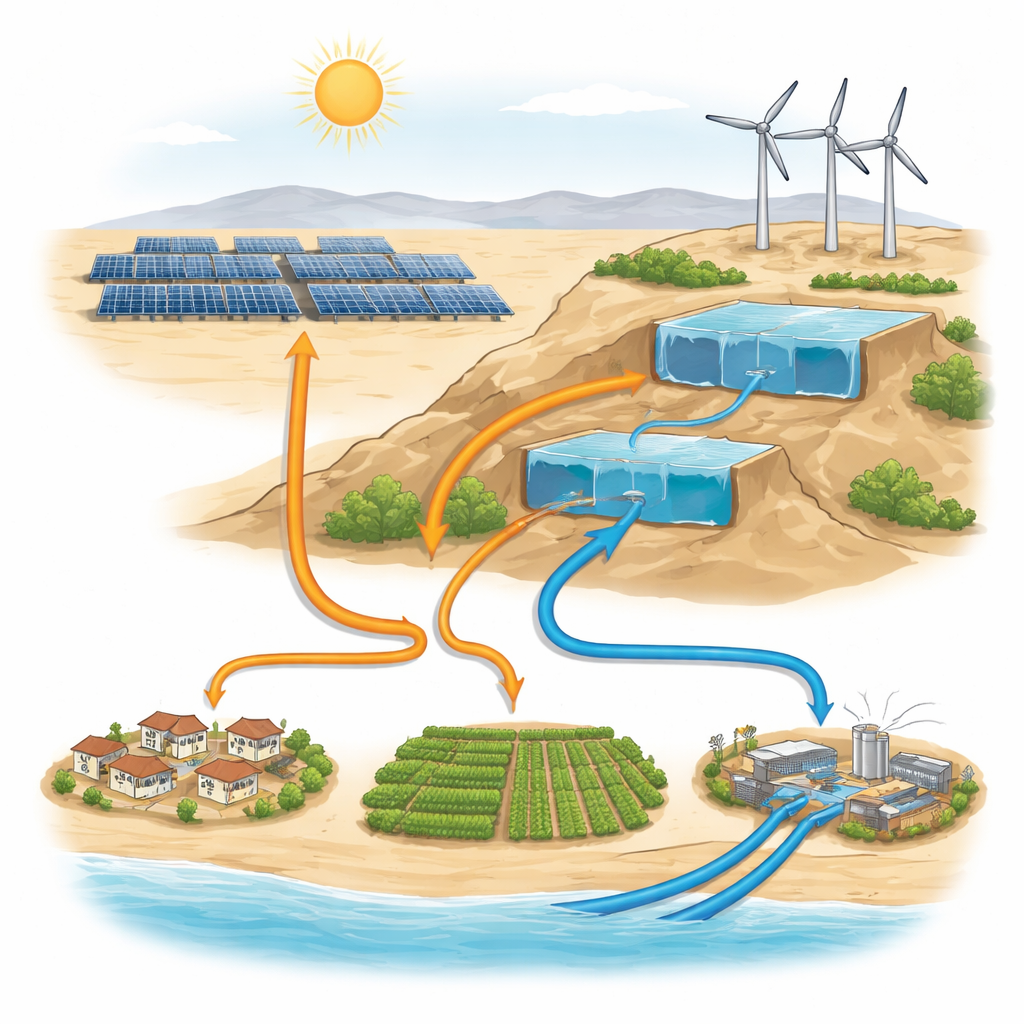
Ras Ghareb lies on the western shore of the Gulf of Suez, an area blessed with strong, steady winds and intense sunshine almost year‑round. At the same time, it has no rivers or lakes, so drinking and irrigation water must come from the sea through energy‑hungry reverse‑osmosis desalination. Local demand is rising: about 100,000 residents need electricity and water, oil‑related industries are expanding, and farms covering 2,000 acres require regular irrigation. These overlapping needs make Ras Ghareb a test bed for solving the “water–energy” challenge in arid coastal regions.
Building a Mixed Energy and Water System
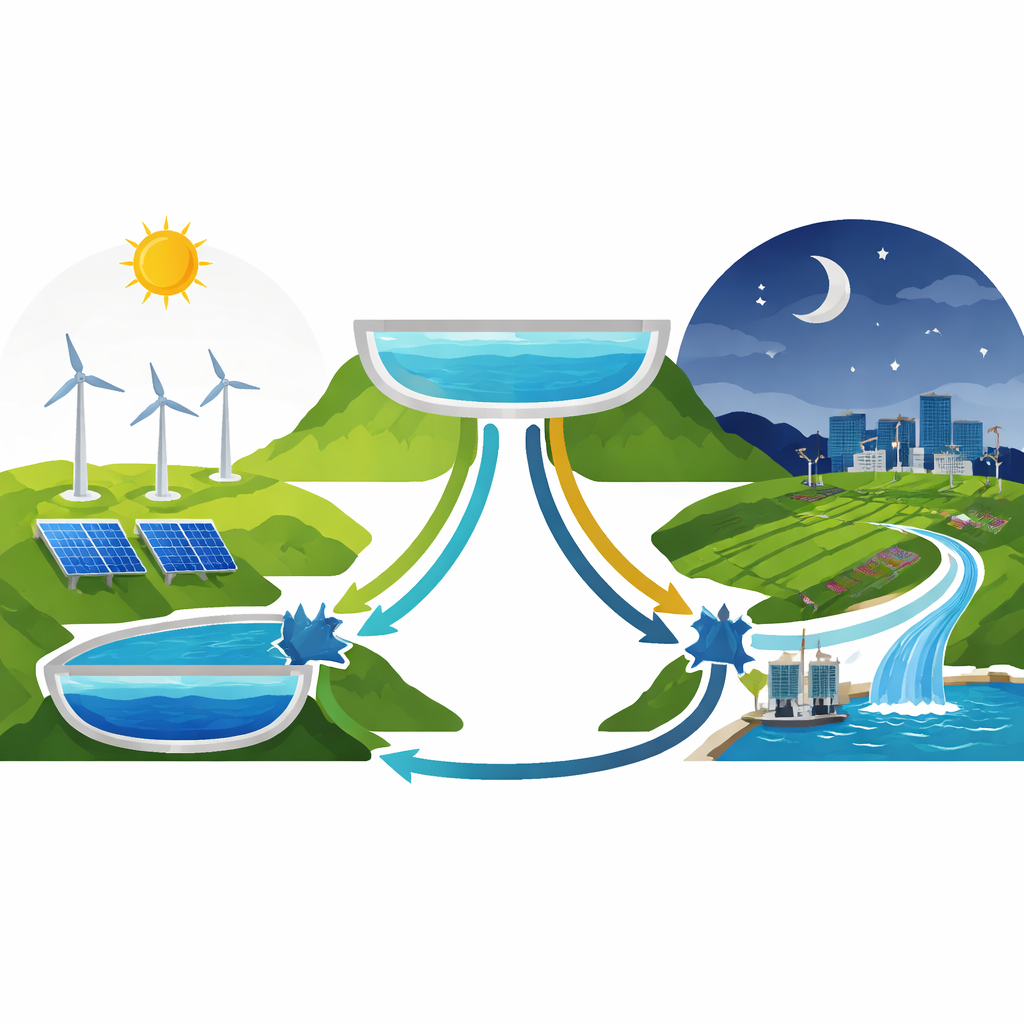
The researchers designed a large hybrid system that combines 157.6 megawatts of solar power, 166.8 megawatts of wind power, and a pumped‑hydro storage station that acts like a giant rechargeable battery. When the sun is bright and the wind is strong, excess electricity pumps water from a lower reservoir to a higher one. When sunlight fades or winds weaken, water runs back down through turbines to generate power. Realistic hourly demand profiles were built for three types of consumers: 5,000 homes with evening peaks, round‑the‑clock desalination that produces about 80,000 cubic meters of freshwater per day, and flexible irrigation loads that can be shifted to sunny hours. A statistical “diversity factor” was used so that the plant is sized to meet the true combined peaks of these different users without being unnecessarily oversized.
Testing Performance with Digital Experiments
Using the HOMER Pro simulation tool and long‑term NASA data on sunlight and wind, the team explored many possible system designs and compared them to a conventional “grid‑only” option. For each configuration, the software tracked whether all demand was met, how much renewable energy was used, and what the costs and earnings would be over the project’s lifetime. The winning design delivers a renewable share of 93.8% with zero unmet load, meaning the hybrid plant and storage can fully cover the town’s needs while leaning on the main grid only as a backup. Because the site’s resources are so strong, the plant also produces a large surplus—over 520 gigawatt‑hours per year—that can be exported to the national grid through existing high‑voltage lines.
Turning a Utility into a Profit Center
Economically, the numbers are striking. When revenues from selling surplus electricity at Egypt’s feed‑in tariff are included, the project’s net present cost becomes negative (−$94.7 million), meaning earnings over 25 to 30 years exceed all investment and operating expenses. The initial capital outlay of about $358 million is paid back in less than two years, and the internal rate of return reaches 53%, well above typical infrastructure projects. Sensitivity checks suggest that even if wind speeds dipped, solar panels became more expensive, or buy‑back prices fell, the hybrid system would remain more attractive than relying on the grid alone.
Cutting Pollution While Securing Water
Because nearly all of Ras Ghareb’s electricity in this design comes from sun, wind, and water storage, dependence on fossil‑fuel‑based grid power plunges. The study estimates annual reductions of around 292 million kilograms of carbon dioxide, plus large cuts in sulfur dioxide and nitrogen oxides—pollutants linked to smog, acid rain, and health problems. In effect, the hybrid station not only powers homes, farms, and desalination; it also behaves like a regional “carbon sponge,” offsetting emissions that would otherwise have been produced elsewhere on the grid.
A Blueprint for Other Coastal Regions
For non‑specialists, the main message is that a properly sized mix of solar, wind, and pumped‑hydro storage can do much more than keep the lights on. In Ras Ghareb, it can secure drinking water, support food production, and turn an essential public service into a profitable, low‑carbon asset. The authors argue that this approach offers a scalable model for similar coastal and desert regions worldwide, where strong sun and wind can be harnessed not only to power communities, but also to make the water they need to thrive.
Citation: Awad, H., Abu El-Nasr, N.S.M., Mahmoud, H. et al. Techno-economic optimization of a grid-connected solar–wind - pumped hydro hybrid system for energy and desalination in Ras Ghareb, Egypt. Sci Rep 16, 14425 (2026). https://doi.org/10.1038/s41598-026-49904-2
Keywords: renewable energy, desalination, pumped hydro storage, Egypt, hybrid power systems