Clear Sky Science · en
Synthesis of vanadium pentoxide doped zinc oxide nanocomposites via laser ablation and their antibacterial activity and cell viability
Why Tiny Particles Matter for Wounds
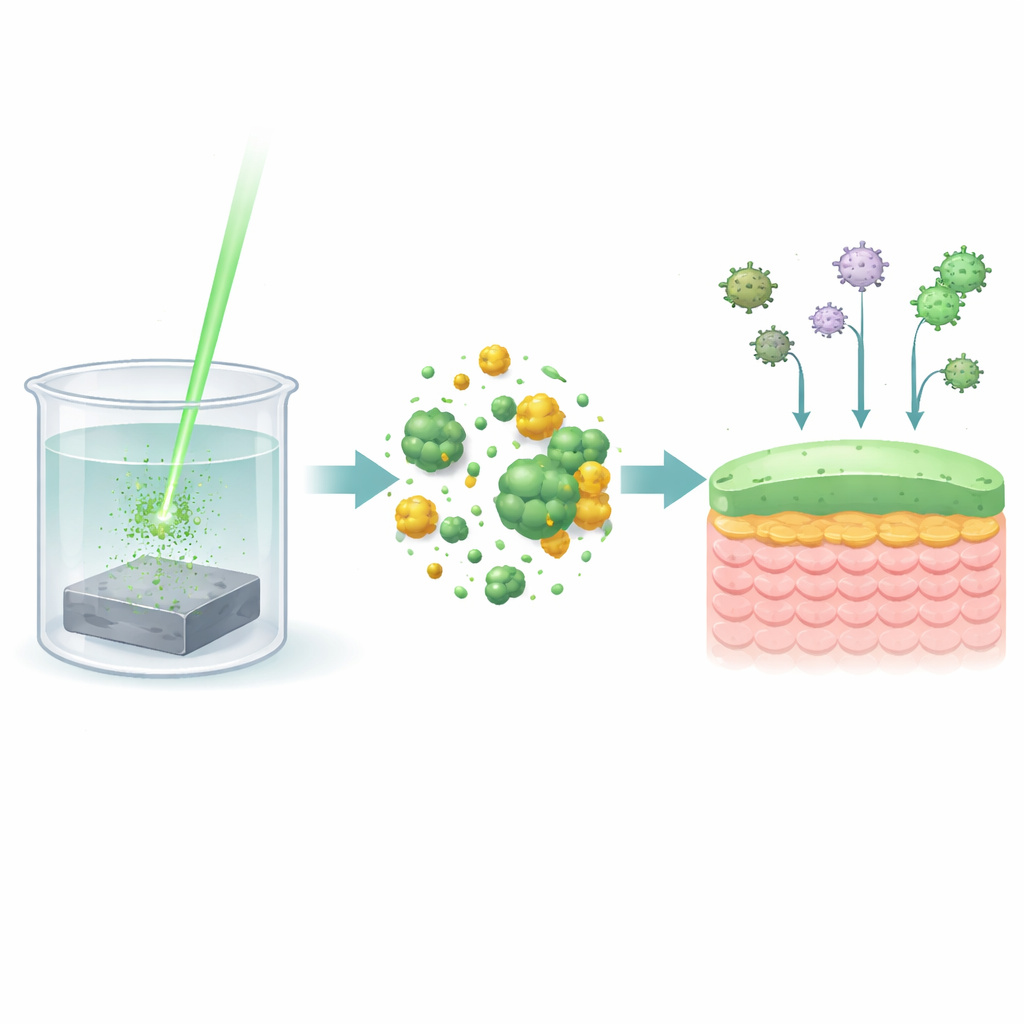
When we cut or burn our skin, germs can slip in and slow healing, sometimes leading to serious infections. Scientists are searching for smart materials that can both fight harmful bacteria and be gentle on our own cells. This study explores a new way to make such a material from two metal oxides, zinc oxide and vanadium pentoxide, using a cleaner "green" process. The goal is to create tiny particles that could someday coat medical implants or dressings and help wounds heal faster and safer.
Building a New Protective Material
The researchers started with zinc, a metal already common in creams and ointments, and turned it into zinc oxide nanoparticles using a laser fired into water. This laser ablation approach avoids added chemical reagents, making the process cleaner and more environmentally friendly. They then mixed these zinc oxide particles with commercially available vanadium pentoxide using a co-precipitation method, forming a combined material called V2O5@ZnO. Both the pure zinc oxide and the mixed material were heated to very high temperature to improve their structure and stability.
Looking Inside the Nanocomposite
To understand what they had made, the team examined the powders with several standard lab tools. Infrared spectroscopy revealed how atoms are bonded together, confirming the expected fingerprint of zinc oxide and the presence of groups linked to vanadium-containing structures. X-ray diffraction showed that the zinc oxide kept its orderly hexagonal crystal form and that the vanadium pentoxide formed its own distinct crystal pattern within the same material. Electron microscope images displayed small bright particles spread over the surface, along with larger clumps linked to vanadium pentoxide, suggesting a composite where zinc oxide forms the base and vanadium-rich regions act as fillers that could tweak mechanical and surface properties.
Friendly to Human Cells
Because any material touching the body must be safe, the scientists tested how human bone-forming cells responded when grown on the different samples. Using a common laboratory color-change test to measure living cells, they found that pure zinc oxide already allowed most cells to survive after a few days. Remarkably, the zinc oxide mixed with vanadium pentoxide supported even higher cell survival, close to 90 percent. This indicates that, under the tested conditions, adding vanadium pentoxide did not make the material more toxic; instead, it slightly improved how well human cells tolerated the surface, an encouraging sign for possible medical use.
Tough on Bacteria That Delay Healing
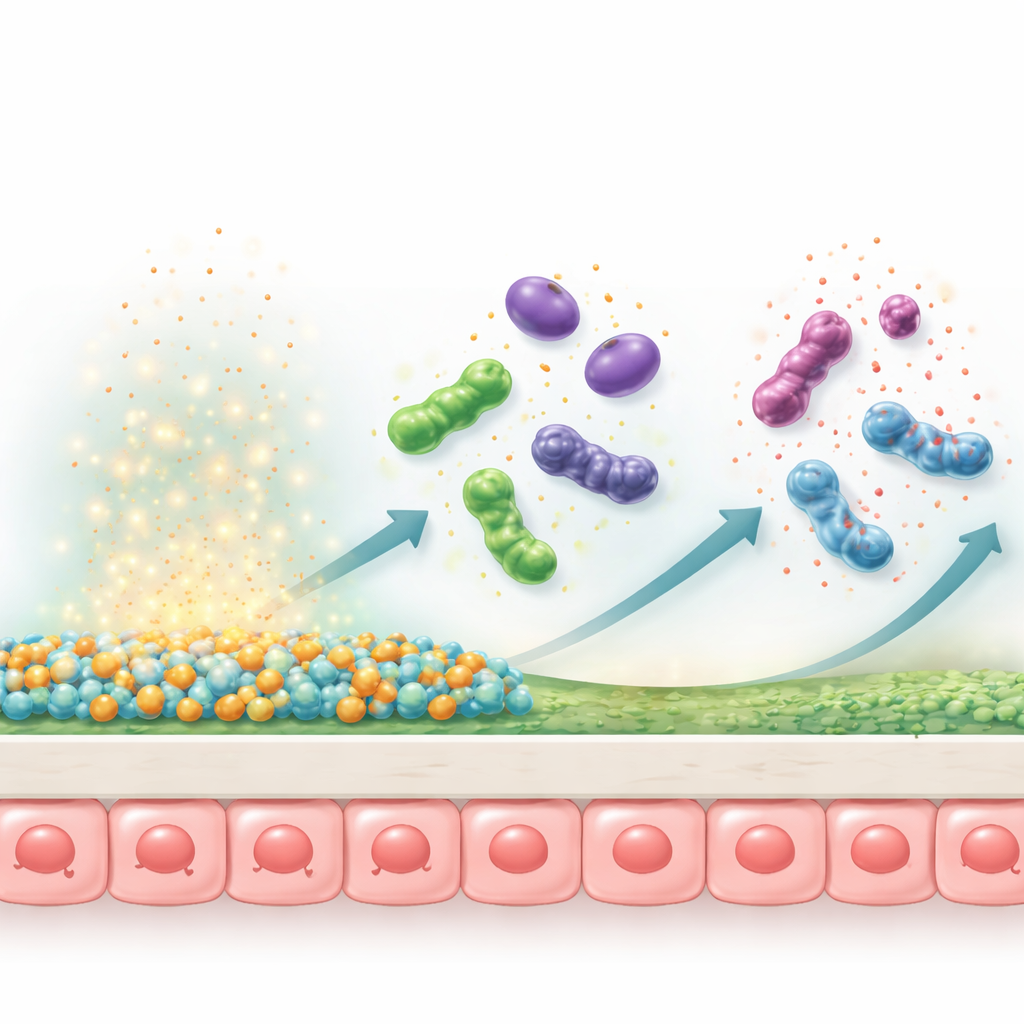
The same materials were then challenged with four common bacterial troublemakers, including strains of Staphylococcus aureus, Pseudomonas aeruginosa, Bacillus subtilis, and Escherichia coli. The researchers placed drops of the nanoparticle solutions on bacteria-grown agar plates and measured the clear "no growth" circles that formed around them. Both pure zinc oxide and the mixed V2O5@ZnO created noticeable zones where bacteria could not grow, confirming strong antibacterial power. In several cases, the vanadium-containing composite showed improved inhibition zones compared with the reference medicines and with pure zinc oxide, meaning it was especially effective at stopping bacterial colonies from spreading across the surface.
What This Could Mean for Future Care
Taken together, the study shows that a carefully designed blend of zinc oxide and vanadium pentoxide nanoparticles can both discourage harmful bacteria and remain friendly to human cells in lab tests. Made through a greener laser-based route and a simple mixing step, these nanocomposites could be promising candidates for coatings on implants, wound dressings, or other medical tools where controlling infection is crucial. While more work is needed to confirm safety and performance in real tissues and living organisms, this research points toward tiny engineered particles that help our bodies fight germs while giving healing cells a safer place to grow.
Citation: Menazea, A.A. Synthesis of vanadium pentoxide doped zinc oxide nanocomposites via laser ablation and their antibacterial activity and cell viability. Sci Rep 16, 14163 (2026). https://doi.org/10.1038/s41598-026-49830-3
Keywords: zinc oxide nanoparticles, antibacterial nanomaterials, wound healing, green nanotechnology, biocompatible coatings