Clear Sky Science · en
The interplay between cytokine genes and microRNAs in anemia of inflammation among hemodialysis patients
Why fatigue in kidney patients matters
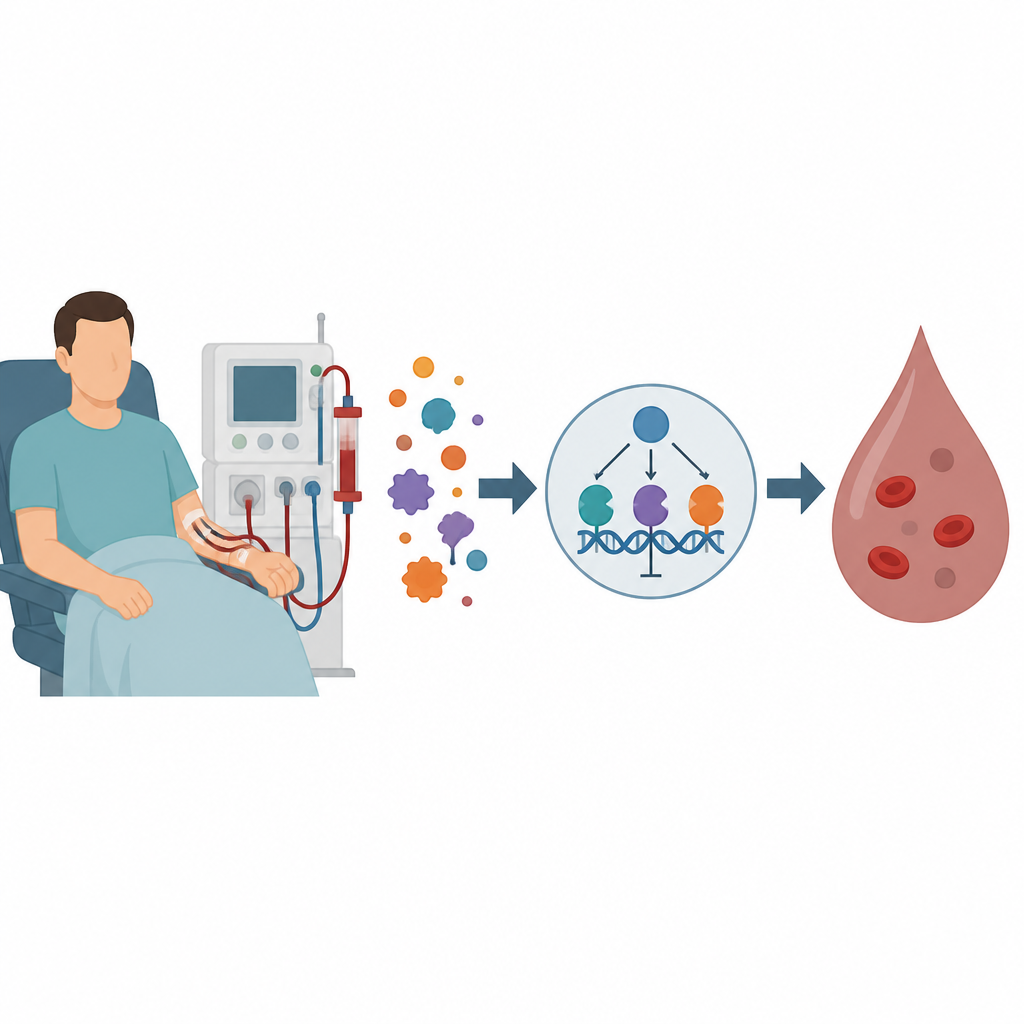
People on long term dialysis often battle relentless tiredness because their blood is low in healthy red cells, a condition called anemia. This study looks under the hood of that problem, asking how signals from the immune system and tiny genetic switches in the blood might team up to keep iron locked away and red cell production down. Understanding this hidden conversation could one day point to gentler, more precise ways to ease anemia in dialysis patients and improve daily life.
Hidden links between inflammation and tired blood
When the body is inflamed for months or years, it reacts by hoarding iron and slowing the making of new red blood cells. In people with kidney failure who rely on hemodialysis, this “anemia of inflammation” is extremely common and adds to weakness, breathlessness, and hospital visits. The authors focus on two well known immune messengers, IL 6 and TNF alpha, which rise during inflammation and help drive iron storage instead of iron use. They also examine microRNAs, tiny strands of genetic material that act like volume knobs for many genes at once, to see how these elements might jointly shape anemia in dialysis patients.
Taking a close look at blood signals
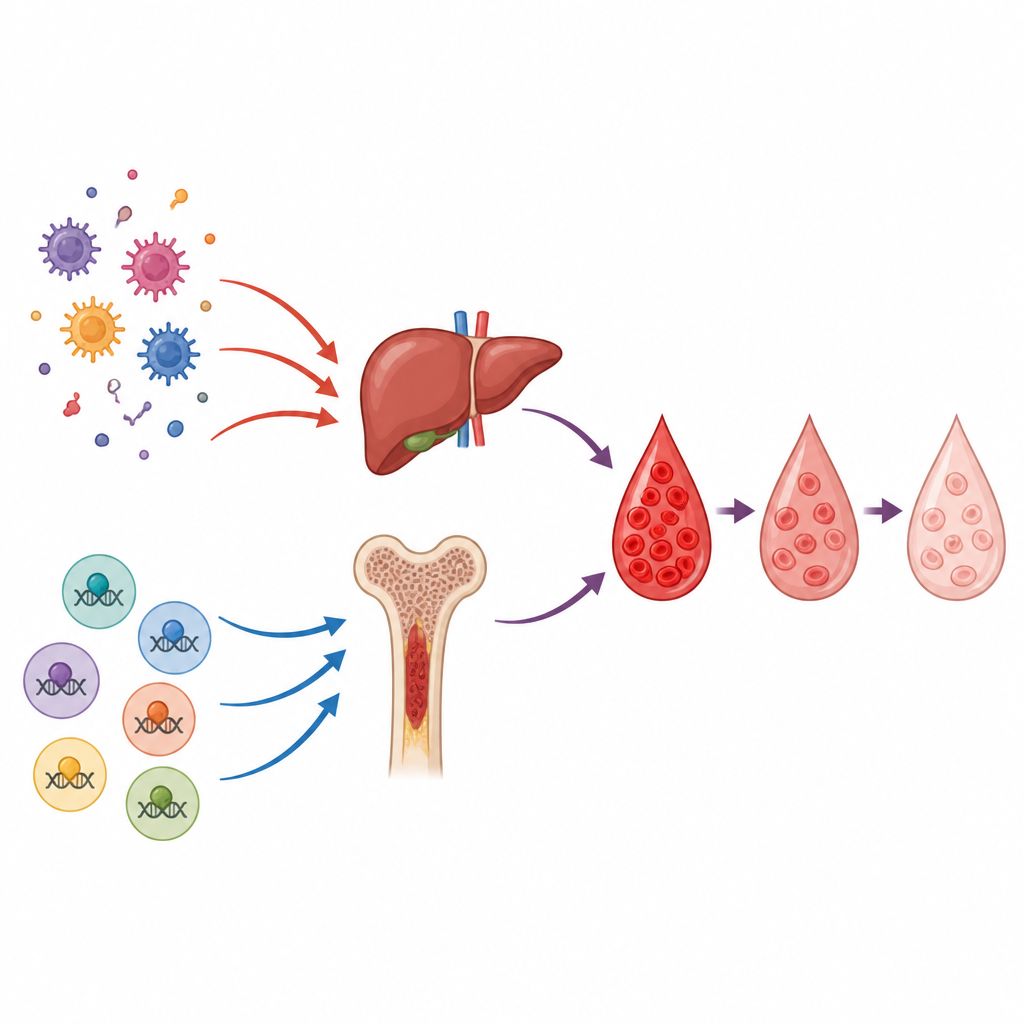
The research team compared 30 adults on maintenance hemodialysis who had anemia of inflammation with 30 healthy volunteers. Before dialysis sessions, they drew blood to measure standard markers such as iron, ferritin, transferrin saturation, and C reactive protein, along with counts of blood cells. They then used a sensitive technique called real time PCR to quantify IL 6 and TNF alpha gene activity and the levels of three inflammation linked microRNAs: miR 34, miR 130, and miR 16b. The group also turned to online genetic databases to explore how these microRNAs relate to large networks of genes involved in kidney disease and immune responses.
What the blood tests revealed
Compared with healthy people, dialysis patients with anemia showed sharply higher activity of IL 6, TNF alpha, and miR 34, alongside notably lower levels of miR 130 and miR 16b. Within the patient group, IL 6 and TNF alpha moved in step with miR 34 but in the opposite direction to miR 130 and miR 16b, hinting at a coordinated network. Iron handling markers told a consistent story: patients had low serum iron and transferrin saturation, yet very high ferritin, meaning iron was stored rather than available to make red cells. High ferritin levels were tied to higher IL 6, TNF alpha, and miR 130, while more severe anemia and stronger inflammation were linked with shifts in miR 16b and miR 34.
Clues from big data and risk patterns
By mining large cancer and kidney datasets, the team found that these microRNAs also track with IL 6 in other human tissues, supporting the idea that they participate in shared inflammatory pathways. Statistical models suggested that higher miR 34 and lower miR 130 and miR 16b were associated with the presence of anemia in dialysis patients, even after accounting for age and sex. In fact, in this small cohort, combinations of these microRNAs could distinguish patients from healthy controls with very high accuracy, raising the possibility that a simple blood test might one day help flag inflammation driven anemia or monitor its course.
What this could mean for treatment
The study does not claim to have solved anemia in dialysis patients, but it offers a fresh way to think about it. The results support a picture in which immune messengers such as IL 6 and TNF alpha, together with specific microRNAs, reinforce iron trapping and weaken red cell production. For patients, this suggests that future therapies might not rely only on iron infusions and hormone shots but could also target the signaling loops that keep inflammation and anemia feeding each other. Larger, longer studies will be needed to confirm these patterns, yet this work lays early groundwork for turning subtle blood based signals into tools for better, more tailored care.
Citation: Shemis, M., Sabry, O., Sherif, N. et al. The interplay between cytokine genes and microRNAs in anemia of inflammation among hemodialysis patients. Sci Rep 16, 15334 (2026). https://doi.org/10.1038/s41598-026-49829-w
Keywords: anemia of inflammation, hemodialysis, microRNA, IL 6, iron metabolism