Clear Sky Science · en
An eco-friendly evaluation of geraniol and CeO2NPs paper poultices for multifunctional paper manuscript conservation
Saving Fragile Pages from Silent Invaders
Ancient books and handwritten documents are more than beautiful objects; they are irreplaceable witnesses to human history. Yet the very paper that carries these stories is quietly eaten away by fungi, pollution, and harsh light. This study explores a gentle, plant-based way to protect historic manuscripts, using a rose-scented compound called geraniol and tiny particles of cerium oxide, to stop decay without harming the delicate pages or the inks that bring them to life.
Why Old Paper Falls Apart
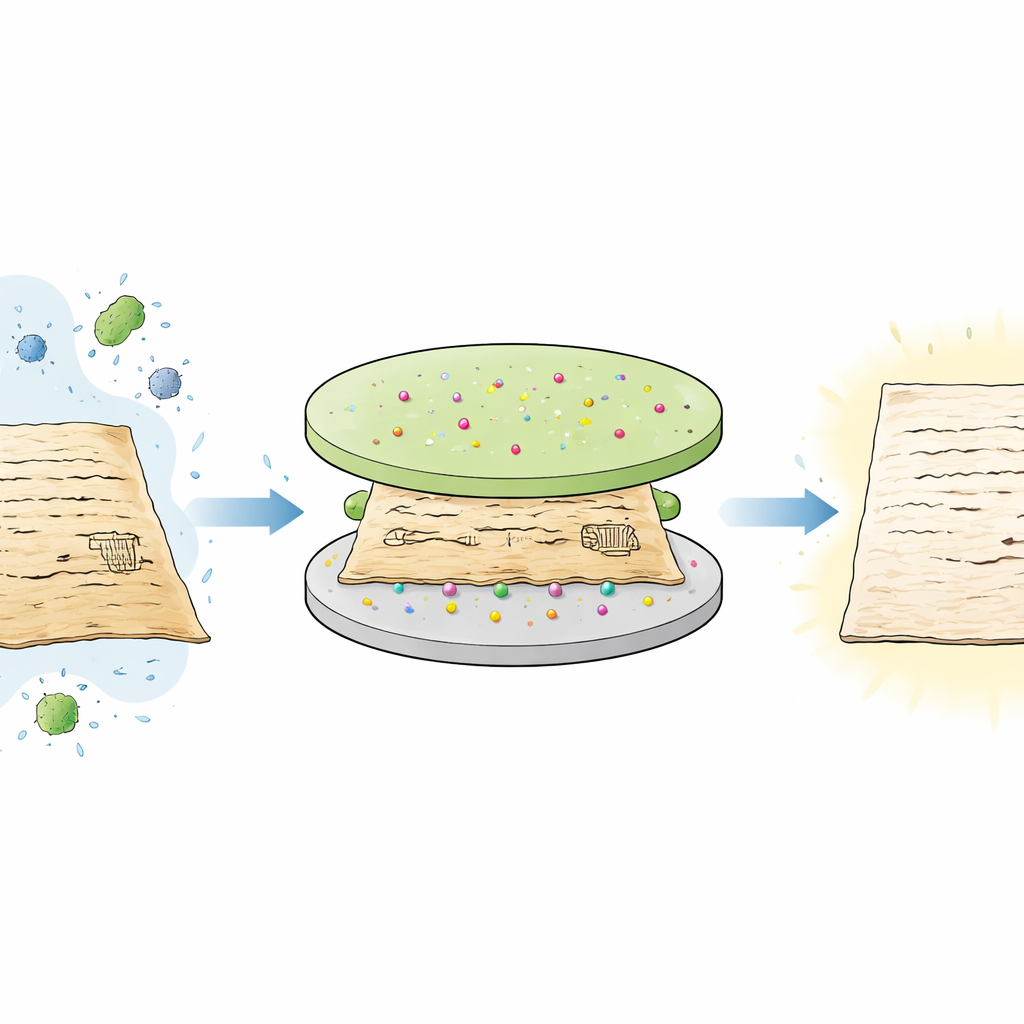
Historic manuscripts face a double threat. In damp conditions, microscopic fungi settle on the surface and digest the paper’s cellulose, leaving stains, holes, and brittle fibers. At the same time, chemical reactions slowly yellow the paper and weaken it, especially when metals in traditional inks speed up oxidation, much like rusting in iron. Iron gall ink, widely used for centuries, is notorious: it can turn from script into a source of acid and metal that attacks the very page it is written on. Conservators need treatments that can halt fungi and slow oxidation, yet be safe enough not to damage fragile fibers or alter precious writing.
A Gentle Poultice Inspired by Nature
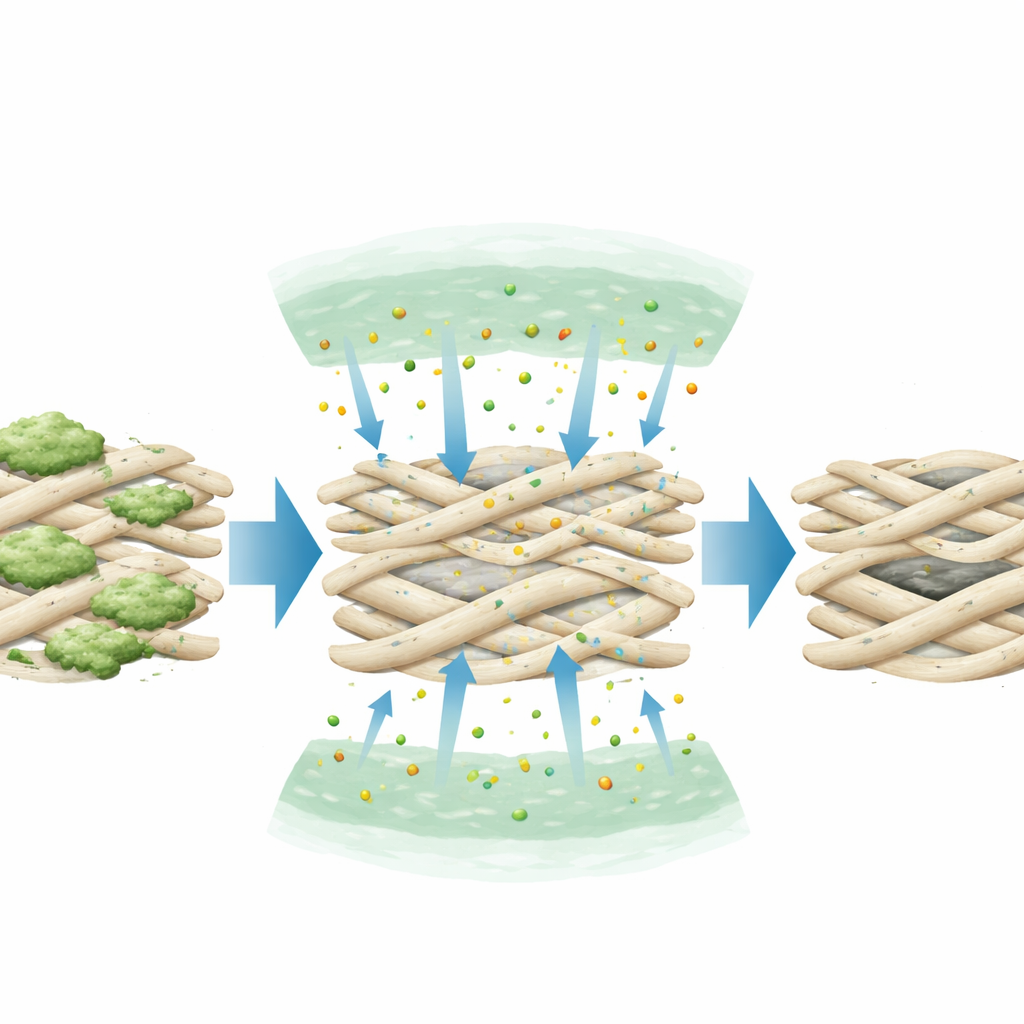
The researchers focused on two eco-friendly helpers. Geraniol is a plant-derived compound found in many herbs and flowers, known for its pleasant scent and strong antifungal and antioxidant abilities. Cerium oxide nanoparticles are ultra-small particles of a rare earth mineral that can mop up reactive molecules and influence surface chemistry. To apply them safely, the team soaked thin Whatman paper sheets in solutions containing geraniol, cerium oxide nanoparticles, or a mixture of both, then used these as poultices: treated papers were sandwiched between the soaked sheets for 24 hours, allowing the active ingredients to migrate into the manuscript-like samples.
Putting the Treatments to the Test
To mimic decades of wear, the scientists first artificially aged cotton paper written with iron gall ink using heat, humidity, and ultraviolet light, and then deliberately infected the samples with two common paper-destroying fungi, Aspergillus fumigatus and Aspergillus terreus. They then compared how well each treatment stopped fungal growth and preserved the look and feel of the paper. Microscopes revealed how fibers changed, color measurements tracked yellowing and fading, pH readings showed shifts in acidity, and techniques such as X-ray diffraction and infrared spectroscopy probed deeper changes in cellulose and ink chemistry. Geraniol-treated samples stayed remarkably clean: fungal growth was halted for weeks, surface roughness stayed close to that of undamaged paper, and the black ink kept its color with only tiny shifts after UV exposure.
How the Plant Compound Outperformed the Nanoparticles
Although cerium oxide nanoparticles did slow fungal growth and offered some protection, they also caused slight color changes and contributed to increased brittleness, especially when combined with geraniol. Infrared analysis showed that geraniol alone could erase signs of oxidation in the paper and ink, preventing the formation of carbonyl groups associated with damage, even after further UV aging. In contrast, samples treated with cerium oxide—alone or in combination—developed new oxidation bands after light exposure. On a real Ottoman-era manuscript from 1620 AD, geraniol poultices successfully removed fungal traces, dirt, and discoloration from the surface without disturbing either the carbon or vermilion inks, while additional gentle cleaning and consolidation restored strength and neutralized excess acidity.
New Hope for Cultural Treasures
The study concludes that a geraniol-loaded paper poultice, used without added nanoparticles, offers a powerful and safe way to protect historic manuscripts. It blocks harmful fungi, reduces oxidation from light, and lifts dirt into the poultice material, all while leaving the inks, paper structure, and acidity essentially unchanged. By showing that a plant-based, low-toxicity treatment can both clean and shield vulnerable pages, this work points toward more sustainable conservation methods that help libraries, archives, and private collectors keep their paper treasures readable and stable for generations to come.
Citation: Mahmoud, S.M.A., Mansour, M.M.A., Ali, M.A. et al. An eco-friendly evaluation of geraniol and CeO2NPs paper poultices for multifunctional paper manuscript conservation. Sci Rep 16, 14409 (2026). https://doi.org/10.1038/s41598-026-49698-3
Keywords: paper conservation, historical manuscripts, antifungal treatment, eco-friendly preservation, geraniol poultice