Clear Sky Science · en
Impact of liver cirrhosis etiology on results of diagnostic tests for minimal hepatic encephalopathy
Why brain fog in liver disease matters
People with advanced liver disease often struggle with subtle but life-altering problems like slowed thinking, poor attention, and difficulty with everyday tasks. Doctors call this minimal hepatic encephalopathy – an early stage of brain dysfunction that can progress to obvious confusion, drowsiness, and even coma. This study asks a deceptively simple question with big consequences for patients: do standard thinking tests work equally well for all kinds of liver cirrhosis, or does the underlying cause of the liver damage change what these tests really tell us?
Different roads to the same damaged liver
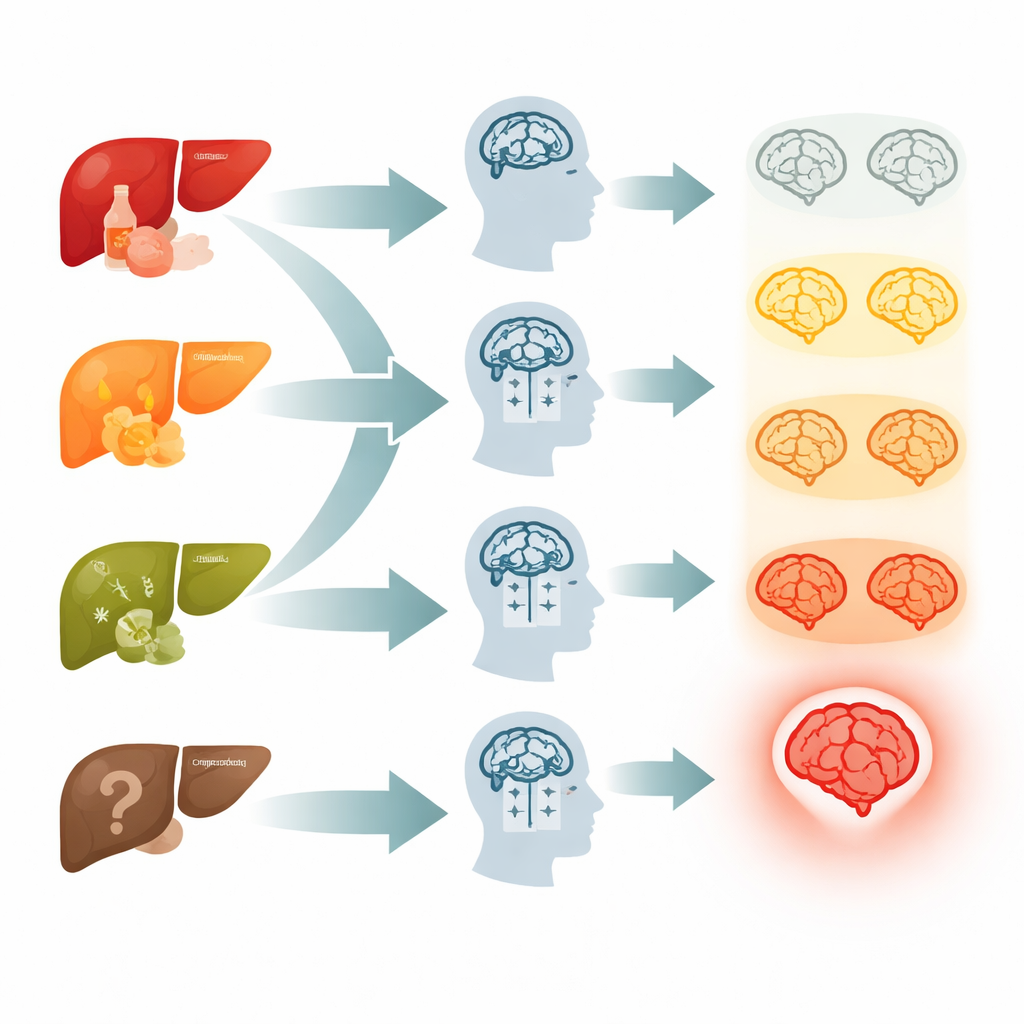
Liver cirrhosis is the end result of many different diseases. Some are driven by long-term alcohol use or by fat and metabolic problems; others stem from viral infections, autoimmune reactions, or bile duct disorders. All can lead to scarring of the liver and pressure in the blood vessels that drain the gut. That, in turn, can allow toxins to reach the brain and disturb its function. But alcohol and metabolic disease can also harm the brain directly, through nutritional deficits, inflammation, and damage to specific brain regions such as the cerebellum. The authors suspected that these different pathways might leave a distinct “fingerprint” on how patients perform in thinking tests.
How the researchers put the tests to the test
The team followed 312 people with cirrhosis treated at a German university hospital. They grouped patients according to the cause of their liver disease: alcohol-related, metabolic fat–related, a mix of both, infectious or autoimmune causes, and a remaining group with unclear or other causes. Everyone completed a battery of six commonly used tests for subtle brain dysfunction, including a paper-and-pencil test set (the PHES), an animal naming task, smartphone-based attention tests, reaction time measurements, and a visual flicker test. The researchers then tracked who went on to develop overt hepatic encephalopathy – clear episodes of confusion or coma – over the following year, while also accounting for age, education, diabetes, and language background.
One flagship test behaves differently by liver cause
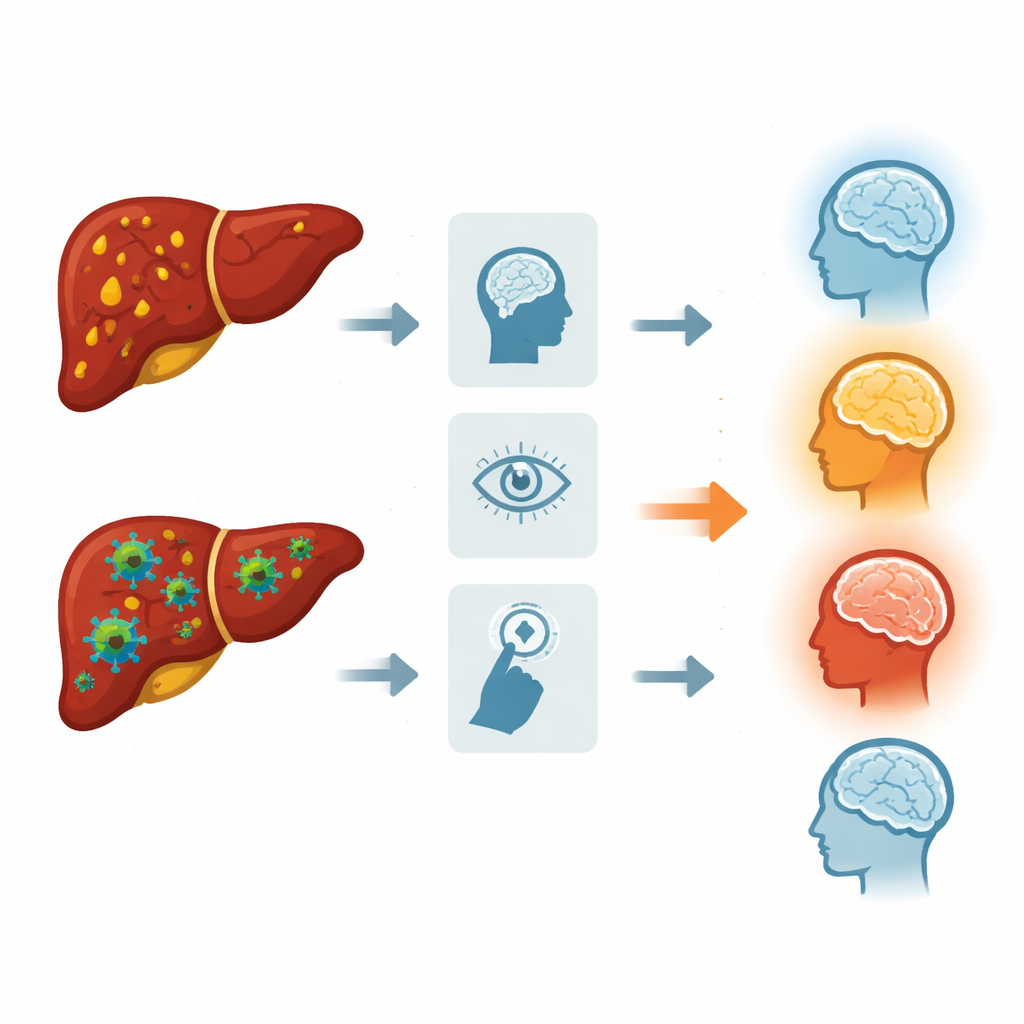
Among all the measures, the PHES, a widely used reference test for early brain problems in cirrhosis, showed the most striking differences across liver causes. Patients whose cirrhosis came from infections or autoimmune disease tended to score better on PHES than those with alcohol-related cirrhosis, even after adjusting for other factors. In other words, for the same degree of liver scarring, people with alcohol-related disease had more noticeable thinking problems on this test. Yet for patients whose cirrhosis was tied to fatty and metabolic causes, PHES scores were more similar to those with alcohol-related disease, suggesting that both alcohol and metabolic fat can add their own burden on brain function beyond the effects of cirrhosis itself.
Predicting serious confusion is not one-size-fits-all
The study’s most clinically important finding is that the power of PHES to forecast serious confusion over the next year depended strongly on why the liver was damaged. In people with infectious or autoimmune causes, and in those with other non–fat-related causes, an abnormal PHES result was a strong warning sign for future episodes of overt hepatic encephalopathy. In contrast, in patients with alcohol-related or metabolic fatty liver disease, an abnormal PHES score carried a much more modest increase in risk. For these steatotic conditions, the same test result could reflect a mix of long-standing brain effects from alcohol or metabolic syndrome plus cirrhosis-related damage, making it a less precise gauge of upcoming liver-related brain crises.
What this means for patients and doctors
For people living with cirrhosis, this work underscores that not all “brain fog” is created equal – and not every poor test score means the same thing. The study suggests that the standard PHES test is particularly useful for predicting dangerous confusion in patients whose liver disease is not driven by alcohol or metabolic fat. But in those with alcohol-related or fatty liver disease, the same test is less reliable as a crystal ball and may need to be combined with other approaches. More broadly, the authors argue that subtle cognitive problems in cirrhosis should not automatically be labeled as minimal hepatic encephalopathy, especially in steatotic liver disease, because multiple overlapping brain insults are often at play.
Citation: Egge, J.F.M., Ehrenbauer, A.F., Gabriel, M.M. et al. Impact of liver cirrhosis etiology on results of diagnostic tests for minimal hepatic encephalopathy. Sci Rep 16, 13154 (2026). https://doi.org/10.1038/s41598-026-49607-8
Keywords: liver cirrhosis, hepatic encephalopathy, cognitive impairment, alcohol-related liver disease, fatty liver disease