Clear Sky Science · en
Sustainable valorization of waste polystyrene and PVC blends for high-performance applications
Turning Throwaway Plastics into Useful Materials
Foam packaging, plastic bottles, and other everyday plastics often end up in landfills or scattered in the environment, where they can linger for decades. This study explores a way to turn two particularly troublesome waste streams—polystyrene foam and drink bottles—into tougher, safer materials that could be used in buildings, cars, and electrical devices. Instead of treating these plastics as garbage, the research shows how they can be blended and upgraded to create new products with better strength, heat resistance, and fire safety.
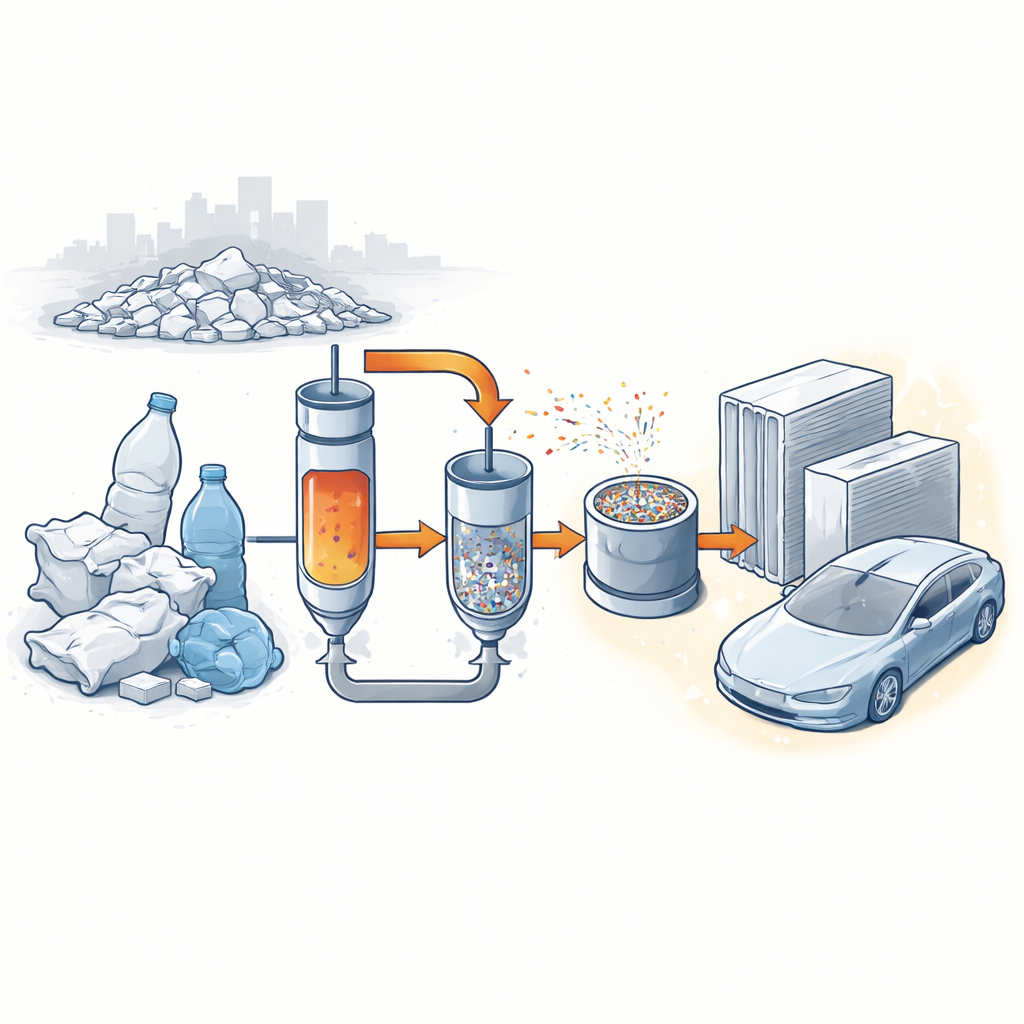
From Trash Foam and Bottles to New Plastic Mixes
The work focuses on waste polystyrene foam, the light, bulky material used in packaging and insulation, and polyethylene terephthalate from used beverage bottles. Both are common, non-biodegradable plastics that are difficult to manage at the end of their lives. In this study, waste polystyrene foam was ground and blended with polyvinyl chloride, a widely used plastic found in pipes and cables, to form a basic plastic mixture. At the same time, the bottle plastic was broken down chemically using a process called glycolysis, producing smaller building blocks that were then used to make a new polyester. These PET-derived products, along with a conventional plastic softener, were added in small amounts to the foam/PVC mix to see how they changed its behavior.
Getting the Plastic to Flow and Stretch Better
For any plastic to be practical on an industrial scale, it must flow smoothly when melted and then solidify into a strong, reliable shape. The researchers measured how easily the blends flowed when heated and how they responded to pulling and stretching. All additives helped the melt move more readily, but the newly made polyester gave the biggest improvement in flow, making the blend easier to process into shapes like sheets or molded parts. When it came to strength and flexibility, the product made directly from recycled bottle plastic (called GPET) stood out: it nearly doubled the strength of the blend and tripled how far it could stretch before breaking compared with the mix without additives. This means the waste-based plastic could be both sturdier and less brittle than the original blend.
Improving Heat Resistance and Slowing Down Flames
Because many plastics burn easily, fire behavior is crucial for uses in buildings, cars, and electrical systems. The team tested how the materials degraded when heated, how quickly they burned, and how much energy they released during combustion. The blends containing the PET-derived additives, especially the polyester, resisted heat-driven damage better and left more solid residue after heating, which is a good sign for fire performance. Most strikingly, the burning speed dropped from about four millimeters per second for the basic blend to about half a millimeter per second when polyester was added, and the energy released during burning also fell. In simple terms, the modified waste plastic became significantly less flammable and more stable at high temperatures.
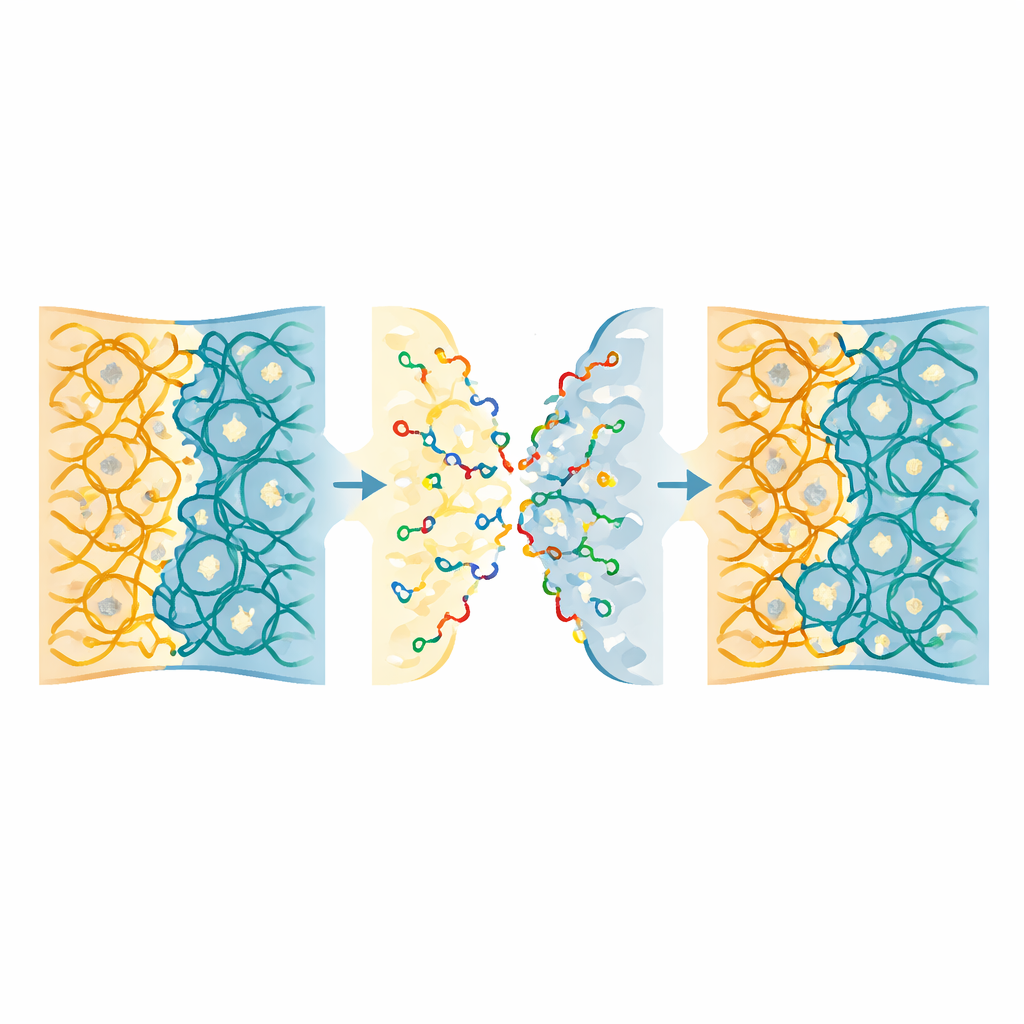
What Happens Inside the Material
To understand why the additives worked so well, the researchers looked closely at the material’s internal structure using electron microscopes and studied how it behaved in electric fields. Without additives, the foam/PVC mix showed rough, broken surfaces and clear signs that its different components did not mix well. With the PET-based additives, the structure became smoother and more uniform, with better contact between phases and filler particles. This tighter, more even arrangement helps the material carry stress without cracking. Electrical tests showed that the additives also increased the material’s ability to store and conduct electrical charge, again with polyester having the strongest effect. This combination of mechanical toughness, controlled electrical behavior, and flame resistance is particularly attractive for insulation and other technical uses.
New Life for Old Plastics
Overall, the study demonstrates that waste polystyrene foam and used drink bottles can be combined and chemically upgraded to create plastic blends with superior strength, flexibility, heat stability, and fire resistance. By carefully choosing additives made from the bottle plastic itself, the researchers turned low-value waste into high-performance materials suitable for electrical insulation, construction components, and automotive parts. For a non-specialist, the main message is that smarter recycling strategies can do more than simply melt and remold plastics—they can redesign them from the inside out, turning a disposal problem into a resource for safer, longer-lasting products.
Citation: Shafik, E.S. Sustainable valorization of waste polystyrene and PVC blends for high-performance applications. Sci Rep 16, 14277 (2026). https://doi.org/10.1038/s41598-026-49599-5
Keywords: plastic recycling, polystyrene waste, PET bottle upcycling, flame-retardant composites, electrical insulation materials