Clear Sky Science · en
Oleuropein attenuates cardiac fibrosis via modulation of TGF-β1/Smad pathway in diabetic cardiomyopathy rat model
Why this matters for people with diabetes
People with type 2 diabetes are not only managing blood sugar; they also face a higher risk of silent damage to the heart. One of the main culprits is a slow buildup of scar-like tissue that stiffens the heart and weakens its pump. This study explores whether oleuropein, a natural compound found in olives and olive leaves and linked to the Mediterranean diet, can ease that scarring process and protect the heart in a diabetic setting.
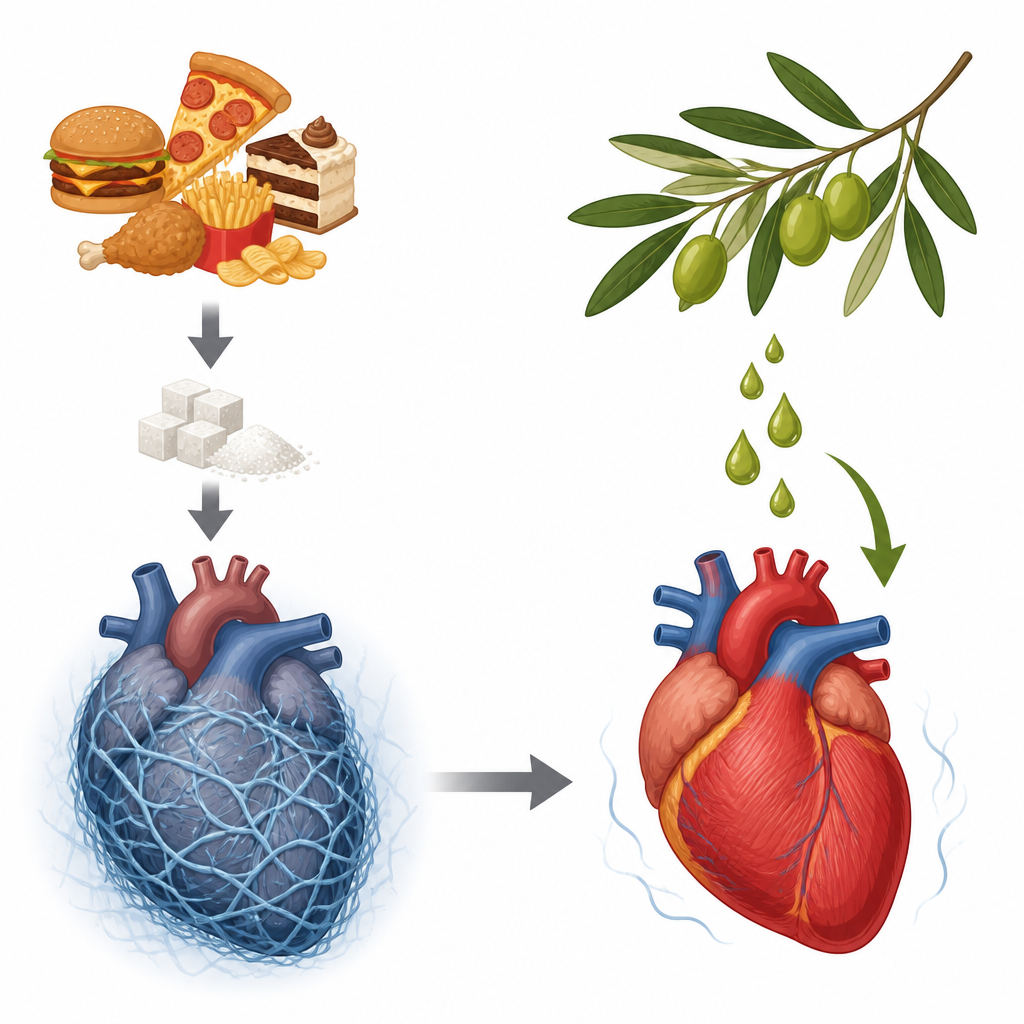
How diabetes can stiffen the heart
In diabetes, long-term high blood sugar and unhealthy fat levels harm heart muscle cells and their support structure. The body responds by laying down extra collagen and related proteins, much like overpacking a room with ropes and nets. This process, known as fibrosis, makes the heart wall thicker and less flexible, so it cannot fill and squeeze properly. A signaling system inside heart cells, driven by a protein called TGF-beta that switches on genes for scar formation, plays a central role in this harmful remodeling.
The olive ingredient put to the test
To study oleuropein’s effects, the researchers used male rats fed a high-fat diet and given a small dose of a pancreas-toxic drug to mimic key features of human type 2 diabetes. Once the animals had stable high blood sugar and early signs of heart damage, treatment began. One group received oleuropein at a fixed daily dose, another group received losartan, a standard drug known to limit heart scarring, and a third diabetic group stayed untreated. Over several weeks, the team monitored heart function by ultrasound, measured blood markers of injury and stress, and examined heart tissue under the microscope and with modern gene and protein tests.
What the hearts looked and acted like
Untreated diabetic rats developed enlarged, weakened hearts with disorganized muscle fibers, widened blood vessels, and obvious overgrowth of collagen. Their hearts showed high levels of proteins that mark active scar-forming cells, along with raised blood signs of heart strain and oxidative stress. In contrast, rats given oleuropein showed smaller heart enlargement, better pumping performance, and more normal tissue structure. The scarred areas, stained bright blue on special slides, shrank markedly, and the buildup of collagen and fibronectin was reduced. Oleuropein also improved blood sugar control and restored some of the heart’s own antioxidant defenses, which likely eased the upstream stresses that drive damage.
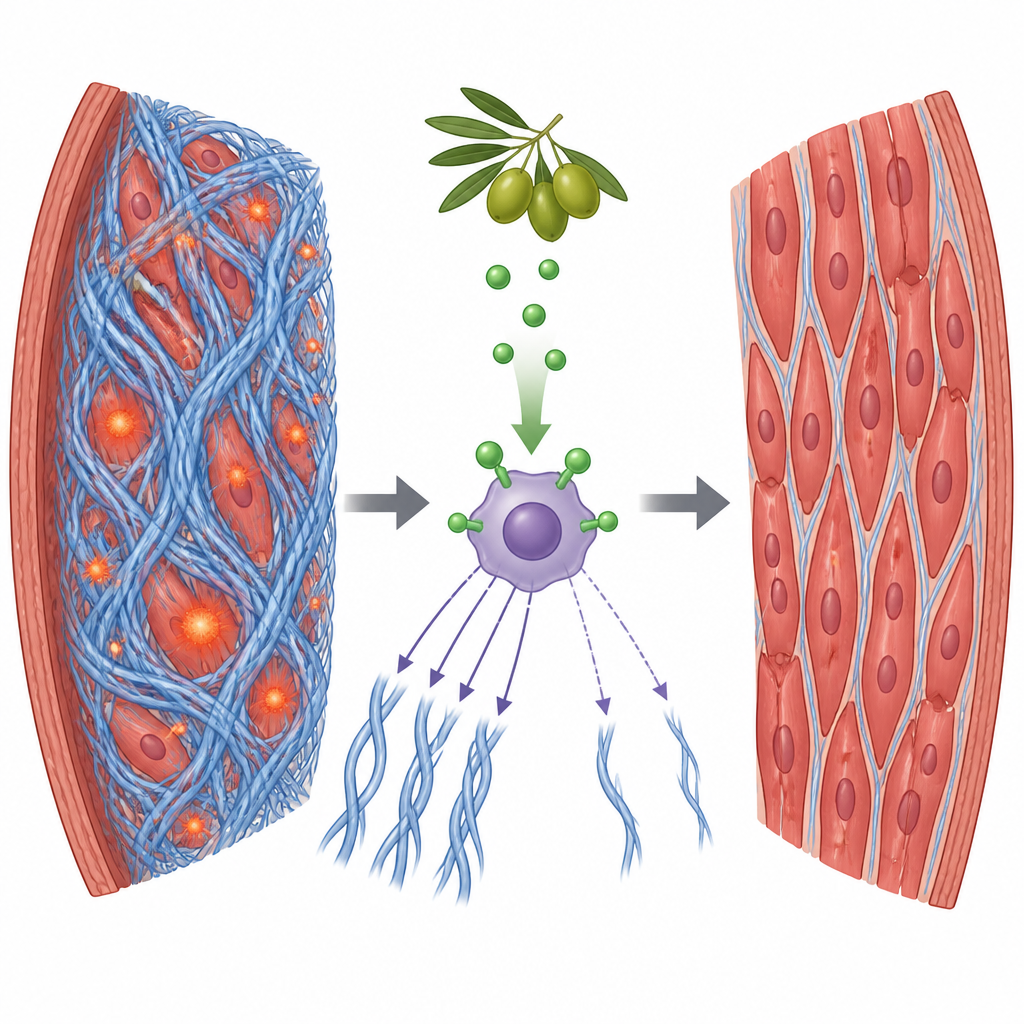
Peering inside the heart’s signaling switches
At the molecular level, diabetes had clearly flipped on the fibrosis program: genes for collagen, enzymes that remodel the tissue matrix, and the TGF-beta signaling partners Smad2 and Smad3 were all more active, while a natural braking protein called Smad7 was dialed down. Oleuropein reversed much of this pattern. Levels of TGF-beta itself fell, activation of Smad3 dropped, and Smad7 rose toward normal. The overall picture was a shift from a “scar on” to a more balanced “repair and maintain” state inside the heart. Losartan produced a similar profile, giving a useful benchmark that oleuropein’s effects were of comparable size under these conditions.
What this could mean for future care
For a lay reader, the takeaway is that a key component of olives helped diabetic rat hearts stay more supple and less clogged with scar tissue, while also improving blood sugar and calming chemical stress. The study cannot yet prove that oleuropein directly blocks a single switch inside heart cells, and it was done only in male rats over a limited time. Still, it adds weight to the idea that natural compounds from familiar foods may one day complement standard drugs to protect the hearts of people living with diabetes, by targeting not just sugar levels but the scarring process itself.
Citation: Abdelrauf, L.M., Habashy, D.A., Sharaf, N.M. et al. Oleuropein attenuates cardiac fibrosis via modulation of TGF-β1/Smad pathway in diabetic cardiomyopathy rat model. Sci Rep 16, 15350 (2026). https://doi.org/10.1038/s41598-026-49571-3
Keywords: oleuropein, diabetic cardiomyopathy, cardiac fibrosis, TGF beta signaling, olive polyphenols