Clear Sky Science · en
Sugar-mediated physical constraints drive the evolution of pollination drops into nectar
Why tiny plant droplets matter
On many conifer cones and flowers, tiny sugary droplets quietly decide whether pollen grains reach the next generation. This study looks at those drops not just as sweet fluids, but as physical objects that must cling, bead up, and hold pollen in place in a windy, changing world. By asking how the mix of simple sugars shapes the behavior of these droplets on plant surfaces, the authors reveal a hidden physical thread that links wind pollination in ancient conifer relatives to the nectar used by modern flowering plants.
Miniature raindrops that catch pollen
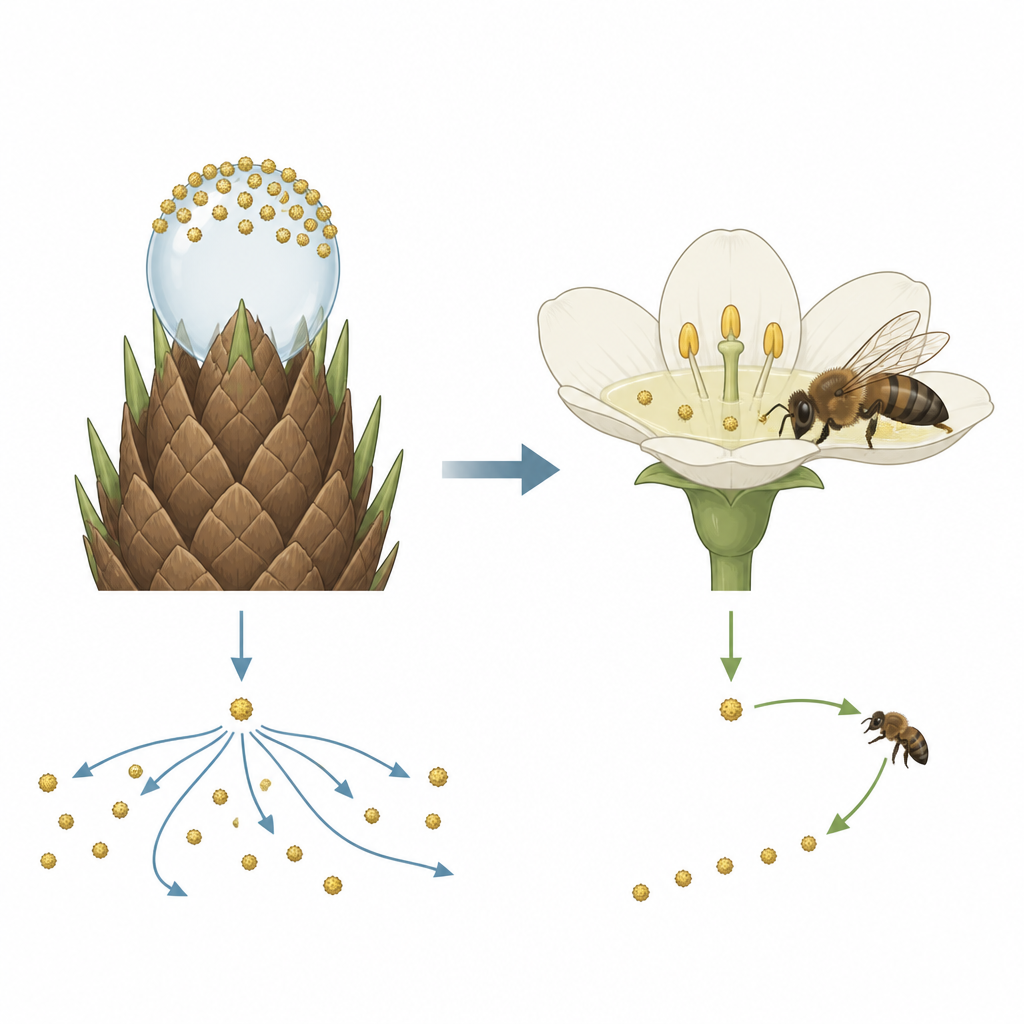
In gymnosperms such as yew trees, each ovule produces a small, exposed liquid sphere called a pollination drop. It sticks out from the tip of a cone and acts like a tiny landing pad for windblown pollen. For this system to work, the droplet must stay almost perfectly round and lightly attached, so it can intercept particles carried by the air, yet it also needs to hold those grains securely once they arrive. The researchers focused on Taxus baccata, the European yew, whose single large drop is easy to observe and has a sugar blend mainly made of glucose and fructose with very little sucrose. This recipe differs sharply from the sucrose rich nectar of most flowering plants.
How sugar changes the droplet’s grip
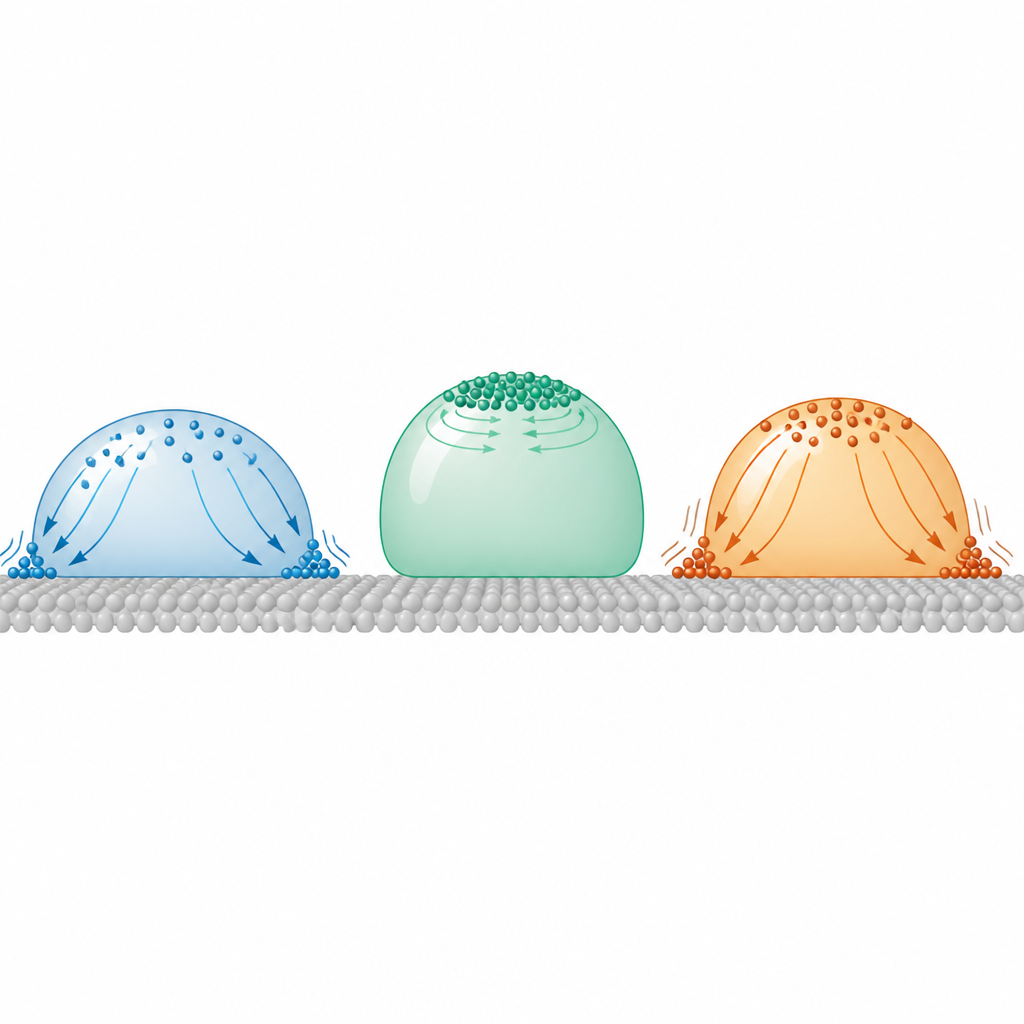
Using artificial solutions placed on real Taxus cones, the team compared three liquids: pure water, a low sugar mix mimicking the natural pollination drop, and a thicker sucrose heavy solution mimicking flower nectar. They measured how each droplet spread or beaded up on different parts of the cone and examined the cone surface with 3D confocal microscopes. The cone tip, where the natural drop forms, showed both micrometer scale roughness and a finer nanometer scale texture, creating a very water repellent region. On this textured tip, droplets stayed highly rounded, but the exact sugar blend fine tuned how strongly they interacted with the surface and how easily pollen could settle.
Tiny flows, sticky grains, and sugar balance
Under the microscope, pollen grains behaved very differently on each droplet type. On pure water, grains gradually slid from the top of the droplet toward the edge. On the sucrose rich nectar like solution, grains rushed to the margins within seconds and the system quickly became unstable. On the low sugar pollination like solution, the opposite happened: grains migrated toward the apex of the droplet, clustered there, and remained stably perched at the air liquid boundary. The authors explain this in terms of a balance between surface tension, viscosity, and the microscopic texture of both the cone and the pollen. A modest increase in viscosity from a small amount of glucose and fructose slows internal flows without making the surface too tight, allowing slight interface deformations that trap pollen at the top.
From wind to insects as pollination partners
Because surface tension and viscosity change with temperature, the team also tested droplets at a higher temperature reflecting Cretaceous era warmth. They found that a nectar like sucrose solution on the cone tip could maintain a spherical shape under hotter conditions much like today’s pollination drop at cooler temperatures, but at the cost of poor pollen stabilization. This suggests that as climates warmed, upping sugar levels and shifting toward sucrose could help preserve droplet shape, while at the same time favoring richer rewards for animal visitors. The study points to plants such as Ephedra, whose sucrose dominated pollination drop and insect friendly structures bridge the gap between cone and flower, as a living hint of this transition.
What this means for plant evolution
To a non specialist, the take home message is that the exact sugars dissolved in a plant’s reproductive droplets do more than feed pollinators. They control how the droplet sits on a rough surface and whether pollen grains stay put or slide away. In gymnosperms like yew, a low concentration of simple sugars working with a nanostructured cone tip creates an ideal catcher’s mitt for airborne pollen. As some lineages faced hotter, drier climates, the same physical rules likely nudged them toward more concentrated, sucrose rich liquids that were less suited to wind capture but better suited to attracting insects. In this view, the physics of tiny sweet drops helped steer the grand shift from wind driven cones to insect visited flowers.
Citation: Giordano, E., Betti, G., Calabrese, D. et al. Sugar-mediated physical constraints drive the evolution of pollination drops into nectar. Sci Rep 16, 15468 (2026). https://doi.org/10.1038/s41598-026-49504-0
Keywords: pollination drops, nectar, pollen capture, plant evolution, sugar composition