Clear Sky Science · en
Spatio-temporal metabarcoding surveys in ports reveal homogenised communities of non-indigenous species with high genetic diversity and connectivity
Why busy harbours matter for hidden sea life
Ports and marinas are more than parking lots for boats. Their walls, ropes and pilings are packed with worms, crustaceans and other small creatures, many of which have sailed in from far away. This study asks how these “port passengers” move and mix along the Mediterranean coast, and whether newcomers from other regions are changing the genetic make up of harbour life.
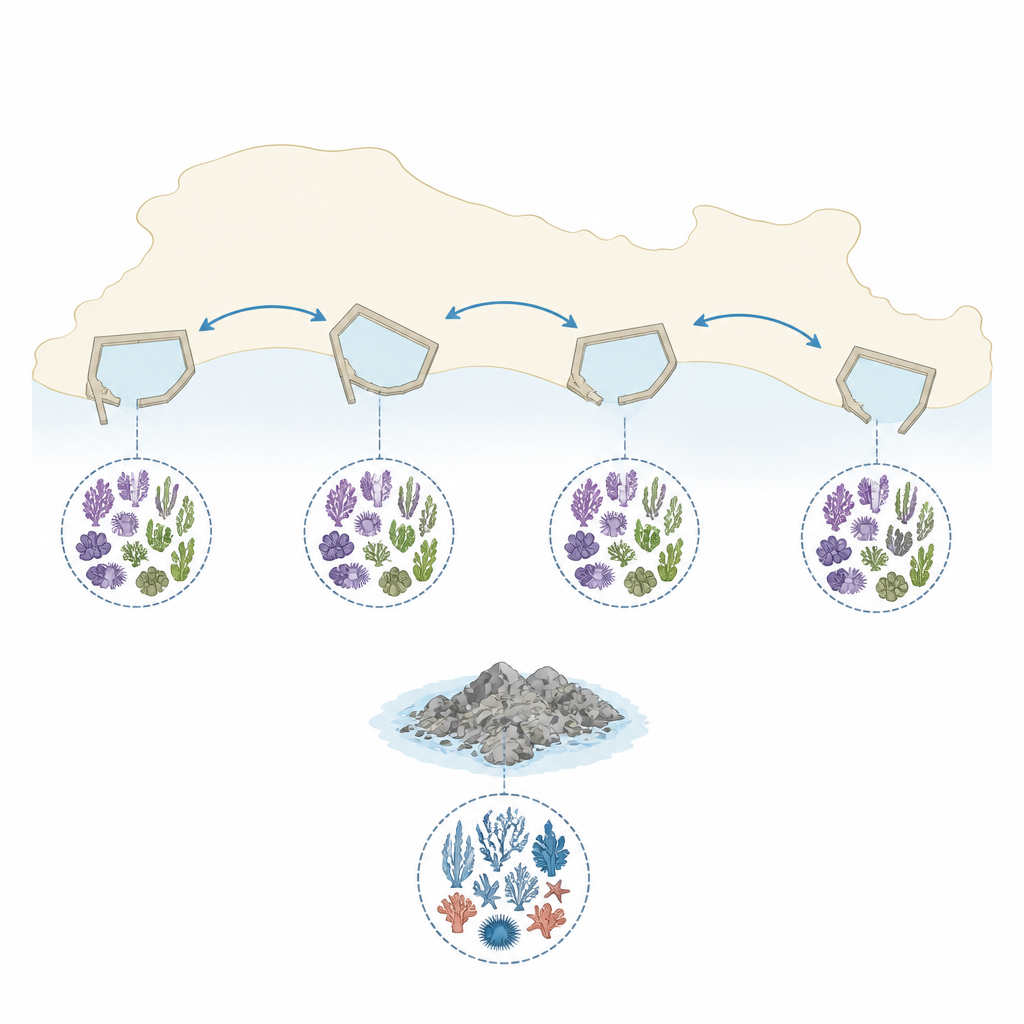
Looking at an entire underwater neighbourhood
Instead of tracking one or two invaders at a time, the researchers examined whole communities of animals living on special collectors hung inside four medium sized ports on the Catalan coast, plus a natural rocky reef just outside one harbour. Over a year, these devices gathered larvae, tiny adults and fragments of tissue. The team then used DNA metabarcoding, which reads a short genetic tag from every bit of material, to list which species were present and how many genetic variants each one carried. This approach revealed 1,774 distinct animal lineages, of which 75 were known non indigenous species that have arrived through human activity.
Few newcomers in number, many in influence
Although these non indigenous species made up less than four percent of all detected lineages, their genetic signals accounted for between one third and 70 percent of the DNA reads inside ports. In the southernmost harbour, near major shellfish farms and large commercial ports, newcomers dominated the community. Across all sites, the most common groups were arthropods such as small crustaceans, along with jellyfish relatives and tunicates. The natural reef outside the port, by contrast, hosted many more native lineages and far fewer newcomers, showing that harbour communities differ strongly from nearby natural habitats.
Harbours linked by boats, not by waves
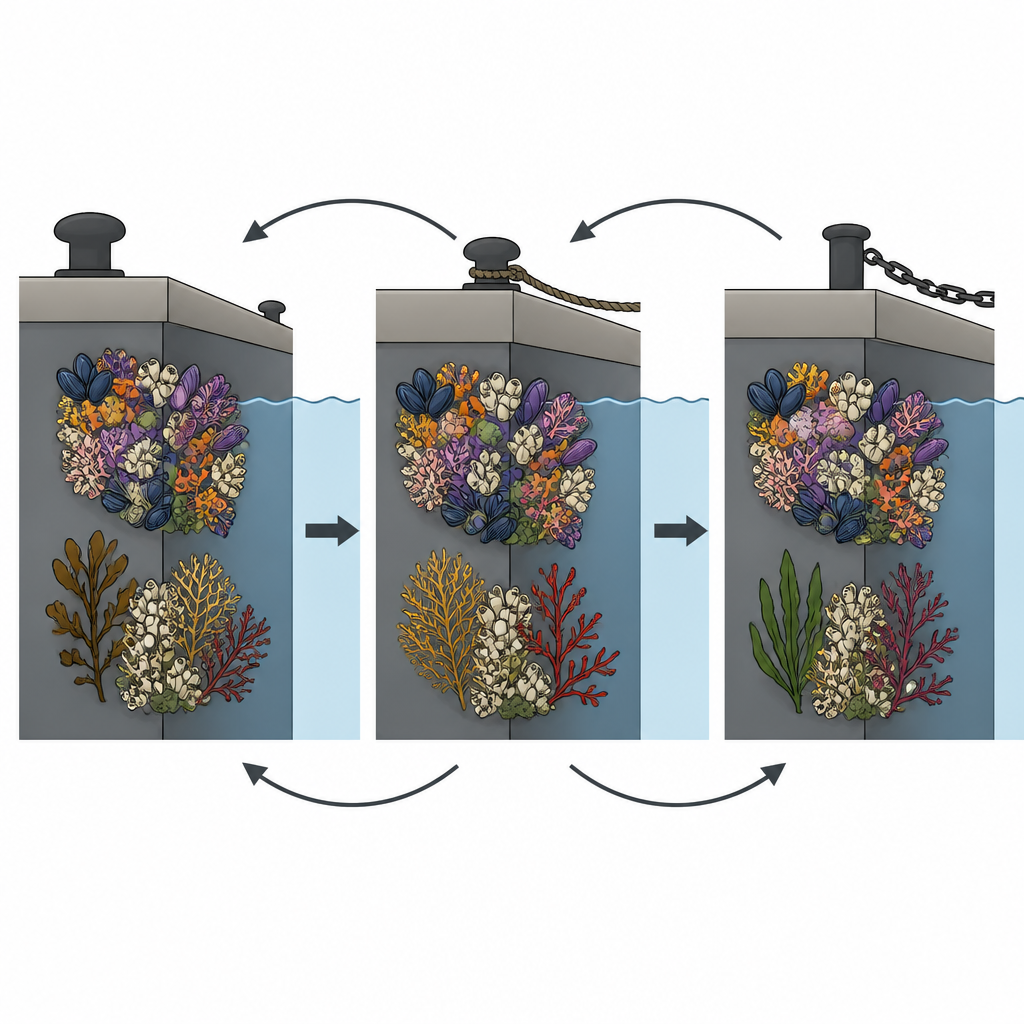
When the team compared which lineages were shared between ports, a striking pattern emerged. Most native lineages were found in only one harbour, so each port had its own local flavour. Non indigenous species were very different: nearly two thirds appeared in at least two ports, and more than a third turned up in all four. Measures of community similarity and genetic relatedness showed that newcomers formed highly connected, homogenised populations along the coast, while natives were more isolated and varied from place to place. Seasonal shifts, linked to changing water temperatures, affected both groups, but the overall picture of strong connectivity among newcomers held through the year.
Genetic variety gives newcomers an edge
The DNA data also allowed the researchers to peek inside each species and count how many genetic variants, or haplotypes, were present. Surprisingly, non indigenous species showed higher genetic diversity within ports than native species did, even after correcting for differences in abundance. Newcomers also showed lower genetic differentiation between ports, meaning their populations were more similar from place to place. This pattern suggests that repeated introductions, along with constant shuttling of organisms on boat hulls and harbour structures, are mixing genetic material and building large, varied gene pools for these invaders.
What this means for coastal seas
For a lay reader, the bottom line is that ports act as powerful hubs that connect and strengthen non indigenous species, while leaving native species relatively fragmented. The constant movement of boats spreads hardy newcomers between harbours, making their communities more alike and boosting their genetic diversity. That diversity can help them adapt to pollution, temperature swings and other stresses, making it easier for them to thrive and expand beyond port walls. The study shows that to protect coastal ecosystems, managers need to treat harbour networks as key stepping stones for biological invasions and keep monitoring them with sensitive genetic tools.
Citation: Zarcero, J., Antich, A., Fernández-Tejedor, M. et al. Spatio-temporal metabarcoding surveys in ports reveal homogenised communities of non-indigenous species with high genetic diversity and connectivity. Sci Rep 16, 15517 (2026). https://doi.org/10.1038/s41598-026-49393-3
Keywords: non indigenous species, ports, DNA metabarcoding, marine invasions, population connectivity