Clear Sky Science · en
Molecular docking of polyphenols and screening of antioxidant and anticancer activity of Artemisia monosperma leaf extracts in human cancer cells
Desert Plant With Hidden Healing Power
Many modern medicines can trace their roots back to plants, and scientists are constantly searching for new natural sources of disease-fighting compounds. This study focuses on Artemisia monosperma, a shrub that grows in the deserts of Egypt, to see whether its leaves contain molecules that can counteract harmful oxygen-related damage and selectively kill cancer cells while sparing healthy ones.
What Makes This Plant Special
The researchers began by preparing three different leaf extracts of Artemisia monosperma using water, ethanol, and methanol. They then used a precise lab technique to measure a family of plant chemicals known as polyphenols, which are often responsible for antioxidant and health-protective effects. The methanol extract contained the highest overall level of these compounds, including notable amounts of kaempferol, taxifolin, naringenin, and several plant acids. The ethanol and water extracts also contained many of these chemicals, but at lower levels.
How Well the Extracts Fight Damage
To test antioxidant power, the team ran two standard laboratory assays that measure how well a substance can neutralize unstable oxygen-containing molecules before they damage cells. In one test, the methanol extract outperformed a common synthetic antioxidant, showing strong ability to “quench” free radicals at relatively low doses. In another test that tracks how well an extract can transform iron from one form to another, the water extract scored highest, with the methanol extract close behind. Overall, the results showed that all three extracts could act as antioxidants, but the methanol extract was the most consistently potent across methods. 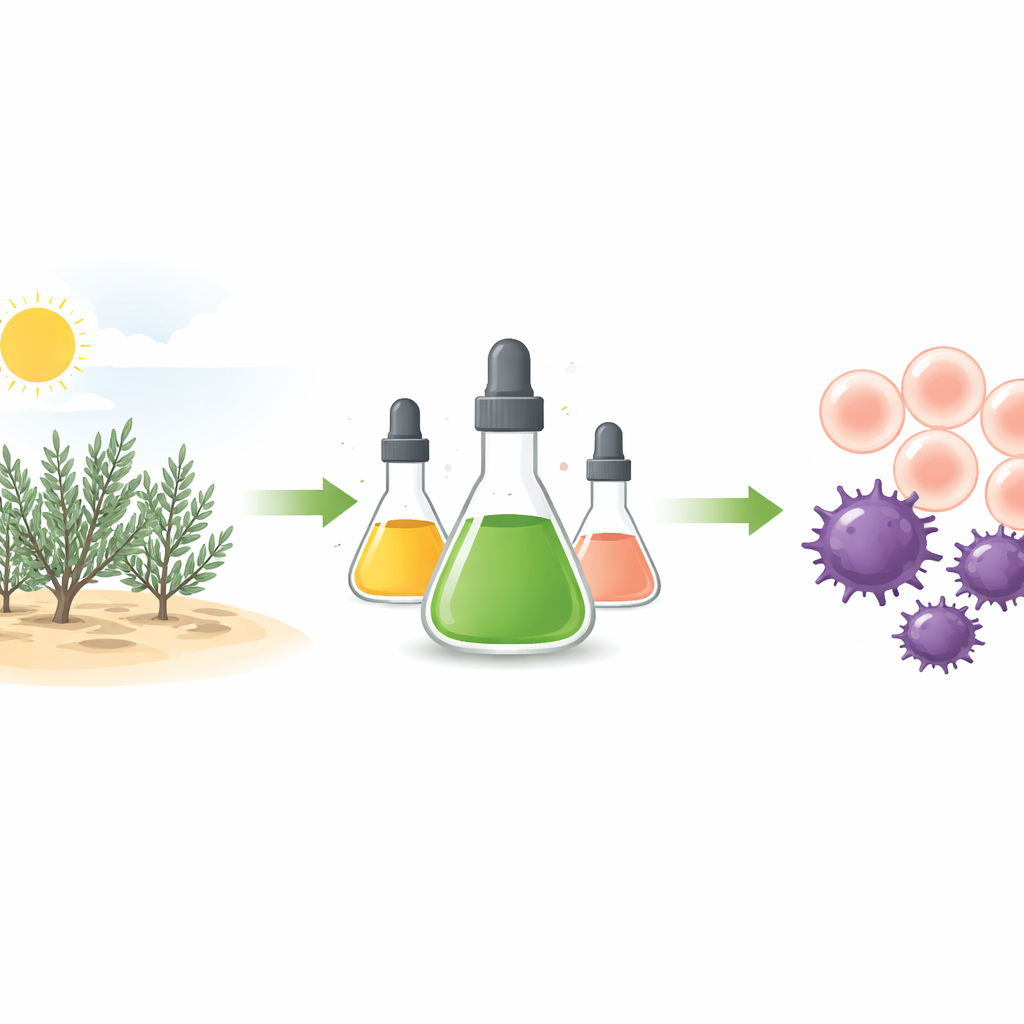
Targeting Cancer Cells While Sparing Healthy Ones
The scientists then moved from test tubes to living cells. They exposed human colorectal cancer cells, liver cancer cells, and normal skin fibroblast cells to the three extracts and compared the effects to a standard chemotherapy drug. The methanol and ethanol extracts showed strong ability to kill colorectal and liver cancer cells, approaching the effectiveness of the drug in some cases. Importantly, the methanol extract was far more toxic to colorectal cancer cells than to normal skin cells, giving it a very high “selectivity index” – a measure of how much more strongly it affects cancer cells than healthy ones. The water extract, in contrast, showed relatively weak anticancer activity.
Peeking Inside the Cell Death Process
To understand how the methanol extract kills cancer cells, the team looked at several hallmarks of controlled cell death, or apoptosis. In colorectal cancer cells, treatment with the extract led to fragmentation of DNA, a signature of cells that have been instructed to self-destruct. The extract also shifted the balance of key guardian proteins: it boosted the level of Bax, which promotes cell death, and reduced Bcl-2, which protects cells from dying, while increasing the activity of p53, a well-known “tumor suppressor” protein. Cell cycle measurements showed that treated cancer cells piled up in a resting phase, consistent with growth arrest and impending death. Computer simulations added another layer of evidence, predicting that major polyphenols from the extract fit snugly into pockets of Bcl-2 and p53, potentially interfering with their normal action and tilting cells toward apoptosis. 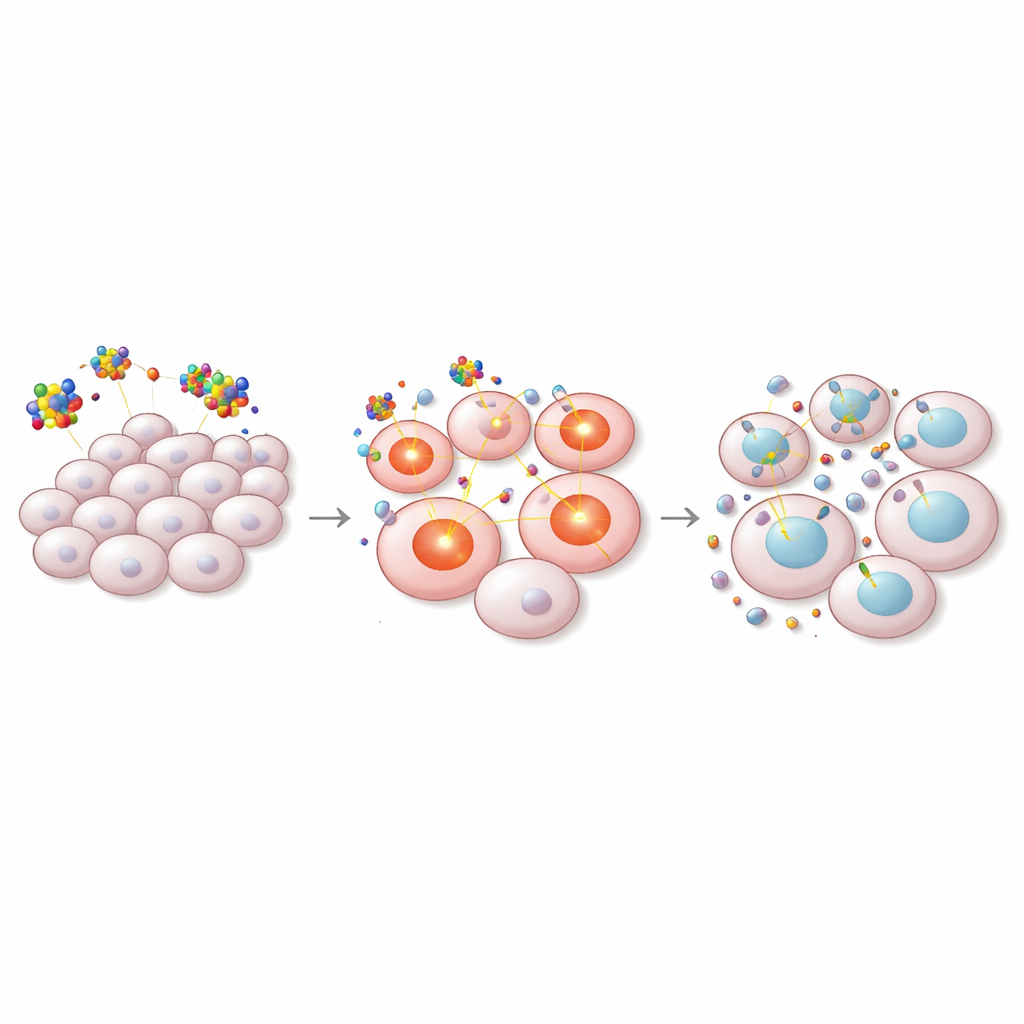
What This Could Mean for Future Treatments
Taken together, the findings suggest that Artemisia monosperma leaves, particularly when extracted with methanol, are rich in plant chemicals that both neutralize damaging oxygen species and actively trigger the self-destruction of cancer cells. The methanol extract showed strong, selective activity against colorectal cancer cells, with relatively mild effects on normal cells, and appears to work by nudging the internal protein machinery toward programmed cell death. While this work was done in cultured cells and computer models – not yet in animals or humans – it points to Artemisia monosperma as a promising natural source of lead compounds for future anticancer drugs, especially for colorectal cancer.
Citation: Abdel-Wahhab, M.A., El-Shahid, Z.A., Hamza, Z.K. et al. Molecular docking of polyphenols and screening of antioxidant and anticancer activity of Artemisia monosperma leaf extracts in human cancer cells. Sci Rep 16, 14043 (2026). https://doi.org/10.1038/s41598-026-49276-7
Keywords: Artemisia monosperma, polyphenols, antioxidant, colorectal cancer, apoptosis