Clear Sky Science · en
“IoT-based evaluation of photovoltaic modules enhanced by different reflector materials”
Brighter Solar Power on a Budget
For many sun-drenched countries, the challenge is not finding sunlight but squeezing more electricity out of each solar panel without driving up costs. This study explores a surprisingly simple idea: placing everyday reflective materials, like mirrors or aluminum foil, in front of solar panels to bounce more sunlight onto them, while using a low-cost Internet-connected monitor to track how much extra energy they really produce in the heat of a Cairo summer.
Simple Add-Ons to Boost Solar Panels
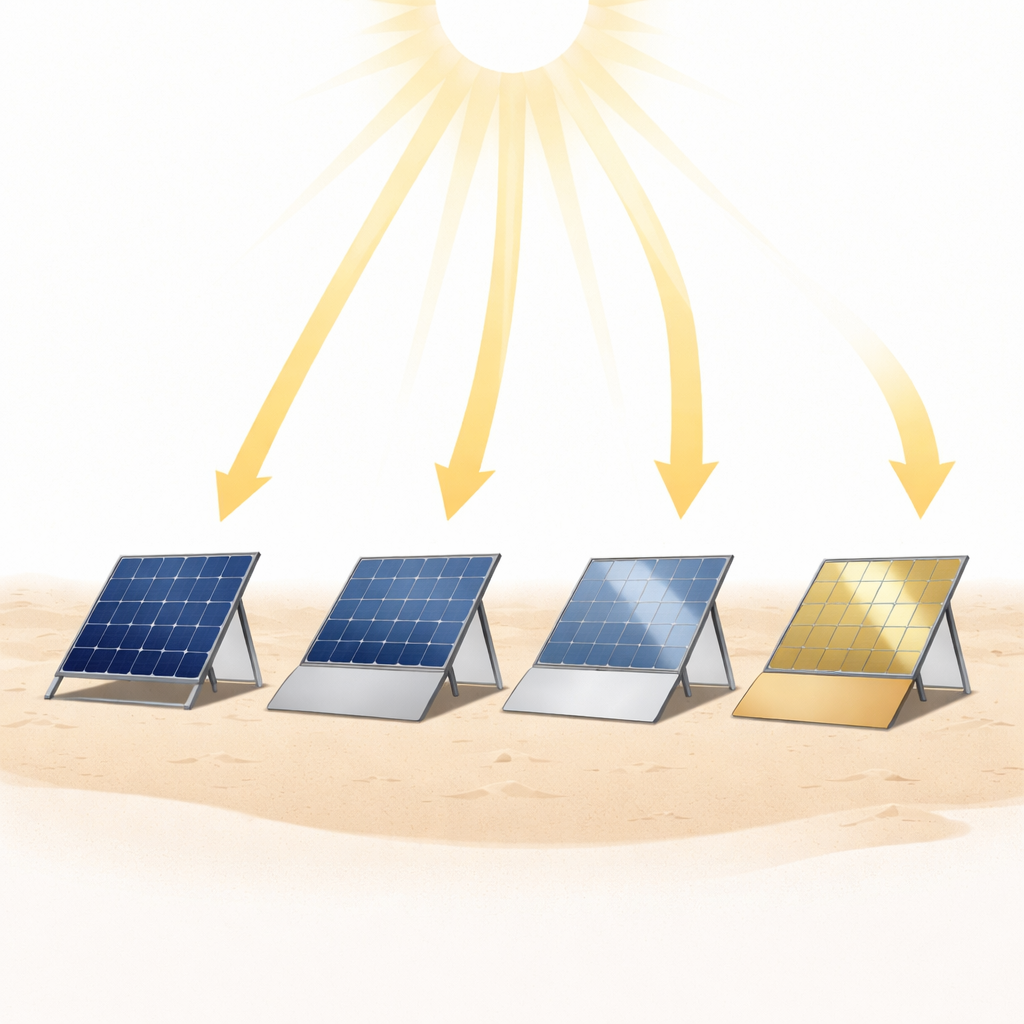
The researchers set up four identical small solar panels on a rooftop in Cairo, Egypt, a city with strong sunshine but high temperatures that can hurt panel performance. One panel was left alone as a reference. The other three were each paired with a flat reflector the same size as the panel, made from mirror glass, galvanized steel sheet, or basic aluminum foil. These reflectors were tilted at three different angles so that sunlight falling on the ground or from the side would be redirected back onto the face of the solar panel, concentrating light without using expensive lenses or tracking systems.
Smart, Low-Cost Monitoring in Real Time
To see what was really happening throughout the day, the team built a custom monitoring box around a cheap ESP32 microcontroller. It was wired to measure each panel’s voltage, current, and power, as well as the temperature on the back of every panel and the surrounding air. Calibrated sensors and simple electronics fed data to the microcontroller, which stored the readings, displayed them on a small screen, and sent them wirelessly for analysis. This do-it-yourself logger cost under 50 US dollars—about one tenth the price of typical commercial tools—yet still provided accurate, high‑resolution data from sunrise to sunset.
More Light, More Power—and a Warmer Panel
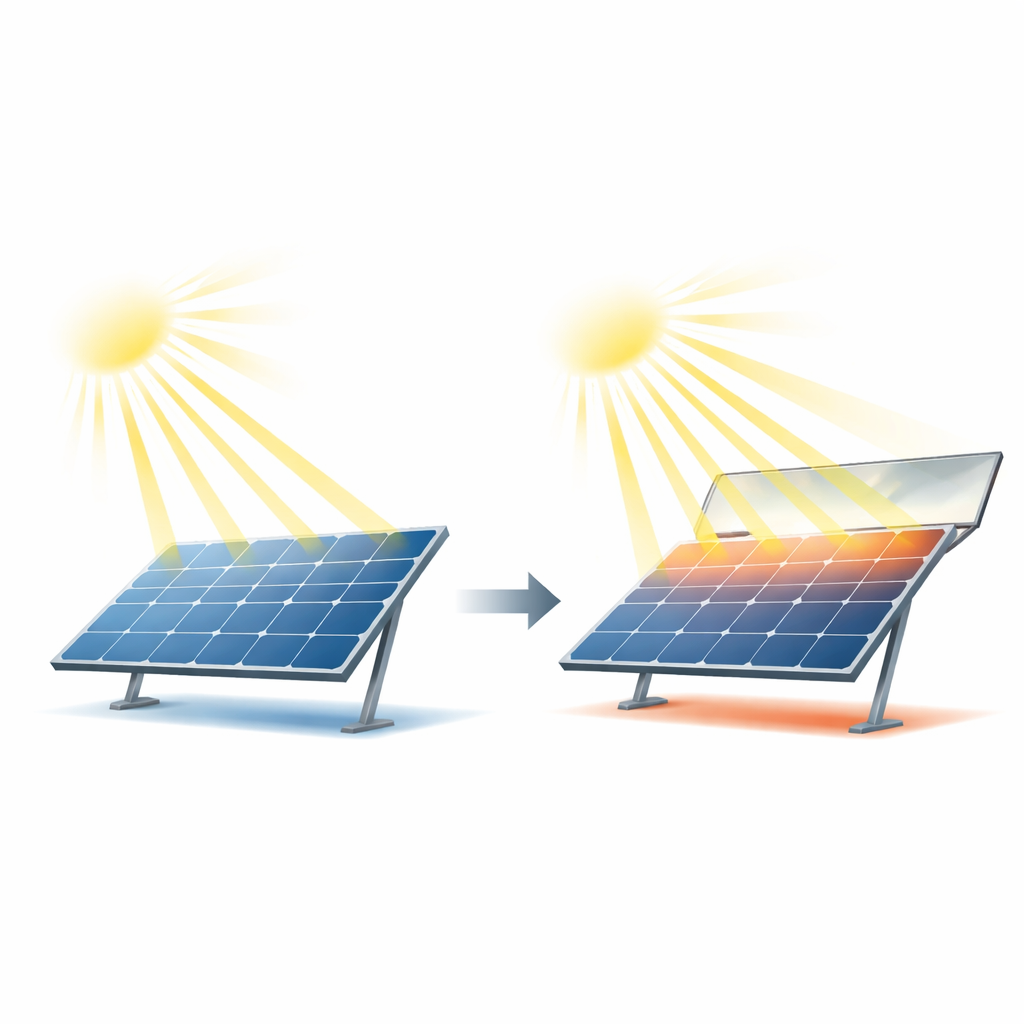
On a clear August day, the reflector-equipped panels showed clear advantages over the bare reference panel. The mirror reflector performed best: when set at a 30° tilt, it increased the panel’s daily energy output by about 21 percent and raised peak power by nearly 30 percent. Galvanized steel offered moderate gains, while aluminum foil produced smaller but still noticeable improvements, making it attractive where cost and availability matter most. However, the extra light came with extra heat. The mirror reflector raised panel temperature by about 6–7 °C compared with the reference, a level that slightly reduces efficiency but remained safely below common operating limits for commercial modules.
Finding the Sweet Spot in Angle and Material
The study found that how the reflectors are tilted is just as important as what they are made of. A 30° angle gave the best overall results for all three materials, aligning the reflected rays with the panel in a way that maximized extra light without losing too much to misalignment or shading. Shallower or steeper angles still helped, but not as much. When the researchers scaled their results to a typical 10‑kilowatt rooftop system in Egypt and included realistic material and installation costs, they estimated that using mirror reflectors could pay for itself in a little over two years thanks to the extra electricity produced.
What This Means for Solar in Sunny Regions
In plain terms, the study shows that you can give existing solar panels a significant “power-up” using simple reflective surfaces and an inexpensive, Internet-connected monitor. Mirrors bring the biggest energy boost but also warm the panels the most; galvanized steel and aluminum foil offer trade-offs between extra power, heat, and cost. For places where roof or land space is limited, or where budgets are tight, this combination of low-cost reflectors and smart monitoring could be a practical way to get more clean electricity from the same patch of sunlit surface.
Citation: Abdelaziz, A.M.A., Abdelwahab, T.A.M. & El-Soaly, I.S.A. “IoT-based evaluation of photovoltaic modules enhanced by different reflector materials”. Sci Rep 16, 14020 (2026). https://doi.org/10.1038/s41598-026-49258-9
Keywords: solar panels, reflectors, IoT monitoring, renewable energy, low-cost PV