Clear Sky Science · en
Development and validation of ratio spectra manipulation methods for the determination of etoricoxib and tramadol in binary mixtures
Why this matters for pain relief
Many people living with moderate to severe pain now receive medicines that combine two active drugs in a single dose. One such pairing brings together etoricoxib, an anti-inflammatory painkiller, and tramadol, an opioid-like pain reliever. Checking that every batch of this combination medicine contains the right amount of each drug is essential for both safety and effectiveness. The study behind this article introduces two simple, low-cost laboratory tests that can reliably measure both drugs at once, without relying on expensive, solvent-hungry equipment.
Two painkillers working together
Etoricoxib and tramadol help with pain in different ways. Etoricoxib blocks a body enzyme that makes prostaglandins, small molecules that drive inflammation and pain, and it tends to be gentler on the stomach than many older pain medicines. Tramadol acts inside the brain and spinal cord, both mildly stimulating opioid receptors and affecting chemical messengers like serotonin and norepinephrine. When used together, these drugs can give strong pain relief with lower doses of each, reducing side effects and the risk of dependence. Drug companies now market fixed-dose products that combine them in one sachet or tablet, which makes precise testing of both ingredients especially important.
The challenge of seeing through overlap
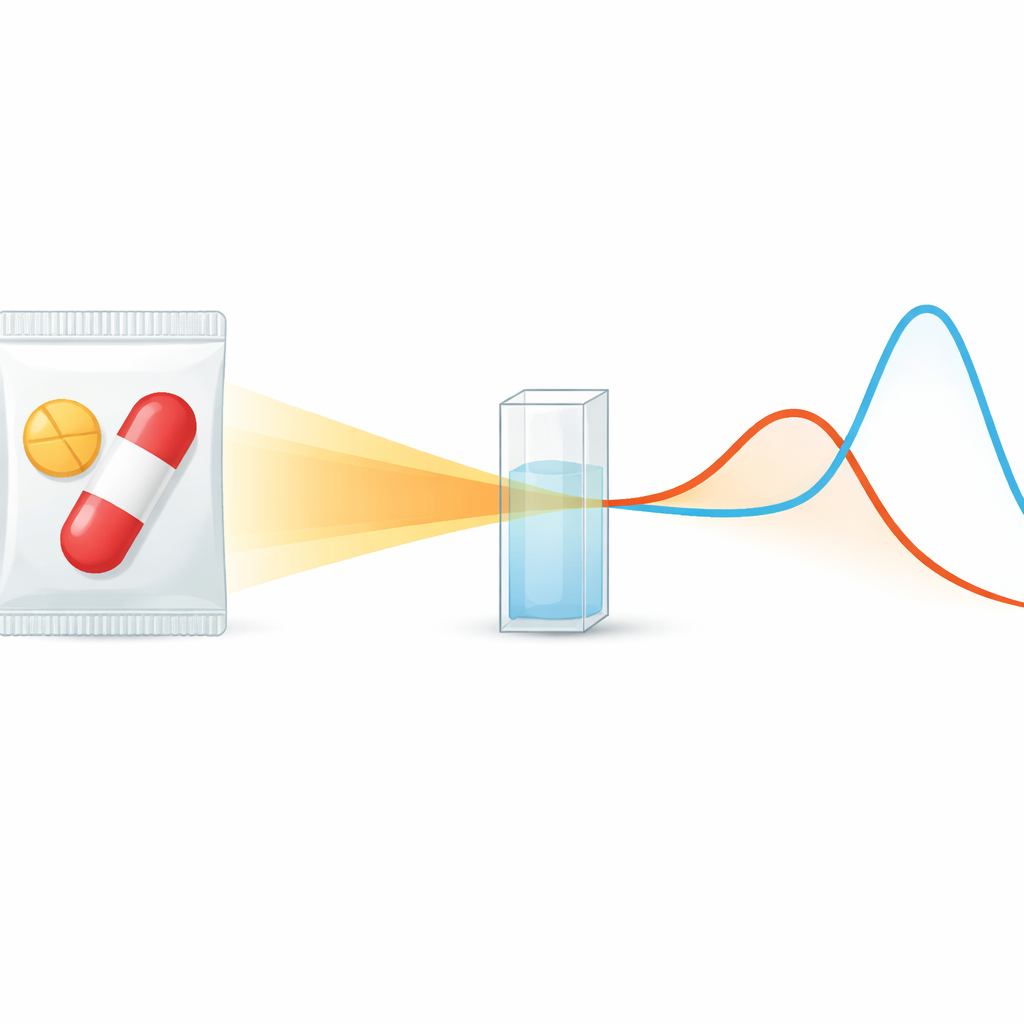
To check how much of each drug is present, many quality-control labs shine ultraviolet light through dissolved samples and measure how much is absorbed. The difficulty is that etoricoxib and tramadol absorb light in very similar ways over the same range of wavelengths. Their signals largely sit on top of each other, like two singers singing the same notes, making it hard to tell who is contributing what. Traditional methods either separate the drugs first using chromatography, which needs costly instruments and lots of solvents, or use simpler light-based tricks that can lose accuracy when signals overlap too strongly.
Using smart signal math instead of separation
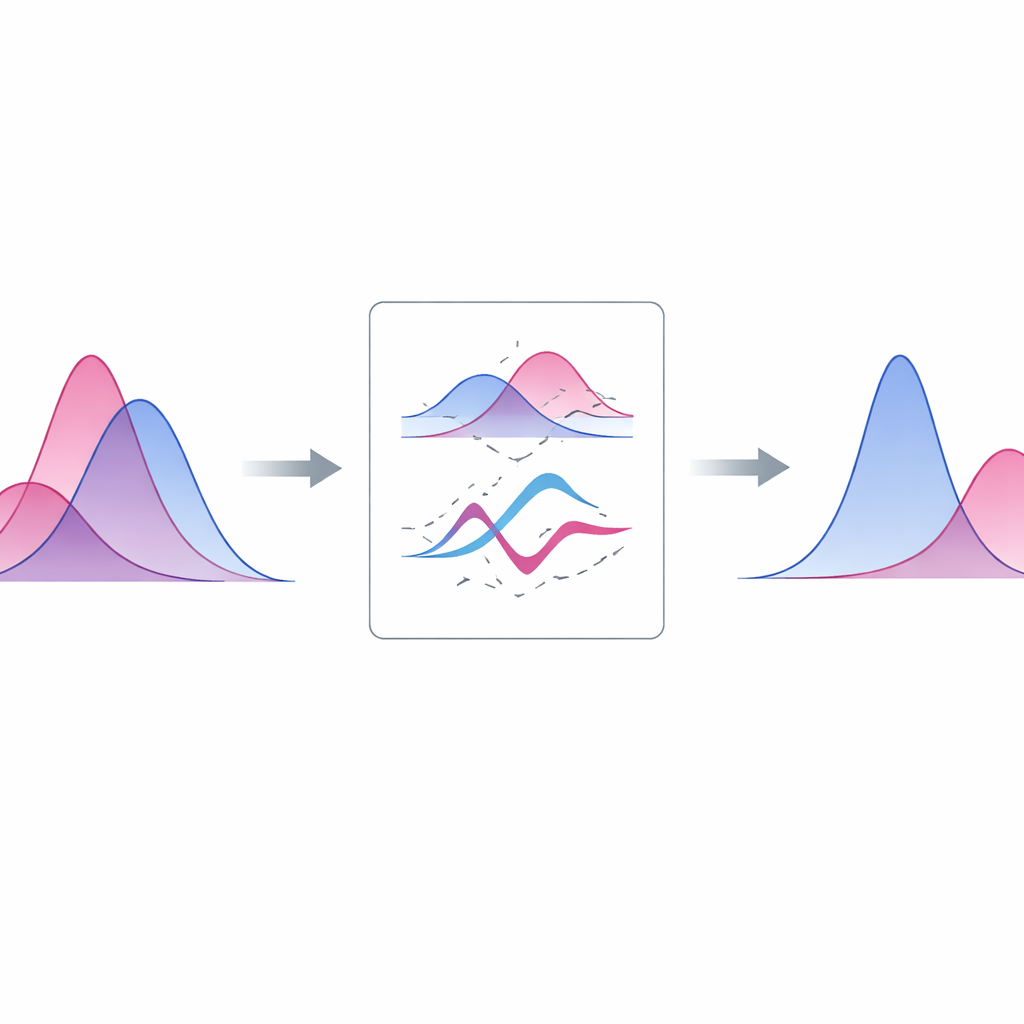
The researchers in this study refined two mathematical tricks applied to the light-absorption curves, known as ratio difference and derivative ratio methods. In both, the mixed signal of one drug is divided by a carefully chosen reference signal from the other drug, helping cancel out what is shared and highlight what is unique. The ratio difference method then compares the heights of the processed signal at two selected wavelengths, while the derivative ratio method looks at the slope of the processed curve at a single, well-chosen point. By experimenting with different reference strengths and wavelength choices, the team found conditions where each drug produced a clean, predictable response even in the presence of the other.
How well the new tests perform
To judge whether these approaches are practical, the scientists tested laboratory mixtures covering the typical concentration ranges found in real products, then measured a marketed etoricoxib–tramadol sachet. In all cases, the calculated amounts were extremely close to the true values, generally between about 99 and 101 percent, with very small variation from one measurement to the next. The smallest detectable amounts were well below the levels used in routine testing. When the results were compared with those from a standard high-performance liquid chromatography method, there was no meaningful statistical difference, showing that the simpler light-based tests can match the more complex technique in accuracy and precision.
Greener and more accessible quality checks
Beyond performance, the team also examined how environmentally friendly their tests are, using a scoring system called AGREE that rates methods on the principles of green analytical chemistry. Because the new procedures use a basic ultraviolet–visible spectrophotometer, modest amounts of methanol, and minimal sample preparation, they scored better on energy use, waste generation, and simplicity than typical chromatographic approaches. The authors note that these methods are best suited for relatively clean pharmaceutical products, not for tracking impurities or breakdown products in complex biological samples. Within that intended role, however, the new tests provide a robust, economical, and greener way for manufacturers and control laboratories to ensure that combined etoricoxib–tramadol medicines deliver the promised dose every time.
Citation: Al kamaly, O., Sayedahmed, M. & Abdelzaher, A.M. Development and validation of ratio spectra manipulation methods for the determination of etoricoxib and tramadol in binary mixtures. Sci Rep 16, 12875 (2026). https://doi.org/10.1038/s41598-026-49144-4
Keywords: etoricoxib, tramadol, spectrophotometry, pain medication, green analytical chemistry