Clear Sky Science · en
Effects of hemoadsorption on plasma catecholamine levels: an in vitro study
Why this matters for people in intensive care
When someone is in septic shock, their life can depend on delicate balancing acts in the intensive care unit. Doctors use powerful drugs to support blood pressure and heart function, while newer blood-filter devices aim to calm runaway inflammation. This study asks a practical but crucial question: if we run a patient’s blood through a hemoadsorption cartridge to remove harmful inflammatory molecules, does the same filter quietly remove the very heart and blood‑pressure drugs that are keeping the patient alive?
A blood filter that targets inflammatory clutter
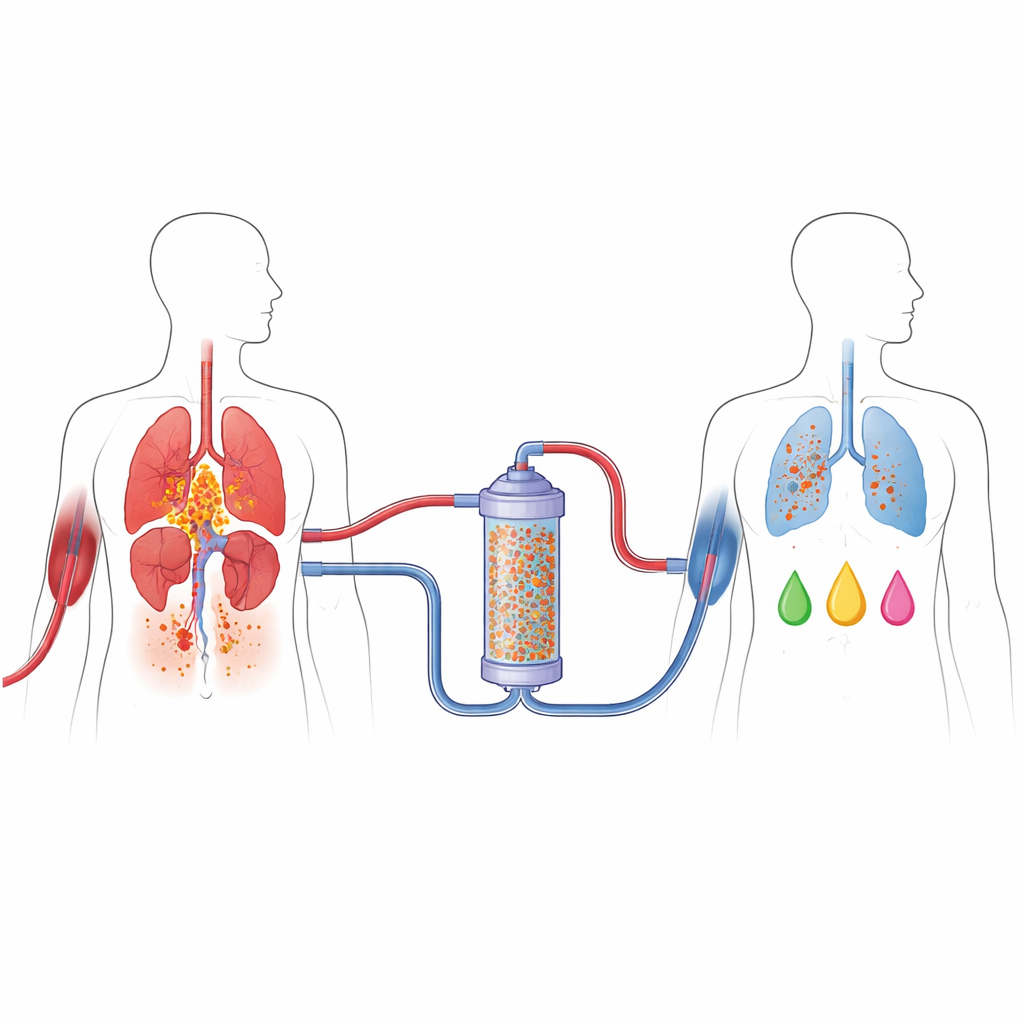
Hemoadsorption is a technique where blood is pumped through a cartridge filled with microscopic plastic beads. These beads, made from a material called polystyrene-divinylbenzene, have an enormous internal surface area and a tendency to attract greasy, medium‑sized molecules. In septic shock, this cartridge is used alongside standard care in an effort to soak up excess inflammatory signals that damage blood vessels and organs. Observational reports suggest that some patients on this therapy need less blood‑pressure medication, hinting at better circulation. But if the filter also removed those medications, that could be dangerous and would complicate dosing at the bedside.
Testing heart and blood‑pressure drugs in a simulated bloodstream
To probe this, the researchers built a scaled‑down blood circuit in the lab using donated human whole blood and miniaturized versions of a commercial hemoadsorption cartridge. They added three commonly used drugs: epinephrine and norepinephrine, which tighten blood vessels and help maintain blood pressure, and dobutamine, which strengthens the heartbeat. After an initial dose to reach typical treatment levels, each drug was continuously infused to mimic ongoing therapy in an intensive care unit. Warmed to body temperature and pumped through the small cartridge for five hours, the blood was sampled repeatedly before and after the adsorber to track how much of each drug remained in the plasma.
Two drugs pass by, one gets partially trapped
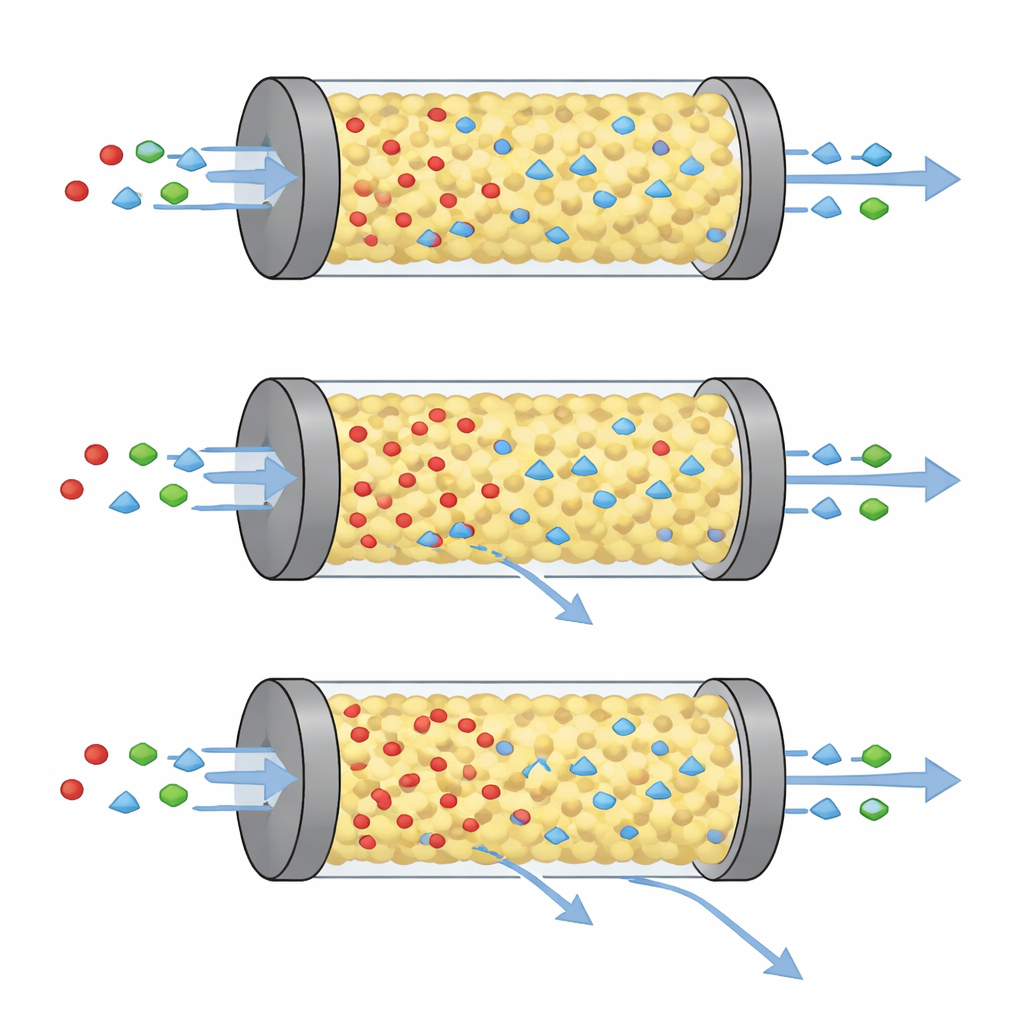
The concentration of epinephrine and norepinephrine stayed essentially flat over the entire 300‑minute experiments. Calculations of how much of these drugs the cartridge cleared from the plasma showed only minimal values, indicating that the filter did not meaningfully remove them under these conditions. Dobutamine behaved differently. Its levels at the outlet of the cartridge were consistently lower than at the inlet, and the derived plasma clearance ranged roughly between 5 and 15 milliliters per minute. This pattern signals that the beads in the cartridge were actively adsorbing a portion of dobutamine from the circulating blood.
Why do these closely related drugs behave differently?
All three medicines belong to the catecholamine family, but their chemical "personalities" differ. Epinephrine and norepinephrine are very water‑loving and small, so they tend to stay dissolved in the fluid part of blood rather than slipping into the oily micro‑environment inside the beads. Dobutamine, although still a catecholamine, carries an additional bulky side chain that makes it somewhat more fat‑like. This subtle change appears enough for the hemoadsorption material to catch and hold it, while letting the more water‑friendly relatives pass through. The carefully controlled lab setup, together with existing knowledge about the stability and measurement of these drugs, suggests that the observed patterns reflect real interactions with the sorbent rather than testing artefacts.
What this means for patients and their doctors
For people with septic or vasoplegic shock receiving hemoadsorption therapy, these findings are reassuring on one front and cautionary on another. The study supports the idea that reduced requirements for blood‑pressure drugs seen in some clinical reports are not caused by the filter stripping out epinephrine or norepinephrine. Instead, any improvement likely stems from better overall circulation when inflammatory clutter is removed. At the same time, the work flags dobutamine as a drug that could be partially lost to the cartridge. Because the experiment used a closed lab circuit rather than real patients, it cannot say exactly how large this effect would be in the body. The authors therefore call for clinical studies that directly measure dobutamine levels during hemoadsorption and help refine dosing, so heart‑supporting benefits are preserved without sacrificing the potential advantages of this emerging blood‑filter therapy.
Citation: Körtge, A., Klinkmann, G., Kamper, C. et al. Effects of hemoadsorption on plasma catecholamine levels: an in vitro study. Sci Rep 16, 12897 (2026). https://doi.org/10.1038/s41598-026-49101-1
Keywords: septic shock, hemoadsorption, catecholamines, dobutamine, critical care