Clear Sky Science · en
Investigating sarcopenia and mucus plugging by chest computed tomography in patients with severe chronic obstructive pulmonary disease
Why clogged airways and weak muscles matter
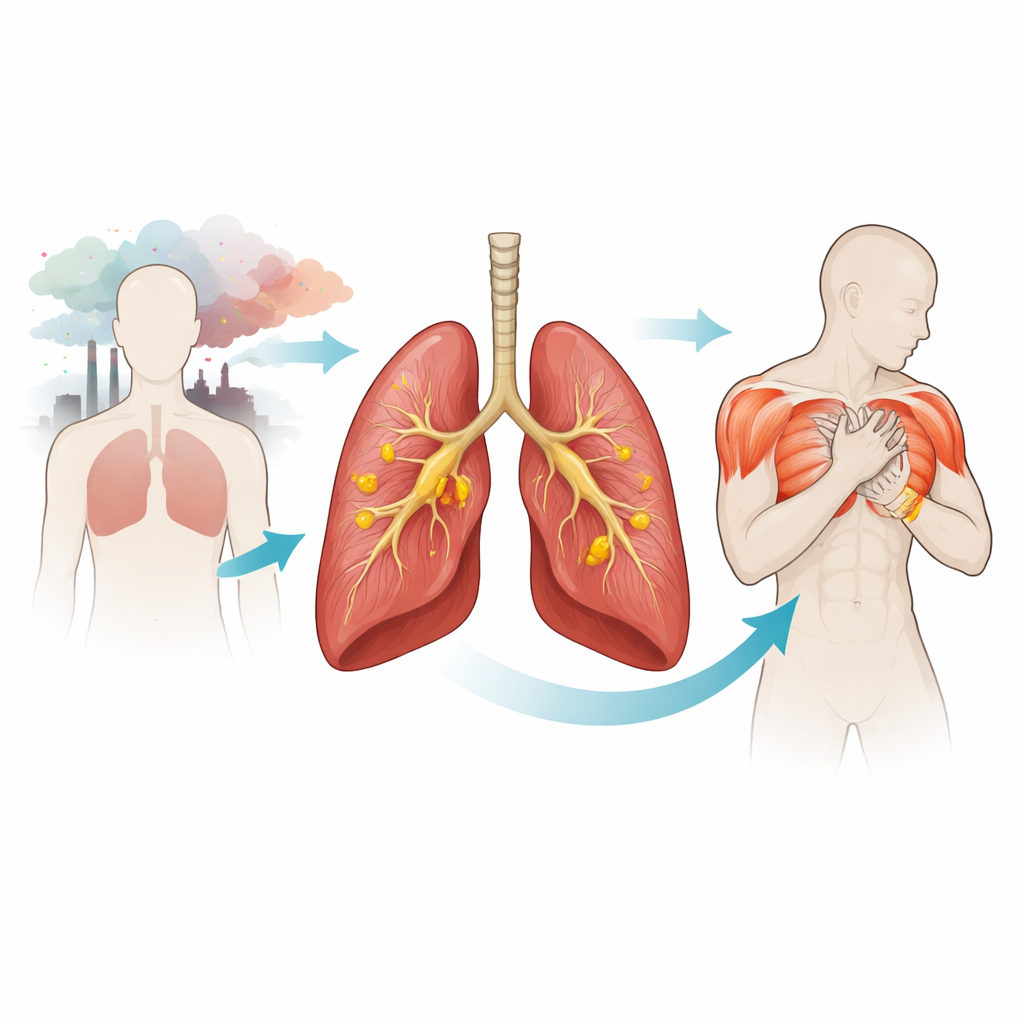
For people living with severe chronic obstructive pulmonary disease (COPD), every breath can feel like hard work. Two problems often go hand in hand: sticky mucus that clogs the airways and loss of muscle mass, known as sarcopenia. This study asks a simple but important question: can routine chest CT scans, already used to look at the lungs, also reveal how mucus blockages and breathing muscles are linked in advanced COPD? Understanding this relationship could help doctors better assess risk and tailor treatment without additional tests.
Who was studied and how images were used
The researchers examined 123 people with advanced COPD (the most severe stages, called GOLD 3 and 4) who underwent standard chest CT scans while being evaluated for lung volume reduction therapy. All participants had long-standing, serious breathing problems mainly due to emphysema, but were no longer actively smoking. From these scans, two radiologists looked for mucus plugs—small, tube- or round-shaped clogs completely blocking medium-to-large airways. They then scored each patient using a 20-point mucus plug score, which reflects how many lung segments contain these blockages. At the same time, the team measured the size and density of two key muscle groups visible on CT: the pectoral muscles in the chest and the erector spinae muscles along the spine, both important for supporting breathing.
Breath-clogging mucus and body build
When the researchers grouped patients by how many mucus plugs they had, some clear patterns emerged. Roughly half the group had no visible plugs, while the rest had either a few or many. Those with more mucus plugging tended to weigh less and had worse lung function, as measured by the amount of air they could forcefully exhale in one second (FEV1). In other words, a higher mucus plug score went hand in hand with more advanced disease and lower body weight. However, when the team simply compared the raw size of chest and back muscles across groups, they did not see major differences. Muscle density—a marker of fat within muscle, which can indicate poorer muscle quality—also did not change much with mucus burden.
A closer look at breathing muscles and weight
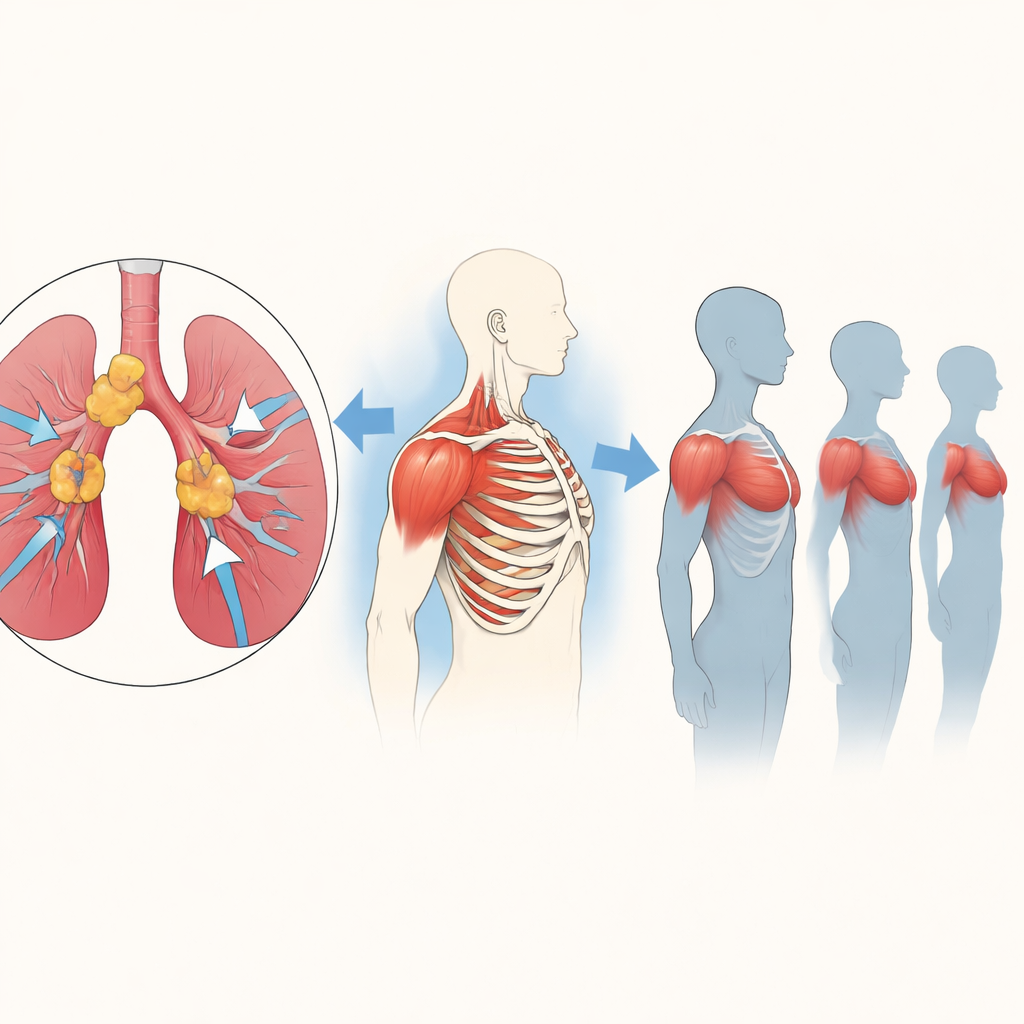
The story became more interesting when the scientists examined how muscle size and body weight interacted. In patients without mucus plugs, there was no clear link between weight and the size of the chest or back muscles. The same was true for those with only a few plugs. But among patients with many plugs, a different pattern appeared: as body weight decreased, the cross-sectional area of the pectoral muscles tended to be relatively larger for that weight. Statistical modeling showed that the relationship between mucus burden, body weight, and chest muscle size was not straightforward—body weight and lung function were the strongest direct predictors of mucus plugging, while chest muscle size influenced the picture mainly in combination with weight.
Reliable measurements from everyday scans
Because these measurements might be used in future clinical care, the team also tested how consistent they were. Two radiologists independently scored mucus plugs and measured the muscle areas and densities, and one of them repeated the measurements months later. The agreement between and within readers was very high, meaning that mucus plugging and muscle characteristics can be reliably assessed from standard chest CT images. This supports the idea that CT-based measures of both airway blockage and muscle status could become practical tools, without requiring special imaging protocols or additional scans.
What it means for patients with severe COPD
For patients with advanced COPD, the findings suggest that those with heavier mucus clogging often end up lighter overall, yet may maintain relatively larger chest muscles for their size. The authors propose that these breathing muscles may bulk up as the body works harder to pull air through narrowed, partially blocked airways—like a natural training effect driven by the effort of breathing. At the same time, muscle quality does not appear to worsen in those with more plugs. Taken together, the study shows that routine CT scans can provide a window not only into how badly the airways are clogged, but also into how the body’s breathing muscles are adapting, potentially giving doctors a richer picture of disease severity and the body’s attempts to cope.
Citation: Petersen, A., Hübner, RH., Mall, M.A. et al. Investigating sarcopenia and mucus plugging by chest computed tomography in patients with severe chronic obstructive pulmonary disease. Sci Rep 16, 13762 (2026). https://doi.org/10.1038/s41598-026-49060-7
Keywords: COPD, mucus plugging, sarcopenia, chest CT, respiratory muscles